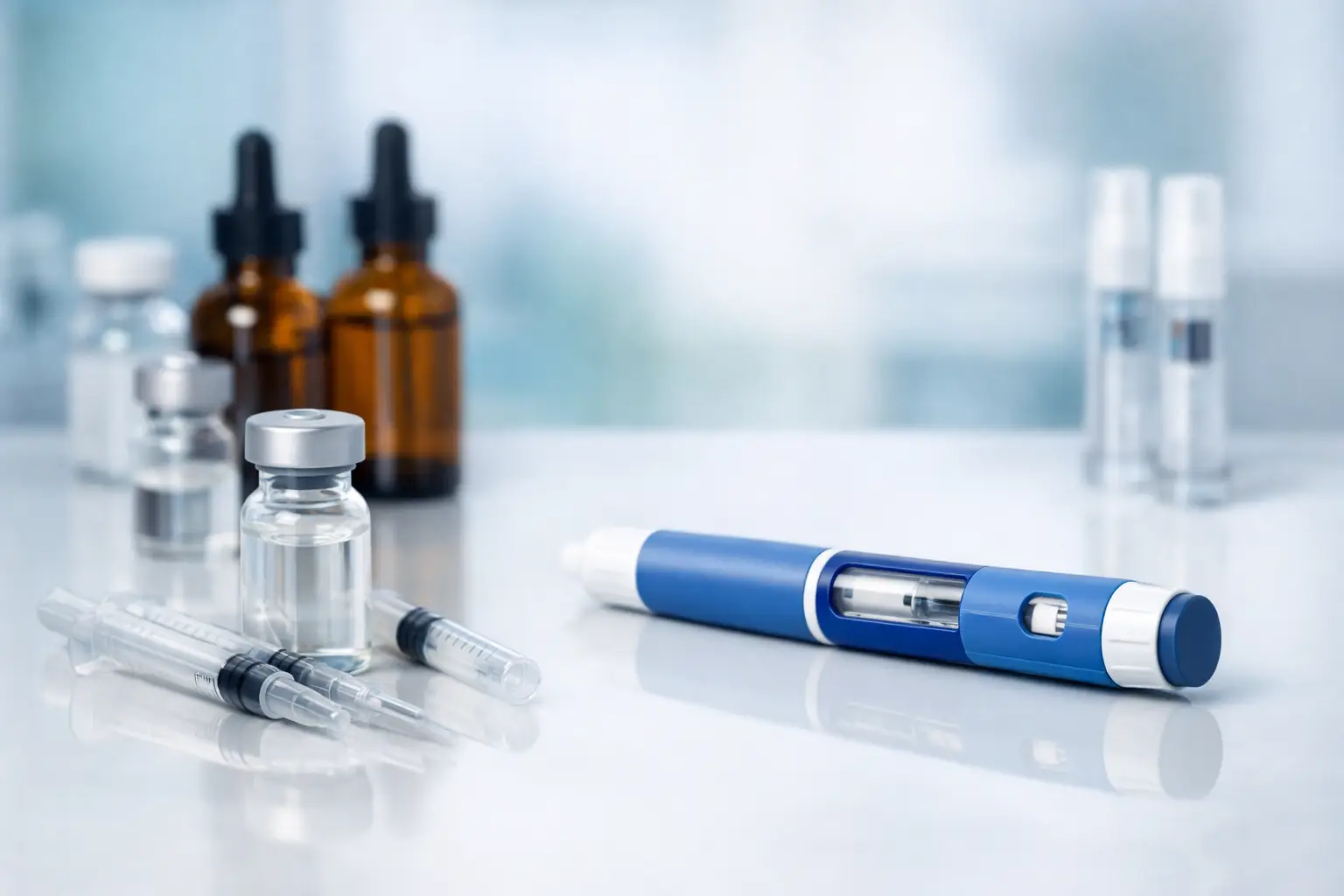
Peptide therapy in Homestead FL may offer targeted support for metabolic health, recovery, and wellness when supervised by qualified providers. Our online, provider-reviewed program pairs telehealth access with evidence-informed protocols so patients in Florida and New York can explore options if eligible.
Ready to find out if you qualify? Start Free Assessment — No payment required
What is peptide therapy and how it works
Peptides are short chains of amino acids that act as signaling molecules in the body. In clinical settings, synthetic or bioidentical peptides may be prescribed to mimic or enhance natural signaling pathways involved in metabolism, inflammation, tissue repair, and appetite regulation.
Mechanistically, different peptides target specific receptors or pathways. For example, some peptides may influence growth hormone release, others may support cellular repair or modulate hunger and satiety. In a telehealth program, providers review your medical history and goals to determine whether peptide therapy may be appropriate and which compound(s) to consider.
Common peptide compounds and their intended uses
A range of peptides is used in practice, each with a specific profile. Examples include peptides that potentially support weight management, recovery, or skin health. Providers may combine peptides with lifestyle guidance, other medications, or programs such as our semaglutide offerings when clinically appropriate.
If you are comparing options, consider how peptide therapy fits with other treatments like GLP-1 agents. Learn more about semaglutide options and comparisons at /semaglutide-florida and /semaglutide-vs-tirzepatide, and how peptide services can complement an overall plan in our /programs.
Safety profile and medical oversight
Peptide therapy should be delivered under medical supervision because individual response, interactions, and side effects vary. Common side effects depend on the specific compound and route of administration and may include injection site reactions, mild systemic symptoms, or changes in metabolic markers. Serious adverse effects are uncommon but possible, which is why provider review and ongoing monitoring matter.
Our telehealth pathway includes initial review, virtual follow-up, and lab testing when indicated. Patients in Florida and New York can receive care through our licensed clinicians who evaluate medical history, concurrent medications, and eligibility before prescribing. Pricing and program details are available at /pricing and /programs.
Who may benefit from peptide therapy
Peptide therapy may be considered for adults seeking adjunctive support for goals such as improved recovery, metabolic health, or targeted wellness concerns. Ideal candidates are those without contraindicating medical conditions and who are willing to engage in medical oversight, routine monitoring, and lifestyle measures.
It is not suitable for everyone: certain chronic illnesses, pregnancy, or incompatible medications may disqualify a person. Our online assessment helps identify candidates and determines whether an in-person lab or referral is needed; start the process at /assessment.
Telehealth delivery and the EdenRx approach
Telehealth allows patients in Homestead FL and New York to access provider-reviewed peptide protocols without unnecessary clinic visits. Virtual consultations let clinicians review history, counsel on expected outcomes, and create a follow-up plan that may include local lab testing or coordinated in-person services when needed.
EdenRx focuses on evidence-informed protocols and integrates peptides into comprehensive care pathways. Programs are individualized, and we emphasize patient education, realistic expectations, and safety. If you are combining peptide therapy with other treatments like semaglutide or tirzepatide, we assess interactions carefully and may coordinate with options listed at /semaglutide-florida, /semaglutide-vs-tirzepatide, and /online-weight-loss-florida.
Why Provider Review Matters
Provider review reduces risk by ensuring peptides are prescribed only after appropriate evaluation. Licensed clinicians screen for contraindications, adjust dosing based on response, and monitor labs to identify adverse effects early. This oversight is especially important given variability in compounded formulations and patient health status.
A provider-reviewed program also helps set realistic expectations. While peptides may potentially support certain physiological processes, results vary and are not guaranteed. The provider role includes deciding if you are eligible, managing follow-up, and coordinating care across treatments.
Built from Eden Med Spa — real patients, real treatments.
Ready to find out if you qualify? Start Free Assessment — No payment required
Frequently Asked Questions
Q: What compounds are used in peptide therapy?
A: Peptide therapy can involve a variety of compounds that target growth hormone pathways, tissue repair, inflammation, or metabolism. Specific prescriptions depend on clinical goals and provider assessment; compounding and formulation vary by program.
Q: How do peptides differ from medications like semaglutide?
A: Peptides are signaling molecules with varied mechanisms; semaglutide is a GLP-1 receptor agonist that specifically targets appetite and glucose regulation. In some cases, peptides may be used alongside GLP-1 therapies under close clinical supervision. See comparisons and programs at /semaglutide-vs-tirzepatide and /programs.
Q: Are peptides safe?
A: When prescribed and monitored by licensed providers, peptides may be safe for eligible patients. Side effects and risks depend on the compound and individual health factors. Ongoing monitoring and lab testing help manage safety.
Q: How is peptide therapy administered?
A: Administration varies: some peptides are injectable, others are topical or oral (less common). Your provider will discuss routes, dosing, and training for at-home administration if applicable, and will determine the appropriate follow-up schedule.
Q: Who is not a candidate for peptide therapy?
A: Individuals who are pregnant, breastfeeding, have certain active cancers, or have incompatible medical conditions or medications may not be eligible. A thorough provider review during the assessment will identify contraindications.
Q: How much does peptide therapy cost?
A: Costs vary by compound, frequency, and required monitoring. We provide transparent pricing after assessment; view general details at /pricing and explore combined care options at /online-weight-loss-florida.
Conclusion
Peptide therapy in Homestead FL, when delivered through a provider-reviewed telehealth program, may be a useful adjunct for select patients seeking metabolic, recovery, or wellness support. Because individual responses vary and safety depends on proper screening and monitoring, provider evaluation is essential. If you live in Florida or New York and want to learn whether peptide therapy may be appropriate for you, begin with our free assessment.
Ready to find out if you qualify? Start Free Assessment — No payment required