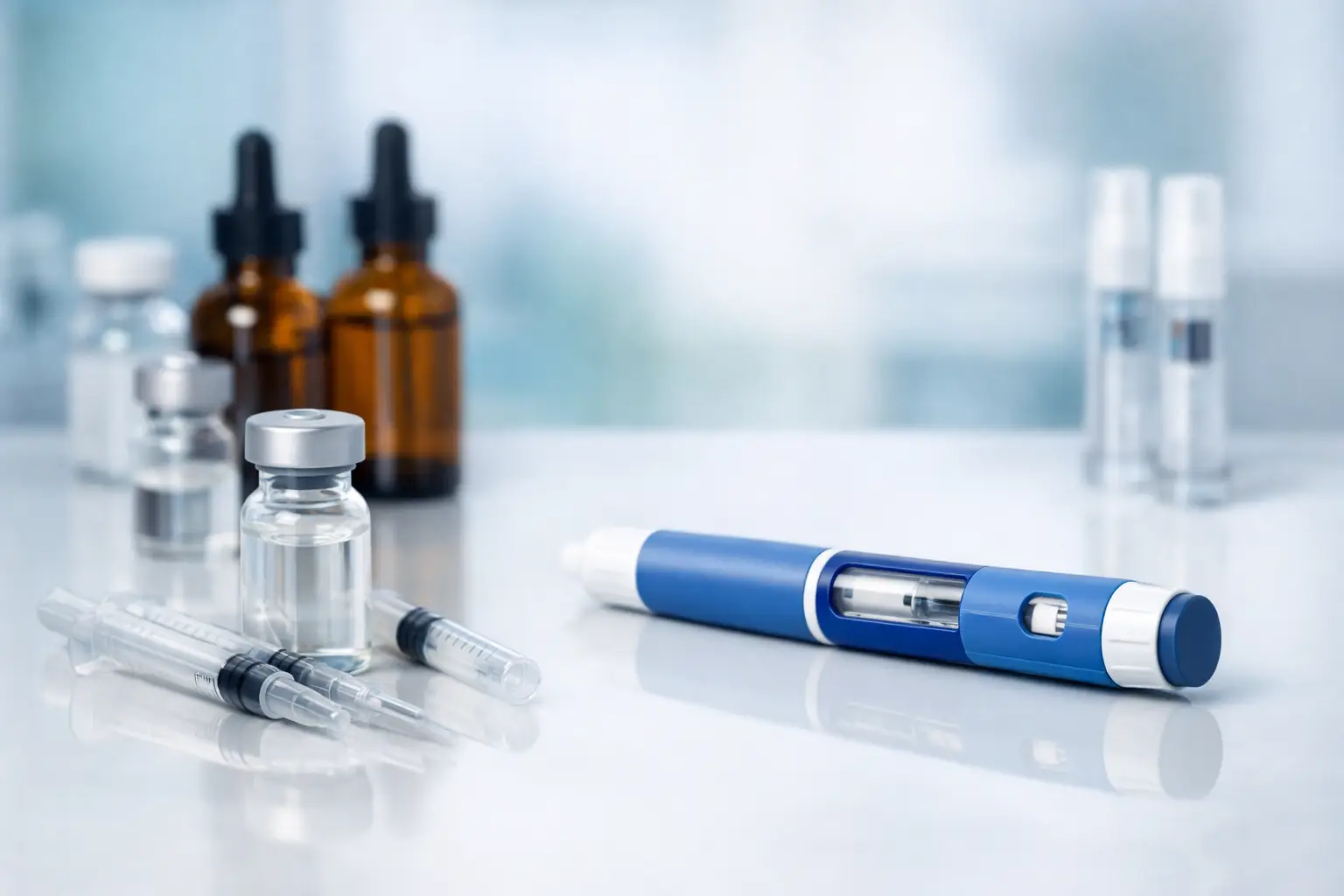
NAD+ therapy may potentially support metabolic processes by restoring cellular NAD+ levels, a cofactor involved in energy production and repair. While results vary, provider-reviewed NAD+ approaches are used as part of wellness and adjunctive metabolic care in eligible patients.
Ready to find out if you qualify? Start Free Assessment — No payment required
What is NAD+ and how it affects metabolism
Nicotinamide adenine dinucleotide (NAD+) is a naturally occurring molecule found in every cell. It serves as a critical coenzyme in redox reactions, helping convert nutrients into cellular energy through pathways like glycolysis, the citric acid cycle, and oxidative phosphorylation. Research suggests that declining NAD+ levels with age or metabolic stress may be associated with reduced mitochondrial function and altered metabolic regulation.
Understanding nad+ therapy metabolism means recognizing NAD+ as a facilitator rather than a magic bullet. NAD+ replacement or boosting strategies are intended to restore cellular balance and support metabolic processes; they may potentially improve energy handling, glucose regulation, and cellular repair depending on individual health status and provider oversight.
Common NAD+ Therapy Options (Provider-Reviewed)
Providers typically offer several NAD+ therapy formats: oral precursors (like nicotinamide riboside or nicotinamide mononucleotide), IV NAD+ infusions, and adjunctive peptide or micronutrient protocols. Each option differs in delivery, dosing, onset, and cost—oral precursors are convenient and more scalable, while IV approaches aim for higher, more immediate plasma levels.
At EdenRx we review these options for safety and appropriateness for each patient. If you’re exploring NAD+ as part of metabolic wellness, consult a provider-reviewed program that aligns with your goals. Learn more about our telehealth weight loss and wellness services at /weight-loss-online and see recommended pathways on /provider-reviewed-weight-loss.
Mechanisms: How NAD+ May Support Metabolism
NAD+ participates in enzymatic reactions carried out by sirtuins and PARPs, proteins involved in cellular energy sensing, DNA repair, and mitochondrial biogenesis. By supporting these pathways, raising NAD+ levels may potentially help cells respond better to metabolic demands and stressors, which is why some clinicians consider NAD+ therapy as part of a metabolic optimization plan.
Clinical and preclinical studies suggest improvements in markers of metabolic function in select populations, though outcomes are variable. NAD+ approaches are often combined with lifestyle measures—nutrition, exercise, and sleep optimization—and with targeted medical oversight in programs found at /programs to support sustained benefit if eligible.
Safety Profile and Side Effects
NAD+ therapies generally have a tolerability profile that depends on route and dose. Oral precursors commonly produce mild side effects like nausea, flushing, or gastrointestinal upset in some patients. IV NAD+ infusions can cause transient reactions such as flushing, lightheadedness, or injection-site discomfort; they require clinical monitoring for safety.
Because NAD+ affects cellular repair and signaling pathways, providers screen for contraindications and interactions before recommending therapy. Always discuss medical history, current medications, and goals with a licensed clinician—start your provider-reviewed assessment at /assessment. For pricing expectations, review our /pricing page to compare options and determine cost transparency.
Who May Benefit from NAD+ Therapy
Patients who may potentially benefit include those experiencing age-related metabolic changes, individuals with chronic fatigue of unclear origin, or people seeking adjunctive support for metabolic resilience under medical supervision. NAD+ therapy is not a standalone cure for metabolic disease, but may be considered as part of a comprehensive, provider-reviewed plan if eligible.
Eligibility varies by region and medical history; EdenRx offers telehealth services in Florida and New York only, with providers assessing candidacy based on clinical criteria. If you’re curious whether NAD+ could fit into your care, see /who-qualifies-for-weight-loss-medication and complete a free /assessment to begin provider screening.
Why Provider Review Matters
Provider review ensures NAD+ therapy is matched to the right candidate, reducing risk and increasing the chance of meaningful outcomes. A clinician evaluates medical history, baseline labs, drug interactions, and realistic expectations, then recommends an evidence-informed approach—oral, IV, or adjunctive therapy—tailored to the individual.
Provider oversight also helps integrate NAD+ into broader metabolic and weight-management strategies, such as lifestyle interventions and pharmacologic options when appropriate. Our provider-reviewed weight loss and wellness resources at /provider-reviewed-weight-loss and /weight-loss-online show how NAD+ may be incorporated safely into larger treatment plans.
Built from Eden Med Spa — real patients, real treatments.
Ready to find out if you qualify? Start Free Assessment — No payment required
Frequently Asked Questions
Q: What is the difference between oral NAD+ precursors and IV NAD+?
A: Oral precursors (nicotinamide riboside, NMN) are taken by mouth and rely on absorption and cellular conversion, while IV NAD+ delivers the coenzyme directly into circulation for higher immediate plasma levels. Providers weigh convenience, cost, and clinical goals when recommending a route.
Q: Is NAD+ therapy safe for everyone?
A: NAD+ therapy may not be appropriate for all patients. Safety depends on medical history, medications, and specific health conditions. A provider-reviewed assessment is essential to determine if you are an appropriate candidate and to monitor potential side effects.
Q: How long until I might notice metabolic effects?
A: Timing varies widely. Some people report subjective energy changes within days of IV therapy, while metabolic markers may take weeks to months to shift. Results vary and should be discussed with a clinician; no guaranteed timeline exists.
Q: Does insurance cover NAD+ therapy?
A: Coverage is inconsistent and often limited; NAD+ therapies, particularly IV infusions and supplements, are commonly self-pay. Check our /pricing page for program cost details and consult your insurer for benefits information.
Q: Can NAD+ therapy be combined with weight-loss medications or programs?
A: In many cases, NAD+ may be used alongside lifestyle changes and medically supervised weight-loss programs if approved by your provider. Discuss integration with any pharmacologic treatments during your clinical review; see /programs and /who-qualifies-for-weight-loss-medication for coordination guidance.
Q: Where is EdenRx available for NAD+ therapy?
A: EdenRx telehealth services and provider-reviewed offerings are available in Florida and New York only. Eligibility and service options are determined during the provider assessment process.
Conclusion
Provider-reviewed NAD+ therapy may potentially support metabolic function by restoring key cellular cofactors involved in energy production and repair. It is best considered as one component of a comprehensive plan that includes lifestyle measures and clinical oversight; results vary and are not guaranteed.
If you live in Florida or New York and want to explore whether NAD+ therapy fits your goals, start a free provider-reviewed assessment today. Start Free Assessment
For more on how NAD+ might be integrated with weight-loss and wellness programs, visit /weight-loss-online, review our provider-vetted options at /provider-reviewed-weight-loss, and learn about program details and pricing at /programs and /pricing.