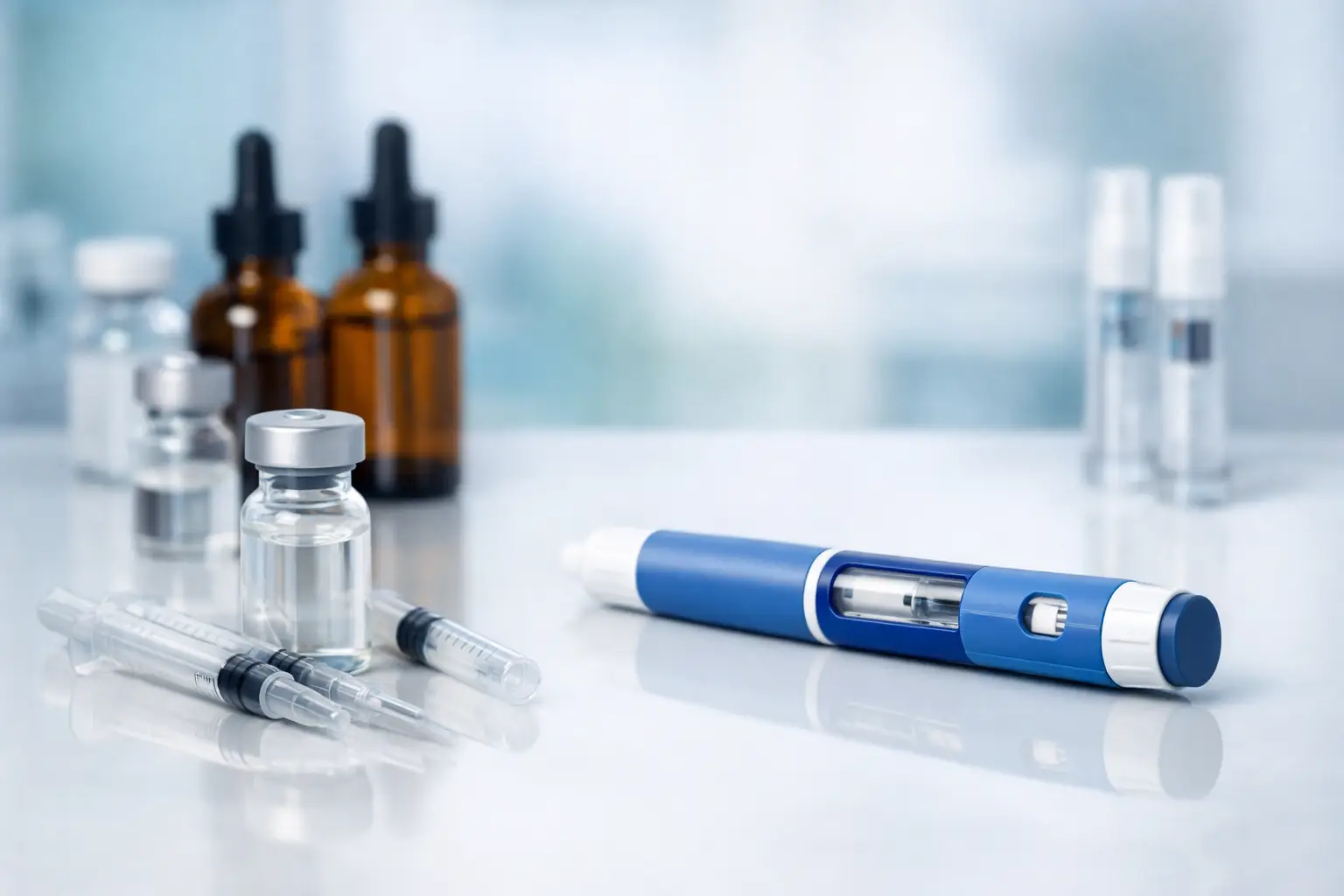
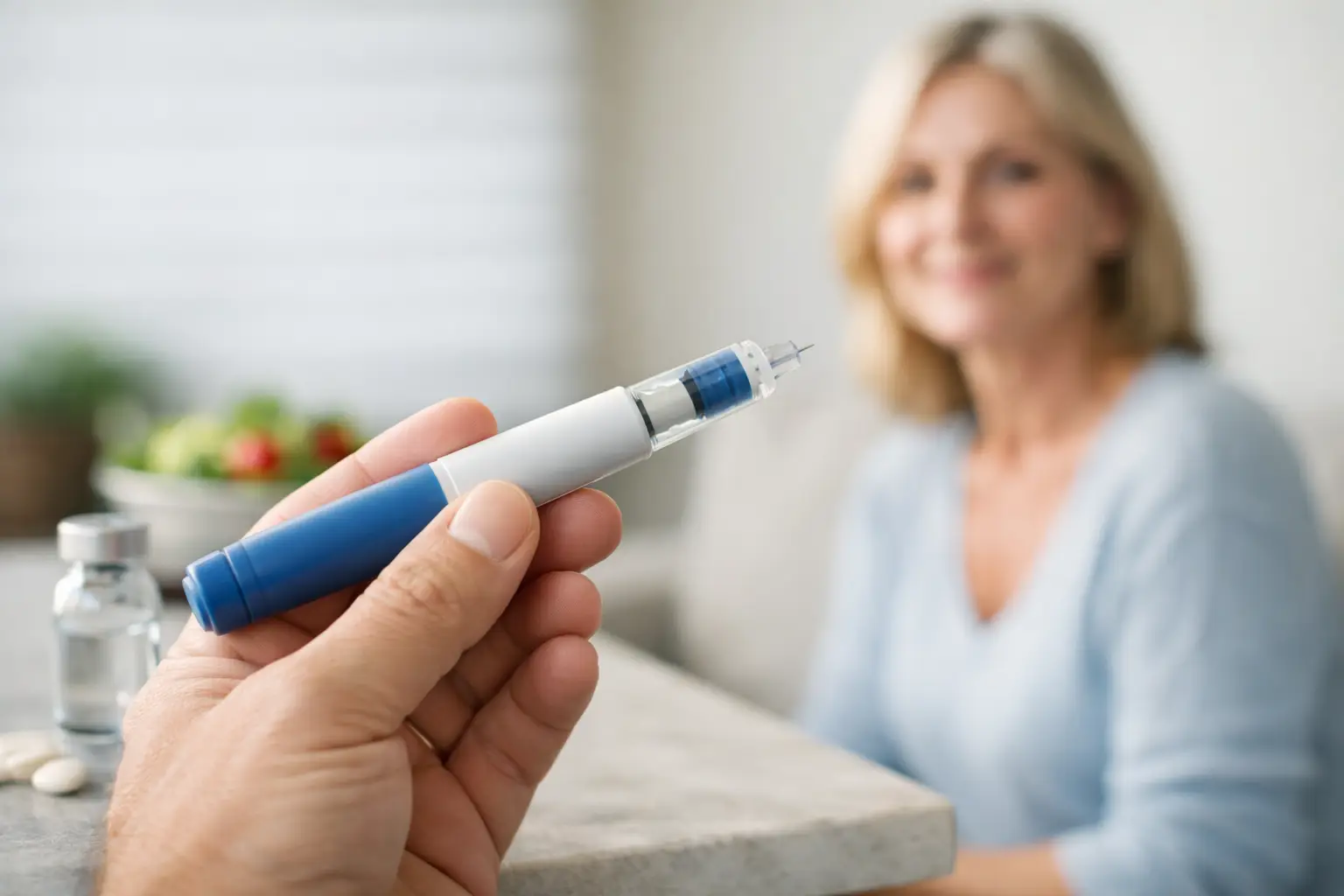
B12 injections may help support short-term energy and improved mood for people with deficiency or absorption issues, although results vary and are not guaranteed. If eligible, injections can be part of a broader wellness or weight-management plan that addresses nutrient status and metabolic support.
Ready to find out if you qualify? Start Free Assessment — No payment required
What is a B12 injection and what does it contain?
B12 injections typically contain cyanocobalamin or methylcobalamin, two forms of vitamin B12 used to restore vitamin levels quickly. Cyanocobalamin is a stable synthetic form commonly used in clinics; methylcobalamin is a bioactive form that some providers prefer for neurological support.
As a water-soluble vitamin, B12 is essential for red blood cell formation, DNA synthesis, and nervous system function. Injections bypass the digestive tract, which can be especially useful for people with malabsorption, certain medications, or gastrointestinal conditions that reduce oral uptake.
How B12 injections may influence energy, mood, and metabolism
B12 plays a role in cellular energy production by participating in mitochondrial function and the conversion of nutrients to usable energy. For people with low B12, replenishment can potentially reduce fatigue and increase perceived energy levels, though injections are not a guaranteed energy cure for everyone.
B12 is also involved in neurotransmitter synthesis and homocysteine regulation, pathways that can influence mood and cognitive function. Some patients report mood improvements after correction of deficiency, but outcomes depend on baseline status, overall health, and concurrent mental health care.
Mechanism of action: why injections differ from oral B12
When injected intramuscularly or subcutaneously, B12 enters the bloodstream directly, avoiding gastric acidity, intrinsic factor dependence, and other barriers to absorption. This direct delivery often leads to a faster rise in serum B12 levels compared to oral supplementation, which may be important in clinically significant deficiencies.
For people taking medications that affect gastric pH (like proton pump inhibitors) or with conditions such as pernicious anemia, Crohn's disease, or post-gastric surgery anatomy, injections may be the most reliable way to normalize levels. That said, many mild deficiencies can still be addressed with high-dose oral B12 under provider guidance.
Safety profile and common side effects
Vitamin B12 injections are generally well tolerated when administered by trained providers. Common side effects are usually mild and can include injection-site soreness, redness, or a temporary feeling of increased energy followed by tiredness in some individuals.
Serious adverse events are rare but can include allergic reactions; if you have a history of hypersensitivity to cobalamin preparations, discuss alternatives with your provider. Lab monitoring and provider review help reduce risks and tailor dosing to individual needs. If you are pregnant, breastfeeding, or have complex medical conditions, your provider will assess eligibility carefully.
Who may potentially benefit from B12 injections?
People who may benefit include those with diagnosed B12 deficiency, individuals with malabsorption syndromes, people who have had gastric surgery, and those on certain long-term medications that interfere with B12 absorption. Vegans and strict vegetarians with low dietary B12 intake may also need parenteral or high-dose oral replacement if levels are low.
B12 injections may also be considered as part of a broader wellness or weight-management strategy if a deficiency is contributing to fatigue or limiting physical activity. For telehealth weight-loss patients in FL and NY, our provider-reviewed programs can assess whether B12 injection therapy is appropriate as part of your plan; learn more about our online options at /weight-loss-online and about our provider review process at /provider-reviewed-weight-loss.
Practical considerations: frequency, testing, and cost
Frequency of injections depends on the severity of deficiency and the form used; initial loading doses may be followed by maintenance injections every 1 to 3 months, or as directed by a healthcare provider. Baseline blood tests (serum B12, CBC, methylmalonic acid when indicated) help guide appropriate dosing and duration.
Costs vary by program and individual needs; review pricing and program options on our /pricing and /programs pages. If you want to explore eligibility, start with a free assessment at /assessment and our team can advise on testing and next steps. For those interested in weight-loss medications combined with nutrient optimization, see /who-qualifies-for-weight-loss-medication for eligibility criteria.
Why Provider Review Matters
Provider review ensures B12 injections are recommended based on clinical need, lab evidence, and safety considerations rather than as a one-size-fits-all wellness quick fix. A qualified clinician will evaluate symptoms, order appropriate testing, consider drug interactions, and document medical necessity for ongoing therapy.
This review process is especially important in telehealth models across FL and NY, where state regulations and patient medical histories must be integrated into treatment decisions. Our provider-reviewed approach connects patients with licensed practitioners who follow evidence-informed protocols for nutrient replacement and monitoring.
Built from Eden Med Spa — real patients, real treatments.
Ready to find out if you qualify? Start Free Assessment — No payment required
Frequently Asked Questions
Q: What are the main B12 injection benefits for energy? A: For people with an identified B12 deficiency, injections may restore normal biochemical function and potentially reduce fatigue, improving perceived energy. Results vary and are most likely if low B12 is the cause of tiredness.
Q: Are B12 injections safe to take with other medications? A: B12 is generally safe, but interactions and underlying conditions matter. A provider review can evaluate your current medications and medical history to ensure injections are appropriate and safe.
Q: How soon might I notice mood or energy changes after a B12 injection? A: Some individuals report subjective improvement within days to weeks if deficiency is corrected; others may need several doses or concurrent treatment for mood disorders. There is no guaranteed timeline, and outcomes vary by person.
Q: Do I need lab testing before getting B12 injections? A: Yes. Providers typically check serum B12 and related markers to confirm deficiency and monitor response. Testing helps determine whether injections are the best route versus oral supplementation.
Q: Can B12 injections help with weight loss? A: B12 itself is not a weight-loss medication. It may potentially support energy and activity levels when deficiency is present, which could indirectly assist lifestyle efforts. For those exploring medical weight-loss options, review eligibility at /who-qualifies-for-weight-loss-medication and learn about our /weight-loss-online program.
Q: Who is not a good candidate for injections? A: People without deficiency or with contraindications to intramuscular injections may not benefit. Pregnant or breastfeeding patients, and those with complex health conditions, require individualized assessment to determine if injections are appropriate.
Conclusion
B12 injections may be a valuable tool for people with confirmed deficiency or absorption problems who need rapid repletion to address fatigue, neurologic symptoms, or low serum levels. They should be prescribed after appropriate testing and provider review, and used as part of a broader health plan when indicated.
If you live in Florida or New York and want to explore whether B12 injections may be appropriate for you, start with a free assessment and provider review to determine eligibility and next steps. Visit /assessment to begin today.
Ready to find out if you qualify? Start Free Assessment — No payment required