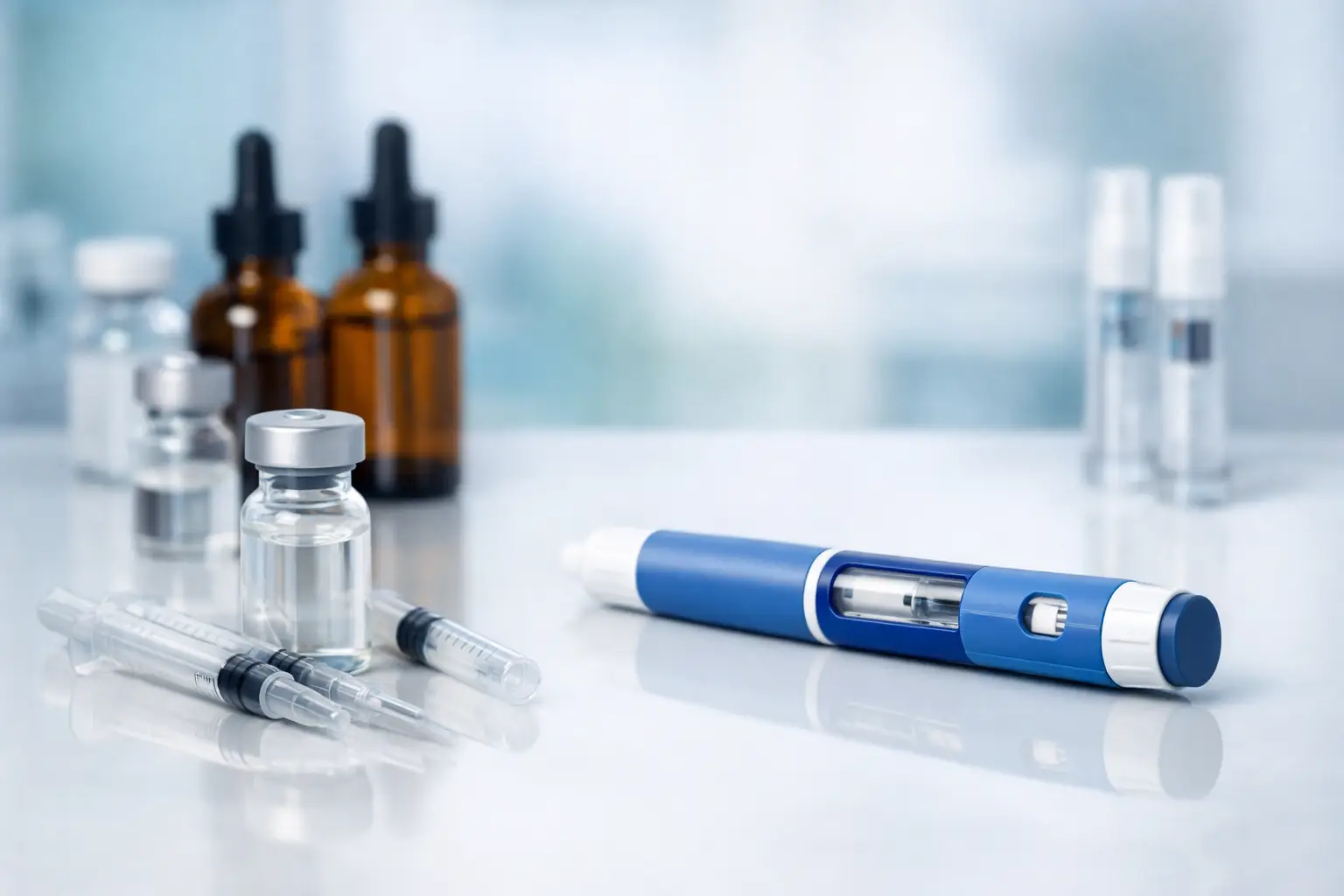


GLP-1 medications have become a leading component of modern weight-management strategies, with 2025 data showing rapid adoption in clinical practice and strong trial results for average bodyweight reductions. National trends indicate increased prescribing, but access, cost, and ongoing safety monitoring mean outcomes may vary and are not guaranteed.
Ready to find out if you qualify? Start Free Assessment — No payment required
What the 2025 numbers show
Large-scale registry and insurance-claims analyses in 2025 report that prescriptions for GLP-1 receptor agonists for weight management increased by an estimated 150-250% compared with 2022, depending on the dataset. Clinical trial meta-analyses continue to show average weight loss ranging from about 10% to 18% of baseline bodyweight over 6 to 18 months for higher-dose GLP-1 regimens; individual results may vary and are not guaranteed.
These statistics also highlight demographic patterns: uptake has been higher among middle-aged adults and in urban areas, while rural and underserved populations face slower access. If eligible, patients in FL and NY may find telehealth programs and local providers that can help start therapy, but cost and insurance coverage remain key determinants of who receives treatment.
Clinical trial highlights and real-world effectiveness
Phase 3 and longer-term extension studies published through early 2025 reinforce that GLP-1 medications can produce clinically meaningful weight loss and improvements in cardiometabolic markers such as HbA1c, blood pressure, and lipids. Many trials note weight reductions sustained over 12 to 24 months when medication is continued alongside lifestyle interventions, but discontinuation often leads to partial regain.
Real-world evidence (insurance claims, electronic health records) shows slightly lower average weight-loss percentages than randomized trials, which is common when treatments move into broader clinical practice. Factors such as adherence, dosing adjustments, comorbidities, and socioeconomic barriers help explain these gaps; programs that combine medication with behavioral support and telehealth coaching, like our /glp1-weight-loss-program and /weight-loss-online options, may improve outcomes for eligible patients.
Safety, side effects, and monitoring trends
Safety surveillance through 2025 has continued to focus on gastrointestinal side effects (nausea, vomiting, constipation), gallbladder events, and very rare cases of pancreatitis and medullary thyroid carcinoma signals in preclinical studies. Large registries suggest serious adverse events remain uncommon, but cautious prescribing and ongoing monitoring are emphasized, especially for patients with complex medical histories.
Prescriber practices in 2025 more often include baseline labs and follow-up assessments, which is consistent with provider-guided programs. If eligible, patients should expect periodic clinical review, recommended labs, and clear stop-and-start counseling. Our provider-reviewed pathway includes eligibility screening and monitoring to support safe use—learn more via /who-qualifies-for-weight-loss-medication and schedule an initial review through /assessment.
Access, insurance, and cost trends nationally
Despite rapid increases in prescribing, access disparities persist. As of 2025, many private insurers have expanded coverage for GLP-1s for obesity in selected plans, but formulary restrictions, prior authorization requirements, and high out-of-pocket costs still limit access for many patients. Government programs and state-level policies vary; Florida and New York each have differing coverage patterns and provider networks that affect availability.
Affordability remains a major barrier: list prices for branded GLP-1 medications are high, and even with discounts or manufacturer programs, some patients face monthly costs that may be prohibitive. Telehealth models and subscription-style programs can sometimes reduce nonclinical barriers by streamlining visits and support; review our /pricing and /programs pages to compare options and understand potential out-of-pocket commitments.
Who is getting prescribed GLP-1s and who may qualify?
Data through 2025 show most prescriptions going to adults with BMI criteria consistent with obesity guidelines and those with obesity-related comorbidities like type 2 diabetes or hypertension. Younger adults increasingly seek GLP-1s for weight loss, but guidelines stress shared decision-making and comprehensive evaluation before starting medication.
Eligibility assessments remain essential: not everyone is a candidate, and prescribers consider medical history, pregnancy plans, pancreatic or thyroid disease, and medication interactions. To determine if you may be a good fit, start a no-cost screening at /assessment and see our eligibility overview at /who-qualifies-for-weight-loss-medication.
Why Provider Review Matters
Provider review helps ensure GLP-1 medications are prescribed appropriately and that monitoring is in place to manage side effects and comorbid conditions. A clinician-led pathway is more likely to include baseline testing, individualized dosing plans, and follow-up schedules that protect patient safety and support sustained, realistic weight-management goals.
At EdenRx, our provider-reviewed programs integrate telehealth appointments with evidence-based coaching and follow-up to help patients in FL and NY navigate eligibility, dosing, and monitoring. These steps may reduce risks and potentially improve adherence compared with unsupervised use.
Built from Eden Med Spa — real patients, real treatments.
Ready to take the next step? Start Free Assessment — No payment required
Frequently Asked Questions
Q: What do the 2025 GLP-1 weight loss statistics mean for a patient in Florida or New York? A: They show broader availability and positive trial outcomes nationwide, but local access and insurance coverage in FL and NY vary. If eligible, you may benefit from a provider-reviewed program that offers assessment, monitoring, and support.
Q: How much weight can someone expect to lose with GLP-1s in 2025 studies? A: Clinical averages in trials range roughly 10%–18% of baseline bodyweight for higher-dose regimens over 6–18 months, but real-world results may be lower. Individual response may vary and is not guaranteed.
Q: Are GLP-1s safe long term? A: Ongoing surveillance through 2025 suggests serious adverse events are uncommon, but side effects like nausea and GI upset are frequent. Provider review and routine monitoring are recommended to manage risks and tailor therapy.
Q: Will insurance cover GLP-1 medications? A: Coverage depends on your plan; some private insurers expanded coverage by 2025 but many patients still face prior authorizations or significant out-of-pocket costs. Check with your insurer and explore program pricing at /pricing.
Q: How do telehealth programs work for GLP-1 treatment? A: Telehealth can streamline initial eligibility screening, prescribing, and follow-up visits while offering remote coaching. Our /weight-loss-online and /glp1-weight-loss-program combine telehealth with provider oversight and local lab recommendations when needed.
Q: How do I know if I qualify for GLP-1 treatment? A: Start with a clinical assessment to review medical history and BMI criteria. Use our free screening at /assessment and read about qualification criteria at /who-qualifies-for-weight-loss-medication.
Conclusion The 2025 landscape for GLP-1 weight loss shows strong clinical trial efficacy, rapid real-world uptake, and persistent access and cost challenges. For patients in Florida and New York, provider-reviewed telehealth pathways may offer an accessible route to evaluation and treatment planning, but outcomes vary and eligible patients should expect structured monitoring and shared decision-making.
If you live in FL or NY and want to explore whether GLP-1 therapy may be appropriate, start with a free clinical screen: Start Free Assessment. For program details and pricing options, visit /programs and /pricing.