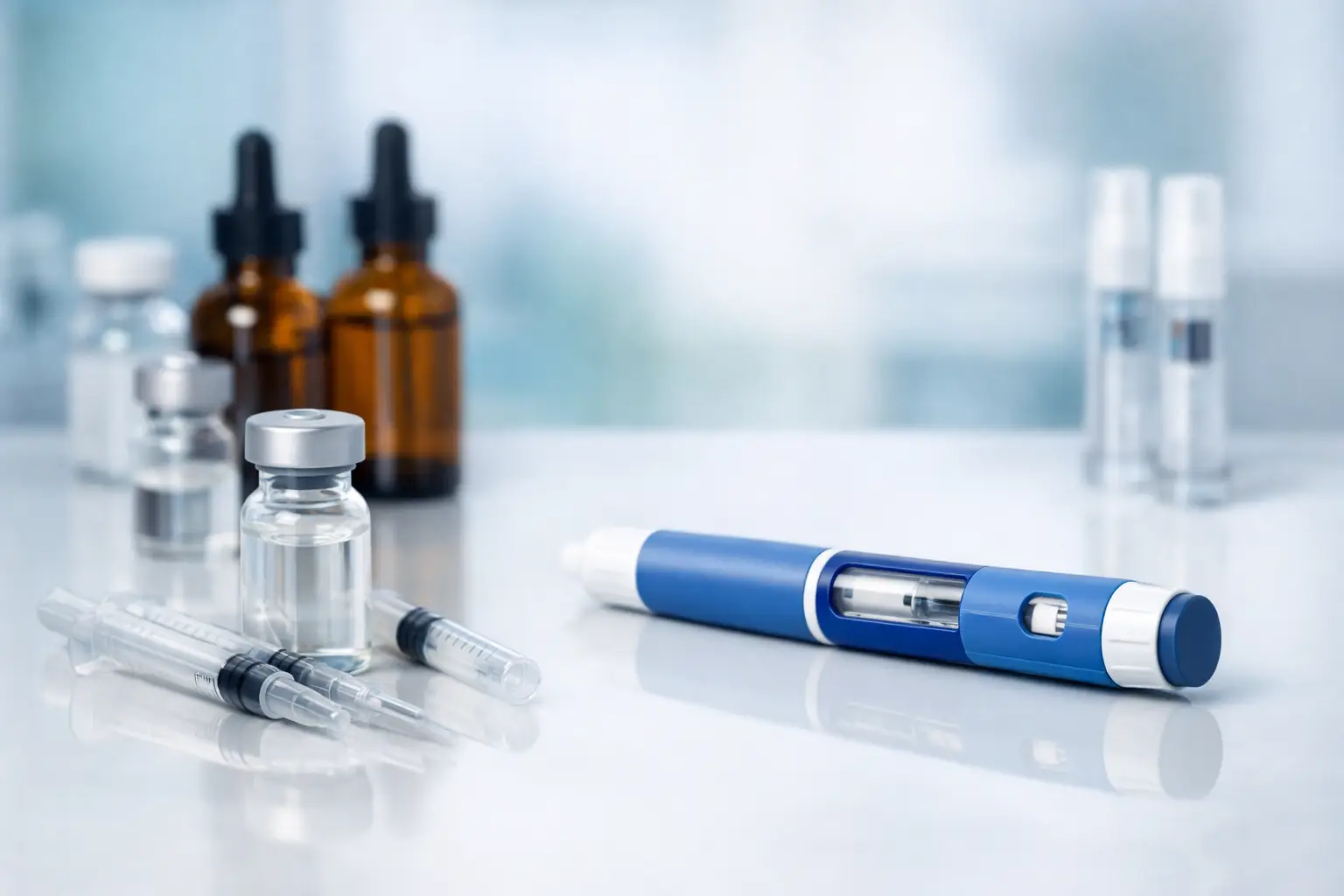


A GLP-1 dosing schedule refers to the planned sequence of starting doses and gradual increases used to introduce glucagon-like peptide-1 medications safely. Titration is the stepwise process clinicians use to help patients reach an effective dose while minimizing side effects.
Ready to find out if you qualify? Start Free Assessment — No payment required
What is a GLP-1 dosing schedule?
A GLP-1 dosing schedule is a roadmap your clinician follows when prescribing GLP-1 receptor agonists for weight management. Rather than starting at the full therapeutic dose, most prescribers begin with a lower dose and increase it over weeks. This approach may reduce common side effects like nausea and can potentially improve adherence.
These schedules vary by medication and by patient. If eligible, your provider will recommend a plan tailored to your medical history, goals, and how you tolerate the medicine. Learn more about program options and how we structure care at /glp1-weight-loss-program and /weight-loss-online.
How titration works: stepwise dosing explained
Titration usually follows fixed increments and timeframes—for example, weekly or monthly increases—until the target dose is reached or until side effects limit further increases. The goal is to find the highest tolerable dose that yields clinical benefit. Titration is not rushed; gradual adjustments allow the body to adapt.
Your clinician will monitor progress and symptoms during titration, potentially adjusting the pace depending on tolerability. Remote follow-ups through a telehealth platform let providers review response and side effects, which is why our programs include routine check-ins in the /programs and /glp1-weight-loss-program offerings.
Managing side effects during titration
Common side effects during dose increases include mild gastrointestinal symptoms such as nausea, vomiting, constipation, or diarrhea. These effects often lessen over days to weeks as the body adjusts, but they may require temporary dose holds or slower titration for some patients.
Simple strategies can help manage symptoms: eat smaller meals, avoid high-fat foods that can exacerbate nausea, and stay well hydrated. If side effects persist or are severe, contact your provider. If you need guidance about eligibility or safety, review /who-qualifies-for-weight-loss-medication or start a clinical review through /assessment.
Typical schedules for common GLP-1 medications
While individual plans vary, there are common titration patterns for frequently used GLP-1 medications. For instance, some weekly injectable GLP-1s start at a low weekly dose for several weeks before increasing, with dose jumps every 4 weeks being common. Oral GLP-1s have their own schedules, generally with daily doses increased over several weeks.
These patterns are examples, not prescriptions—only a licensed clinician can set your specific schedule. EdenRx clinicians practice provider-reviewed telemedicine for patients in Florida and New York and will recommend a titration protocol that may suit you if eligible. For details on enrollment and pricing, see /pricing and program descriptions at /glp1-weight-loss-program.
How long does titration typically take?
Titration timelines vary by medication and individual response. It can take anywhere from a few weeks to several months to reach a maintenance dose. Some people tolerate faster increases, while others need a slower approach to minimize side effects and maximize tolerability.
During this period, progress monitoring is important. Expect regular check-ins with your provider to assess weight response, side effects, and any medical issues. Remote monitoring through our /weight-loss-online services helps maintain consistent oversight without extra travel for patients in FL and NY.
Why Provider Review Matters
Provider review ensures that a GLP-1 dosing schedule is medically appropriate and safe for you. Medical history, current medications, kidney and liver function, and other health factors influence whether titration is advisable and how aggressive it should be. Having a licensed clinician review your case reduces risk and personalizes care.
EdenRx uses provider-reviewed telehealth so a clinician evaluates your eligibility and ongoing response. This oversight helps identify when adjustments or additional testing are needed, and it supports shared decision-making about the balance between benefits and potential side effects. Start with a confidential evaluation at /assessment to see if you may qualify.
Built from Eden Med Spa — real patients, real treatments.
Ready to start your GLP-1 journey? Start Free Assessment — No payment required
Frequently Asked Questions
Q: What is a GLP-1 dosing schedule and why is it important? A: A GLP-1 dosing schedule is the planned series of dose starts and increases designed to safely reach an effective dose. Titration helps manage side effects and improves the chance that patients will continue treatment.
Q: How fast can I expect dose increases? A: The pace varies by medication and individual tolerability. Some schedules increase weekly, others every 2 to 4 weeks, and some may be slower if side effects occur. Your provider will recommend a plan that may work for you if eligible.
Q: Are dose increases reversible if I experience side effects? A: Yes. Providers commonly slow the titration rate, reduce the dose, or pause increases to manage side effects. In some cases, stopping the medication may be necessary until symptoms resolve.
Q: Do I need in-person visits for titration? A: Many patients can be safely monitored via telehealth, with remote follow-ups and symptom checks. EdenRx offers provider-reviewed telemedicine services for patients in Florida and New York for convenience.
Q: Will I lose weight during titration? A: Some weight change may occur during titration, but individual responses vary. Results may depend on dose, lifestyle, and individual biology. There are no guaranteed outcomes; patients may potentially see meaningful weight loss over time if eligible and under clinical supervision.
Q: How do I find out if I qualify for GLP-1 therapy? A: Start with an assessment. Our online evaluation screens medical history and relevant factors to determine whether GLP-1 therapy is a safe option for you in FL or NY. Begin at /assessment and review eligibility criteria at /who-qualifies-for-weight-loss-medication.
Conclusion
A thoughtful GLP-1 dosing schedule and careful titration are central to safe, effective weight-loss therapy. By starting low and increasing doses in a monitored way, clinicians aim to reduce side effects and help patients reach doses that may deliver benefit. Your care plan should be personalized and overseen by a licensed provider, especially when prescribing or adjusting GLP-1 medications.
If you live in Florida or New York and want to explore GLP-1 options, EdenRx provides provider-reviewed telehealth for weight management. Learn about our programs at /glp1-weight-loss-program, see pricing at /pricing, or begin with a free assessment at /assessment to find out if you may be eligible.
Start today and take the first step toward a medically supervised plan that may work for you: Start Free Assessment