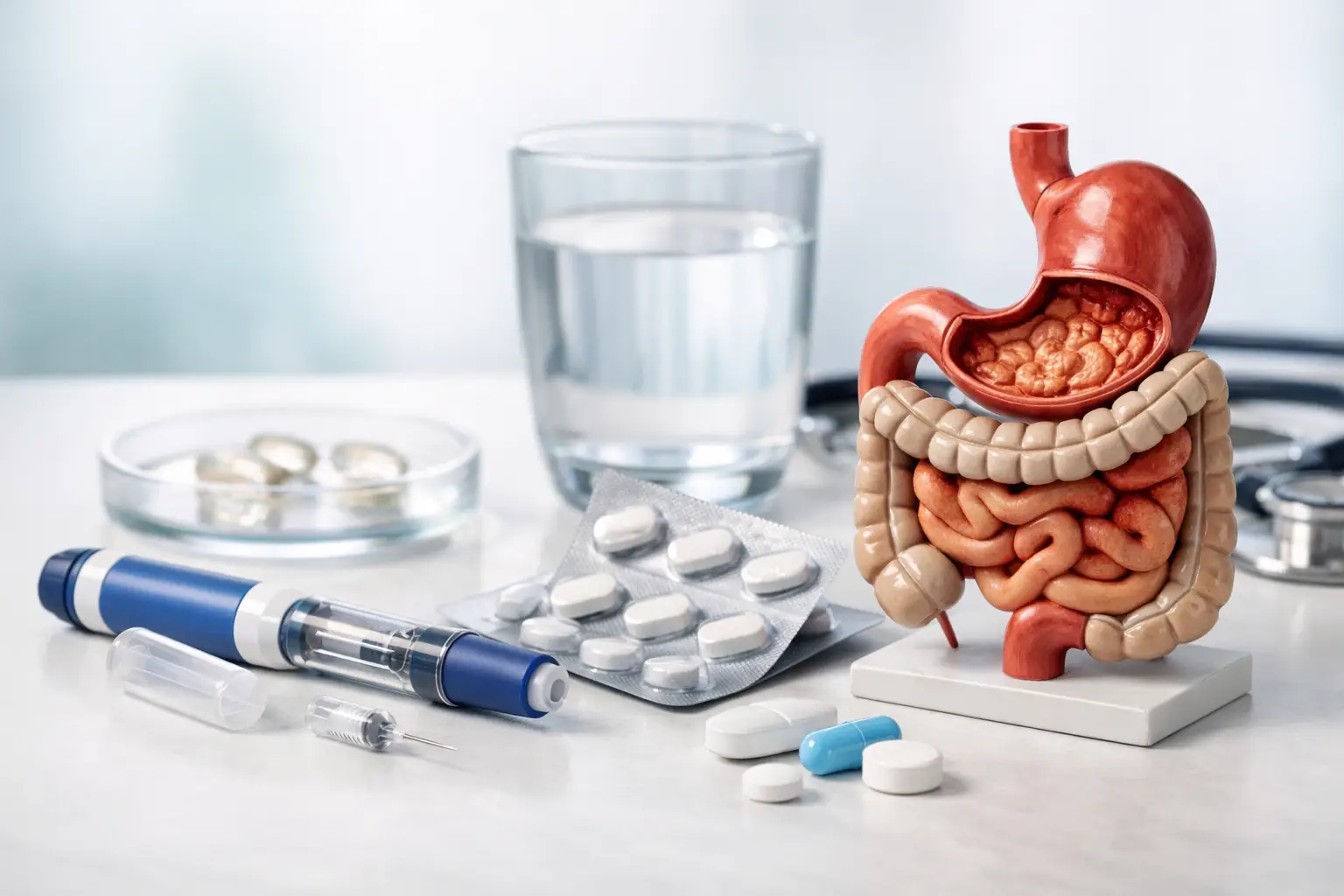


BPC-157 is a synthetic peptide derived from a protein found naturally in human gastric juice, and early research suggests it may support gut lining repair and reduce gastrointestinal inflammation. While most evidence comes from animal models and preclinical studies, interest in BPC-157 gut healing continues to grow among researchers and wellness-focused clinicians alike.
Ready to find out if you qualify? Start Free Assessment — No payment required.
What Is BPC-157 and Where Does It Come From?
BPC-157 stands for Body Protection Compound-157, a pentadecapeptide — meaning it is made up of 15 amino acids. It was originally isolated from a protein sequence found in human gastric juice, which may partly explain why researchers became interested in its potential gastrointestinal applications. Unlike naturally occurring peptides, BPC-157 used in research settings is synthetically manufactured and is not currently FDA-approved as a drug for any specific condition.
Its origins in the gut have made it a focal point for scientists studying mucosal healing, intestinal permeability, and inflammatory bowel conditions. Researchers have noted that the peptide appears stable in gastric acid environments, which makes it a compelling subject for oral and systemic delivery studies. That said, anyone considering peptide therapy should consult with a qualified provider before pursuing any protocol — something EdenRx prioritizes across all of its weight loss and wellness programs.
How BPC-157 May Support Gut Healing: The Proposed Mechanisms
Several mechanisms have been proposed to explain how BPC-157 might contribute to gut healing at a cellular level. Animal studies have suggested that the peptide may promote angiogenesis — the formation of new blood vessels — which could support tissue repair in damaged mucosal layers. It has also been studied for its potential to upregulate growth hormone receptors and modulate nitric oxide pathways, both of which play roles in tissue regeneration and inflammation control.
Additionally, preclinical research has explored BPC-157's potential interaction with the gut-brain axis, a communication network between the gastrointestinal tract and the central nervous system. Some animal studies suggest it may influence dopamine and serotonin activity, potentially affecting gut motility and stress-related digestive symptoms. These findings are intriguing, but it is important to note that extrapolating animal data to human outcomes requires caution and rigorous clinical trials that are still ongoing or yet to be conducted.
What the Current Research Actually Shows
The bulk of BPC-157 research has been conducted in rodent models, where results have been notably consistent across a range of gastrointestinal conditions including colitis, stomach ulcers, intestinal anastomosis healing, and short bowel syndrome. In these studies, BPC-157 administration — whether oral, systemic, or topical — appeared to accelerate healing and reduce markers of inflammation when compared to control groups.
Human clinical trials, however, remain sparse. As of the time of this writing, there are no large-scale, peer-reviewed, double-blind randomized controlled trials in humans that confirm the same effects observed in animals. This does not mean the compound is ineffective in humans — it means the evidence base is still developing. Patients and providers should approach BPC-157 with informed optimism rather than certainty. If you are curious about whether peptide-based wellness approaches might be right for you, exploring who qualifies for weight loss medication at EdenRx is a strong first step in understanding your eligibility for provider-reviewed protocols.
Safety Profile and Considerations
In preclinical studies, BPC-157 has demonstrated a notably favorable safety profile, with animal studies showing minimal toxicity even at relatively high doses. No significant adverse effects have been consistently reported in the research literature to date, which has contributed to growing interest in its potential clinical applications. However, the absence of large-scale human safety trials means that long-term effects in humans have not been fully characterized.
Potential users should be aware that BPC-157 is not FDA-approved and is currently classified as a research compound. Sourcing, purity, and dosing can vary significantly between compounding pharmacies and suppliers, which introduces risk if obtained outside of a medically supervised context. EdenRx works exclusively with provider-reviewed protocols and licensed compounding pharmacies, ensuring that patients who may be eligible receive compounds that meet quality standards. Transparency about what you are taking — and why — is foundational to safe, effective wellness care. You can review current program pricing to understand what provider-reviewed care looks like in practice.
Who May Potentially Benefit From BPC-157?
Based on the available preclinical evidence, individuals who may potentially benefit from BPC-157 gut healing protocols include those dealing with chronic gastrointestinal inflammation, leaky gut syndrome, or recovering from gastrointestinal injury or surgery — though again, these applications are not clinically confirmed in large human trials. Some functional medicine and integrative health providers have begun incorporating BPC-157 into broader gut restoration protocols for patients who have not responded adequately to conventional approaches.
It is also worth noting that gut health is deeply intertwined with metabolic function, weight regulation, and overall wellness. Patients exploring GLP-1 weight loss programs or broader online weight loss support may find that optimizing gut health is a relevant part of their overall journey. As always, any peptide or compound therapy should only be pursued under the supervision of a licensed provider who can assess your individual health history, current medications, and wellness goals.
Take the next step toward informed, provider-reviewed wellness. Start Your Free Assessment — See if you qualify for peptide or weight loss programs at EdenRx. No payment required to get started.
Why Provider Review Matters
In the world of peptide therapy and compounded wellness treatments, the quality of oversight is everything. Compounds like BPC-157 exist in a regulatory gray zone — they are not approved drugs, but they are also not simple supplements. The difference between a safe, effective experience and a harmful one can come down to dosing accuracy, compound purity, and whether a licensed provider has reviewed your health history before recommending a protocol.
At EdenRx, every patient undergoes a thorough assessment before any treatment is recommended or dispensed. Our team of licensed providers in Florida and New York reviews each case individually, ensuring that recommendations are personalized, evidence-informed, and compliant with current medical standards. Results vary by individual, and no outcomes are guaranteed — but what is guaranteed is that you will never receive a protocol that hasn't been reviewed by a real, qualified provider. Built from Eden Med Spa — real patients, real treatments.
Frequently Asked Questions
Is BPC-157 approved by the FDA?
No. BPC-157 is not currently FDA-approved for the treatment, cure, or prevention of any disease or condition. It is classified as a research peptide and, when used in clinical or wellness settings, is typically dispensed through licensed compounding pharmacies under provider supervision.
Can BPC-157 heal a leaky gut?
Preclinical animal studies suggest BPC-157 may potentially support intestinal mucosal repair, which is relevant to conditions like increased intestinal permeability ("leaky gut"). However, no definitive human clinical trials have confirmed this effect, and no cure claims can be made. Speak with a provider to understand whether this may be appropriate for your situation.
How is BPC-157 typically administered?
In research and clinical wellness settings, BPC-157 has been studied via oral, subcutaneous injection, and topical routes. The most appropriate method depends on the intended application and should be determined by a licensed provider based on your individual health profile.
Are there side effects associated with BPC-157?
Animal studies have shown a favorable safety profile with minimal reported side effects. However, because large-scale human trials are lacking, the full side-effect profile in humans has not been established. As with any compound therapy, individual responses may vary, and provider monitoring is strongly recommended.
Who should not use BPC-157?
Individuals who are pregnant, breastfeeding, or have active cancers should avoid BPC-157 until more safety data is available, as its effects in these populations have not been studied. Anyone with underlying health conditions or who is taking prescription medications should consult a licensed provider before considering any peptide protocol.
How do I find out if I qualify for peptide therapy at EdenRx?
The easiest way is to complete our free online assessment. EdenRx serves patients in Florida and New York, and our provider-review process ensures that any recommended protocol is appropriate for your individual health needs. No payment is required to start the assessment.
Conclusion
BPC-157 gut healing is a genuinely exciting area of research — one that holds real promise based on a robust body of preclinical data. The peptide's proposed mechanisms, from angiogenesis promotion to mucosal repair and inflammation modulation, paint an encouraging picture for future human applications. At the same time, the current lack of large-scale human clinical trials means that caution, context, and qualified provider oversight are non-negotiable.
If you are curious about whether BPC-157 or other peptide-based wellness protocols might be a fit for your health goals, EdenRx is here to help you navigate that conversation with evidence-informed guidance. Explore our full range of programs, review pricing options, and take the first step today.
Ready to explore your options? Start Your Free Assessment — Provider-reviewed care in Florida and New York. Results vary. No payment required to qualify.