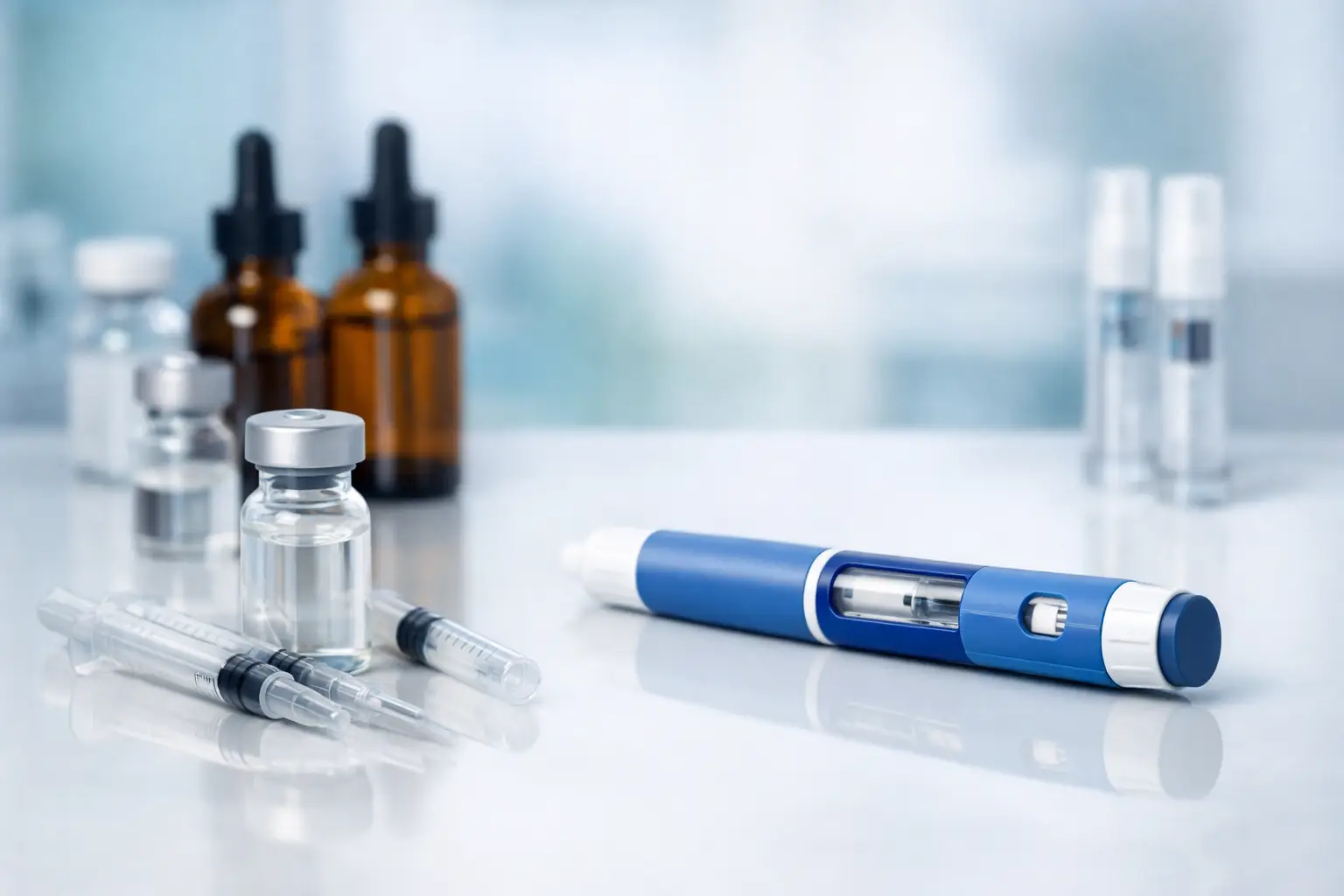
Vitamin injections in Rochester NY may provide faster absorption than oral supplements and can potentially support people with documented deficiencies or certain medical needs. If eligible, a provider-reviewed telehealth consult can help determine which injections, if any, are appropriate for you.
Ready to find out if you qualify? Start Free Assessment — No payment required
What are vitamin injections?
Vitamin injections are formulations of vitamins, minerals, or nutrient blends delivered by intramuscular (IM) or subcutaneous injection rather than taken by mouth. These injections often include B12 (methylcobalamin or cyanocobalamin), B-complex blends, vitamin D, vitamin C, or combination mixes such as MIC (methionine, inositol, choline) that practitioners sometimes use to support metabolic wellness.
In Rochester NY, injections are offered as part of supervised programs that include telehealth provider review and follow-up. For patients exploring broader weight-management options, vitamin injections may be offered alongside programs like those described in our /online-weight-loss-new-york and prescription therapies such as /tirzepatide-new-york, when clinically appropriate.
How vitamin injections work
Injectable nutrients bypass the digestive tract and go directly into muscle or tissue, which can increase bioavailability and raise blood levels more rapidly than oral supplements. This mechanism is particularly helpful for people with malabsorption issues, chronic gastrointestinal conditions, or those taking medications that interfere with nutrient uptake.
The effect of injections depends on the nutrient and the individual. For example, vitamin B12 injections may correct a deficiency that contributes to fatigue or neuropathy, while vitamin D injections may raise stores more quickly in people with severe deficiency. Outcomes vary and depend on baseline levels, overall health, and adherence to a provider-recommended plan.
Common compounds and formulations
Providers in Rochester NY may use single-nutrient injections (like methylcobalamin for B12) or compound blends formulated by licensed pharmacies. Common compounds include B12, B-complex, vitamin D, vitamin C, and MIC blends. "Compound" in this context refers to a mixture of active nutrients combined into one injectable formulation under safe pharmacy standards.
When discussing options, your provider may reference comparative therapies or adjuncts to care found in our programs, such as considerations related to /semaglutide-vs-tirzepatide or combined lifestyle coaching in our /programs. Exact formulations and dosing schedules should be individualized based on clinical assessment and lab results.
Safety profile and clinical considerations
Vitamin injections are generally well tolerated when administered by trained professionals, but they are not risk-free. Common side effects include mild injection-site pain, redness, or swelling. Less common risks include allergic reactions, infection if aseptic technique is not used, or metabolic effects if doses are excessive. A provider-reviewed program screens for contraindications and reviews medications and health history to reduce risk.
Before receiving injections, many patients undergo baseline testing and a telehealth review to identify potential interactions or conditions that could affect safety. People with certain medical issues, such as severe kidney disease or specific allergies, may need adjusted dosing or alternative approaches. Our team emphasizes individualized care and transparent discussion of risks and benefits.
Who may benefit from vitamin injections?
People who may potentially benefit include those with documented nutrient deficiencies (for example, low B12 or vitamin D), individuals with malabsorption from GI conditions or surgeries, older adults with reduced absorption, and some people on restrictive diets such as strict vegan diets. Patients seeking adjunctive support during a medically supervised weight-loss program may also consider injections when clinically indicated.
Vitamin injections are not a one-size-fits-all solution and are best considered as part of a broader plan that could include nutrition counseling, lab monitoring, and prescription therapies. If you are already exploring options like /tirzepatide-new-york or comparing injectable medications in /semaglutide-vs-tirzepatide, a provider-reviewed assessment can clarify whether nutrient injections are appropriate for your goals.
Why Provider Review Matters
Provider review matters because injectable therapies require medical oversight to ensure appropriate dosing, identify contraindications, and interpret lab results. A qualified clinician can determine whether a deficiency exists, whether an injectable formulation is the safest and most effective route, and how injections should fit into your overall care plan.
At EdenRx, provider review also helps coordinate follow-up care, monitor for side effects, and adjust treatment as needed. This oversight is especially important for patients in FL and NY where regulations and standards of care guide how injectable treatments are prescribed and administered.
Built from Eden Med Spa — real patients, real treatments.
Ready to find out if you qualify? Start Free Assessment — No payment required
Frequently Asked Questions
Q: What types of vitamin injections are offered in Rochester NY? A: Common options include vitamin B12 (methylcobalamin or cyanocobalamin), vitamin D, vitamin C, B-complex blends, and MIC-style formulations. Specific products and dosing are determined after provider review and may be adjusted based on lab findings.
Q: Are vitamin injections safe? A: When prescribed and administered by qualified providers, injections are generally safe, but risks such as injection-site reactions, allergic responses, or infection exist. A telehealth assessment and appropriate lab work help identify risks and guide safe use.
Q: Who is a good candidate for injections? A: Candidates may include people with confirmed deficiencies, malabsorption, restrictive diets, or certain clinical symptoms that correlate with low nutrient levels. Eligibility depends on medical history, labs, and a provider's clinical judgment.
Q: How do I get started in Rochester NY? A: Start with a free provider-reviewed assessment to determine eligibility and next steps. You can begin at Start Free Assessment. If eligible, the team will discuss pricing, monitoring, and scheduling; see /pricing and /programs for details.
Q: Can vitamin injections help with weight loss? A: Vitamin injections are not a standalone cure for weight loss. Some ingredients are used as adjunctive support for metabolism, but injections may be considered part of a broader, medically supervised weight-management program. For prescription therapies and comparisons, see /tirzepatide-new-york and /semaglutide-vs-tirzepatide.
Q: Will insurance cover vitamin injections? A: Coverage varies by insurer and by whether injections are prescribed for a medically documented deficiency. Our team can help review options during the provider consultation and explain out-of-pocket pricing and program alternatives.
Conclusion
Vitamin injections in Rochester NY may offer a useful, provider-reviewed option for people with documented deficiencies, malabsorption, or other clinical indications. These therapies should be considered within the context of medical oversight, lab testing, and a comprehensive care plan rather than as standalone remedies.
If you are in New York and want a safe, supervised approach, our online provider-reviewed program can help assess eligibility and recommend next steps. Ready to learn more?
Ready to find out if you qualify? Start Free Assessment — No payment required