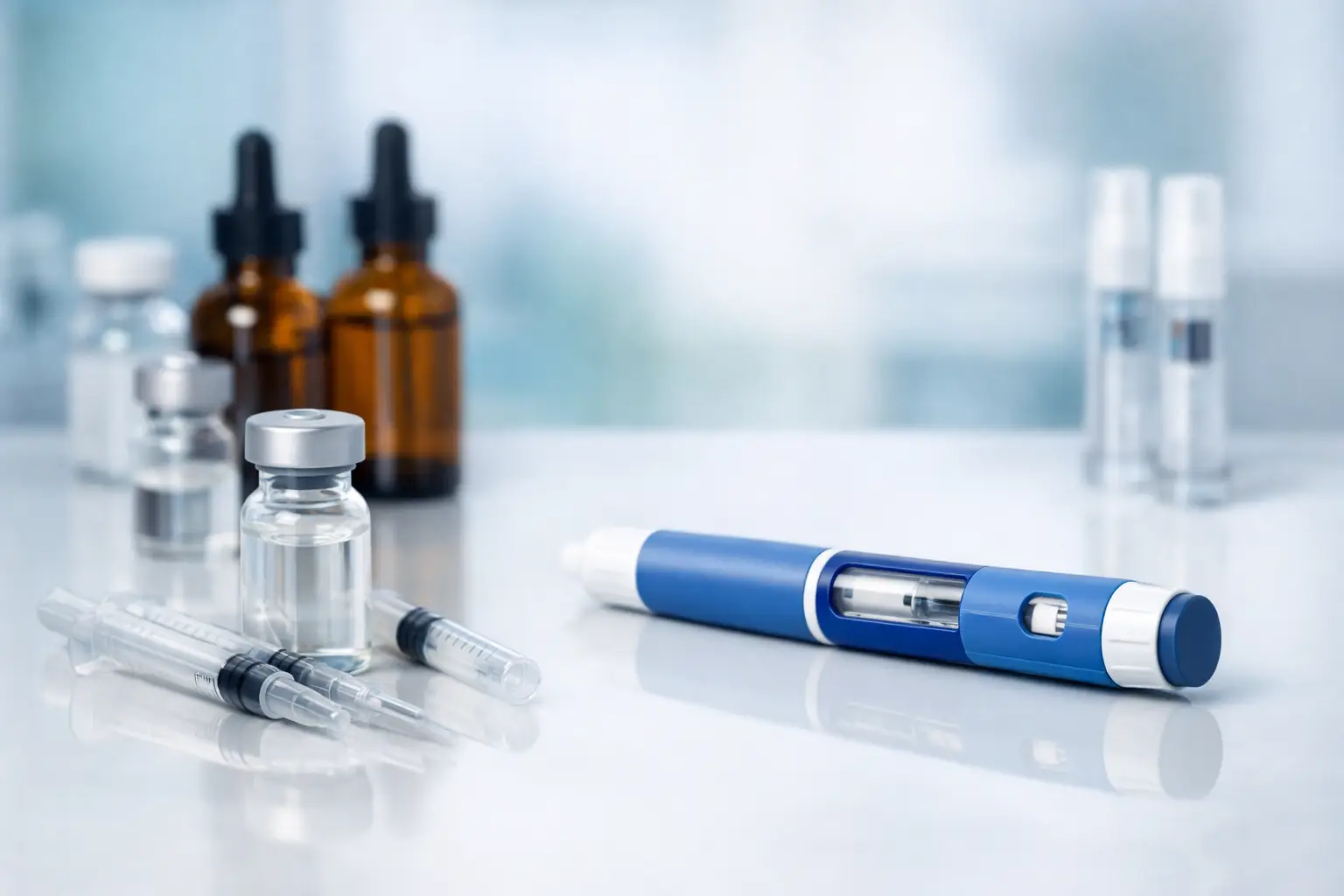
Vitamin injections in Queens, NY may help address specific nutrient gaps and support overall wellness when administered by a qualified provider. If eligible, patients can explore telehealth-guided options and a provider-reviewed program to determine whether injections are appropriate for their needs.
Ready to find out if you qualify? Start Free Assessment — No payment required
What are vitamin injections and how do they work?
Vitamin injections are concentrated formulations of vitamins and cofactors delivered intramuscularly or subcutaneously to bypass the digestive tract and improve bioavailability. Common formulations include vitamin B12 (cyanocobalamin or methylcobalamin), B-complex blends, vitamin D, and micronutrient cocktails that may combine B-vitamins, vitamin C, and trace minerals.
Mechanistically, injections deliver higher circulating concentrations more quickly than oral supplements, which may be beneficial for individuals with malabsorption, certain medical conditions, or those who need rapid repletion. Treatment frequency and dosing are individualized by licensed providers based on lab results, symptoms, and medical history.
Compounds commonly used in clinic-based programs
Clinics offering vitamin injections typically use pharmaceutical-grade compounds. B12 is one of the most commonly administered vitamins, often in the form of methylcobalamin for patients who prefer a bioactive form. Vitamin D injections can be used for those with severe deficiency who may not absorb oral vitamin D well.
Other options may include multi-vitamin cocktails with B-complex vitamins, vitamin C, and trace elements. Providers may also offer tailored formulations after reviewing lab tests and medical history to ensure compatibility with existing medications and conditions. If you are exploring broader metabolic medications like tirzepatide or semaglutide, learn more on our pages about /tirzepatide-new-york and /semaglutide-vs-tirzepatide for how these different approaches compare.
Safety profile and common side effects
When performed by trained professionals, vitamin injections generally have a low risk of serious complications. The most common side effects are mild and transient: injection site soreness, bruising, or a brief sensation of warmth. Rarely, allergic reactions or infection at the injection site can occur, which is why aseptic technique and proper screening are essential.
Safety also depends on proper dosing and lab monitoring. Excessive dosing of certain vitamins, particularly fat-soluble vitamins like vitamin D, may have adverse effects, so providers typically recommend baseline labs and periodic monitoring. If you’re considering injections, a provider-reviewed telehealth program can help coordinate labs and follow-up through an /online-weight-loss-new-york or wellness pathway.
Who may potentially benefit from vitamin injections?
People with documented deficiencies or conditions that impair absorption—such as pernicious anemia, certain gastrointestinal disorders, or after bariatric surgery—may potentially benefit from injections because oral supplements may not adequately restore levels. Individuals with symptomatic B12 deficiency (fatigue, neuropathy) or severe vitamin D deficiency may also be candidates if lab values support treatment.
Others who might consider injections include patients with limited oral intake, those on restrictive diets that risk nutrient gaps, or people seeking faster repletion for a documented deficiency. Eligibility and individualized plans are determined by providers who review your history and labs during a telehealth assessment; to begin, consider our free screening at /assessment.
How a provider-reviewed program works and what to expect
A provider-reviewed program combines telehealth intake, lab testing, and clinician oversight to create a personalized plan. After completing the initial assessment, a licensed clinician reviews your medical history, current medications, and lab results to recommend the appropriate compound, dose, and administration schedule. This model helps ensure safe, evidence-informed care and coordination with primary care when needed.
Many programs offer follow-up visits and monitoring to adjust dosing and check for improvements or side effects. Pricing, visit frequency, and program options can vary—see our /pricing and /programs pages for detailed offerings and package options available across New York and Florida. Telehealth components can streamline follow-up while ensuring clinician oversight of injections administered in-clinic or by qualified personnel.
Why Provider Review Matters
Provider review matters because injections are medical treatments that require individualized assessment. A licensed clinician evaluates potential interactions, contraindications, and the need for baseline labs to avoid under- or over-treatment. Provider oversight reduces risk and supports safer, outcome-focused care.
In a provider-reviewed model, clinicians can coordinate with your primary care provider and recommend alternative strategies—such as oral supplementation or referral for further testing—if injections are not the best choice. This integrated approach helps ensure treatments are safe, evidence-informed, and aligned with your overall health plan.
Built from Eden Med Spa — real patients, real treatments.
Ready to find out if you qualify? Start Free Assessment — No payment required
Frequently Asked Questions
Q: Are vitamin injections safe for everyone? A: Vitamin injections may be safe for many people but are not appropriate for everyone. A provider must review your medical history, medications, and labs to determine safety and if injections are the best option.
Q: Do I need lab tests before starting injections? A: Providers commonly order baseline labs (e.g., serum B12, 25-OH vitamin D, CBC) to identify deficiencies and guide dosing. Ongoing monitoring may be recommended depending on the treatment plan.
Q: How often will I receive injections? A: Frequency varies by compound and clinical need. Some patients receive injections weekly, others monthly, and some only for a short course to replete levels. Your clinician will recommend a schedule if eligible.
Q: Can vitamin injections replace oral supplements? A: Injections can be an adjunct or alternative when oral absorption is inadequate or faster repletion is needed. Providers decide whether injections, oral supplements, or a combination is most appropriate for each patient.
Q: Will insurance cover vitamin injections in Queens, NY? A: Coverage depends on the insurer and medical justification. If injections treat a documented deficiency or medically necessary condition, some plans may cover them; verification with your insurer is recommended. Our team can help with billing questions and discuss out-of-pocket /pricing options.
Q: How do vitamin injections fit with weight-loss medications like tirzepatide? A: Vitamin injections and metabolic medications are different tools. If you’re exploring weight-loss therapies, review our /tirzepatide-new-york and /semaglutide-vs-tirzepatide pages to compare options. Providers can coordinate comprehensive care so nutrient needs are managed alongside weight-related treatments.
Conclusion
Vitamin injections in Queens, NY may provide targeted repletion for people with documented deficiencies or absorption issues when used under clinician supervision. A provider-reviewed telehealth program can help determine if you are eligible, coordinate lab testing, and deliver individualized care plans that prioritize safety and monitoring.
If you’re curious whether vitamin injections are a suitable option for your needs, start with a free assessment to connect with a licensed provider who can review your history and labs. Start Free Assessment
For details on related programs, pricing, and integrated care pathways, visit our /programs and /pricing pages or explore telehealth-guided weight-loss strategies at /online-weight-loss-new-york.