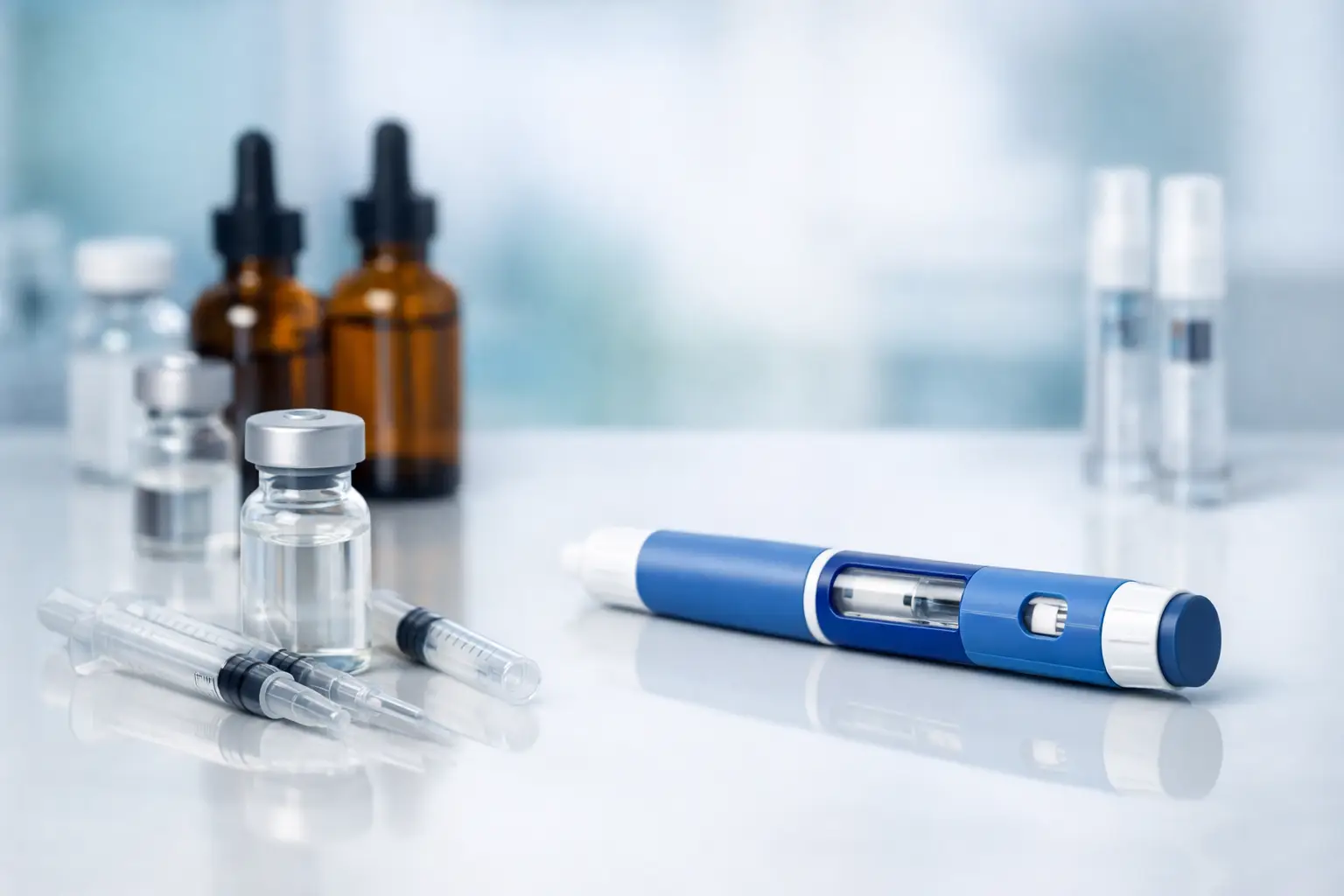


Semaglutide and tirzepatide can both require advance planning when you travel, including temperature control, medication supplies, injection timing, and a plan for possible gastrointestinal side effects. Neither medication is a universal travel winner: the better option depends on your health history, prescribed product, itinerary, access to refrigeration, and provider guidance.
Ready to find out if you qualify? Start Free Assessment — No payment required
Semaglutide vs tirzepatide travel considerations at a glance
Semaglutide is a glucagon-like peptide-1 receptor agonist, or GLP-1 receptor agonist. Tirzepatide activates both the glucose-dependent insulinotropic polypeptide and GLP-1 pathways. Both are prescription medications used for specific medical indications, and both may be prescribed on a weekly schedule depending on the product and treatment plan.
For travel, the most important differences are usually practical rather than simple rankings. A person who values a particular dosing routine, has a history of medication-related nausea, or will be away from reliable refrigeration may need a different plan from someone with a short domestic trip and easy access to medical care.
| Travel factor | Semaglutide | Tirzepatide | What to plan with your provider | |---|---|---|---| | Typical injection frequency | Often weekly for FDA-approved weight-management products | Often weekly for FDA-approved weight-management products | Confirm your exact product and day of administration | | Storage | Product-specific temperature and light requirements | Product-specific temperature and light requirements | Follow the official prescribing information for your formulation | | Airport screening | Carry-on transport is generally practical | Carry-on transport is generally practical | Keep medication in labeled packaging and bring documentation | | Missed dose planning | Instructions vary by product and timing | Instructions vary by product and timing | Do not improvise; ask what to do before departure | | Gastrointestinal effects | Nausea, vomiting, diarrhea, constipation, or abdominal discomfort may occur | Similar gastrointestinal effects may occur | Avoid starting or changing treatment immediately before an important trip when possible | | Compounded products | Some patients may receive a compounded preparation through a clinician | Some patients may receive a compounded preparation through a clinician | Compounded medications are not FDA-approved and have different sourcing and labeling considerations |
This table is a planning guide, not a treatment recommendation. Your provider determines whether either medication is appropriate and which prescribed product, dose, and schedule should be used.
Medication storage while traveling
Storage instructions are product-specific. FDA-approved semaglutide and tirzepatide products have official labeling that addresses refrigeration, room-temperature limits, light exposure, and how long a product may remain outside refrigeration. Those instructions can differ by brand, device, concentration, and presentation.
Before leaving, read the prescribing information for the exact medication you were prescribed. Do not assume that a storage rule for one product applies to another. Ask your provider or dispensing pharmacy whether your medication can remain at room temperature during a portion of the trip, what temperature range is acceptable, and what to do if it becomes frozen or overheated.
For air travel, keeping medication in your carry-on bag is generally preferable to checked luggage, where temperatures may be unpredictable and bags can be delayed. A small insulated travel case may help, but avoid placing the medication directly against frozen gel packs unless the product instructions specifically allow it. Freezing can damage some medicines. Do not use a product if you suspect it was frozen, overheated, damaged, or contaminated; contact your pharmacy or clinician for instructions.
If you use a compounded preparation, storage and beyond-use instructions come from the compounding pharmacy and prescription label. Compounded semaglutide or tirzepatide is not an FDA-approved product, and compounded medications should not be described as generic or equivalent versions of FDA-approved brand-name drugs. Confirm the pharmacy’s travel instructions before departure.
Injection timing and missed doses on the road
Weekly dosing may simplify travel because a single injection can cover much of a seven-day itinerary. However, a trip can cross time zones, overlap with your usual injection day, or make it difficult to access the medication. Write down the date and approximate time of your last dose before traveling, and carry the medication as directed.
Do not take an extra dose to compensate for a missed injection. Semaglutide and tirzepatide products have product-specific missed-dose instructions, including limits on how close doses should be. If you will be away when your next dose is due, contact your prescribing provider before leaving. Your provider may advise whether to take the dose while traveling, adjust the timing within labeled limits, or wait until you return.
Keep needles, syringes, alcohol swabs, and disposal supplies together if your prescribed presentation requires them. Do not place loose needles in a suitcase. A small sharps container or an approved alternative may be appropriate, depending on local rules and your product instructions. Never share injection devices, needles, or medication.
For international trips, check the destination’s medication-entry rules well in advance. Requirements may include the original labeled packaging, a copy of the prescription, a clinician letter, or limits on the amount of medication permitted. Rules can change, so consult the destination’s embassy, consulate, customs authority, or health ministry rather than relying only on general travel advice.
Side effects and trip timing
Both semaglutide and tirzepatide may cause gastrointestinal side effects, including nausea, vomiting, diarrhea, constipation, or abdominal discomfort. These effects may be more noticeable after treatment begins or after a dose increase, although experiences vary. A long flight, cruise, remote excursion, or event may be harder to manage if symptoms occur unexpectedly.
If possible, discuss travel before starting treatment or increasing a dose. Your provider may help you understand what to expect, how to maintain hydration, and when symptoms require medical attention. Do not change your dose, stop treatment, or use medication intended for another person to make travel easier.
Seek prompt medical advice for severe or persistent symptoms, inability to keep fluids down, signs of dehydration, severe abdominal pain, symptoms of an allergic reaction, or other concerning changes. If you have diabetes or use medicines that can lower blood glucose, ask your clinician how travel, meal changes, alcohol, activity, and your weight-management medication may interact with your broader plan.
Travel can also disrupt meals and sleep. Pack foods and fluids that fit your clinician’s recommendations, avoid assuming that a missed meal is harmless, and plan breaks during long journeys. Individual guidance is particularly important if you have a history of gallbladder disease, pancreatitis, kidney problems, diabetic retinopathy, or other conditions that may affect medication selection or monitoring.
A practical travel checklist
Use this checklist as a discussion aid with your provider and pharmacy:
- Confirm the exact medication name, dose, device, and injection day.
- Review the official storage requirements for that specific product.
- Ask what to do if a dose is missed, delayed, exposed to heat, or accidentally frozen.
- Pack medication, supplies, and documentation in your carry-on when appropriate.
- Keep medication in the original labeled packaging.
- Bring enough medication for the trip plus a plan for delays, as advised by your pharmacy.
- Pack a suitable sharps-disposal option if needed.
- Check airline, destination, and international customs requirements.
- Plan for nausea, vomiting, diarrhea, constipation, and hydration needs.
- Identify how to contact your prescribing provider while away.
- Know where to seek urgent care at your destination.
EdenRx provides access to information about weight loss online and GLP-1 weight loss programs, but eligibility, prescribing, and follow-up depend on a provider review. Services described may be available only to eligible patients in Florida and New York.
FDA-approved versus compounded medications
Travel planning depends on the product you actually receive. FDA-approved medications are manufactured, labeled, and distributed under an FDA-approved application for specific indications. FDA-approved semaglutide and tirzepatide products have official prescribing information that should guide storage, dosing, and missed-dose decisions.
Compounded medications are prepared by a compounding pharmacy under applicable federal and state requirements. They are not FDA-approved, and FDA does not review compounded drugs for safety, effectiveness, or quality before marketing in the same way it reviews approved products. A compounded preparation may have different concentration, packaging, labeling, storage, and beyond-use instructions. Patients should follow the dispensing pharmacy’s label and ask questions before traveling.
Do not transfer medication to an unlabeled container or assume that an FDA-approved product’s instructions apply to a compounded preparation. If you are unsure which type of product you received, contact the dispensing pharmacy or prescribing provider.
Choosing between semaglutide and tirzepatide for travel
Travel convenience should be one factor, not the only factor, in medication selection. A provider may consider your medical history, current medicines, treatment goals, contraindications, prior response, side-effect profile, insurance or cash-pay access, and ability to complete follow-up. The product’s approved indication also matters: not every formulation is approved for the same use.
Some travelers may prefer a weekly schedule that aligns with a predictable routine. Others may prioritize a medication plan that fits their previous treatment experience or medical needs. A provider may also recommend delaying initiation or dose escalation until after a major trip, when clinically appropriate. That decision should be individualized rather than based on online comparisons alone.
For broader education, review GLP-1 versus diet, explore available programs, or review pricing. These pages do not replace a clinician’s assessment.
Why Provider Review Matters
A provider review helps determine whether semaglutide, tirzepatide, another approach, or no medication is appropriate. The review may include health history, current medications, allergies, prior treatment response, relevant conditions, treatment goals, and practical factors such as upcoming travel.
Provider review is also important because the same travel plan can present different risks for different people. A person using insulin or a medication that can lower blood glucose may need a coordinated plan. Someone with significant gastrointestinal symptoms, kidney disease, a history of pancreatitis, gallbladder concerns, or a prior severe medication reaction may need additional evaluation. Pregnancy, plans for pregnancy, and breastfeeding also require specific medical discussion.
EdenRx is a provider-reviewed telehealth platform serving eligible patients in Florida and New York. A review does not guarantee eligibility, a prescription, or a particular medication. If prescribed, use the medication exactly as directed and maintain follow-up as recommended.
Evidence and authoritative sources
The travel guidance in this article is based on authoritative medication labeling and public health resources, including:
- U.S. Food and Drug Administration. Wegovy prescribing information, including dosing and storage instructions. https://www.accessdata.fda.gov/drugsatfda_docs/label/2024/215256s011lbl.pdf
- U.S. Food and Drug Administration. Zepbound prescribing information, including dosing and storage instructions. https://www.accessdata.fda.gov/drugsatfda_docs/label/2024/217806s009lbl.pdf
- U.S. Food and Drug Administration. FDA’s position and safety information concerning compounded drugs. https://www.fda.gov/drugs/human-drug-compounding/compounding-and-fda
- Centers for Disease Control and Prevention. Traveling with medicines and health-related travel planning. https://wwwnc.cdc.gov/travel/page/travel-abroad-with-medicines
Product labels and travel rules can change. Check the current prescribing information and destination requirements before departure.
Built from Eden Med Spa — real patients, real treatments.
Want a provider-reviewed plan before your next trip? Start Free Assessment — No payment required
Frequently Asked Questions
Is semaglutide or tirzepatide better for travel?
Neither is universally better for travel. Both may involve weekly dosing, storage requirements, possible gastrointestinal effects, and missed-dose planning. Your provider should select treatment based on your health history, prescribed product, treatment goals, and itinerary.
Can I bring semaglutide or tirzepatide on a plane?
Medication is generally best kept in your carry-on rather than checked luggage. Keep it in the original labeled packaging, follow the product’s storage instructions, and check airline and destination requirements. If you use needles or syringes, bring appropriate documentation and a safe disposal plan.
Can these medications be unrefrigerated while traveling?
The answer depends on the exact product and its labeling. FDA-approved products have specific temperature and time limits, while compounded preparations follow the dispensing pharmacy’s instructions. Ask your pharmacy before travel, and do not use medication that may have been frozen or overheated without professional guidance.
What should I do if I miss a dose while traveling?
Follow the missed-dose instructions for your exact product and contact your prescribing provider if you are unsure. Do not take an extra dose or change the schedule on your own. Timing limits can differ between products.
Should I start or increase a dose right before a vacation?
Discuss the timing with your provider. Because nausea and other gastrointestinal effects may occur after starting or increasing treatment, a provider may recommend a plan that considers the trip, your medical needs, and the importance of follow-up.
Are compounded semaglutide and tirzepatide the same as FDA-approved products?
No. Compounded medications are not FDA-approved and may have different labeling, concentrations, storage instructions, and beyond-use dates. Follow the dispensing pharmacy’s directions and ask your provider or pharmacist about travel requirements.
Conclusion
The best way to compare semaglutide vs tirzepatide travel considerations is to look beyond the medication name. Storage, dosing timing, missed-dose instructions, side effects, supplies, destination rules, and your individual health profile all matter. A provider-reviewed plan can help you decide whether treatment is appropriate and how to travel more safely if you are eligible.
Start your free assessment to learn whether EdenRx may be an option for you in Florida or New York. No payment is required to begin, and results and eligibility vary.