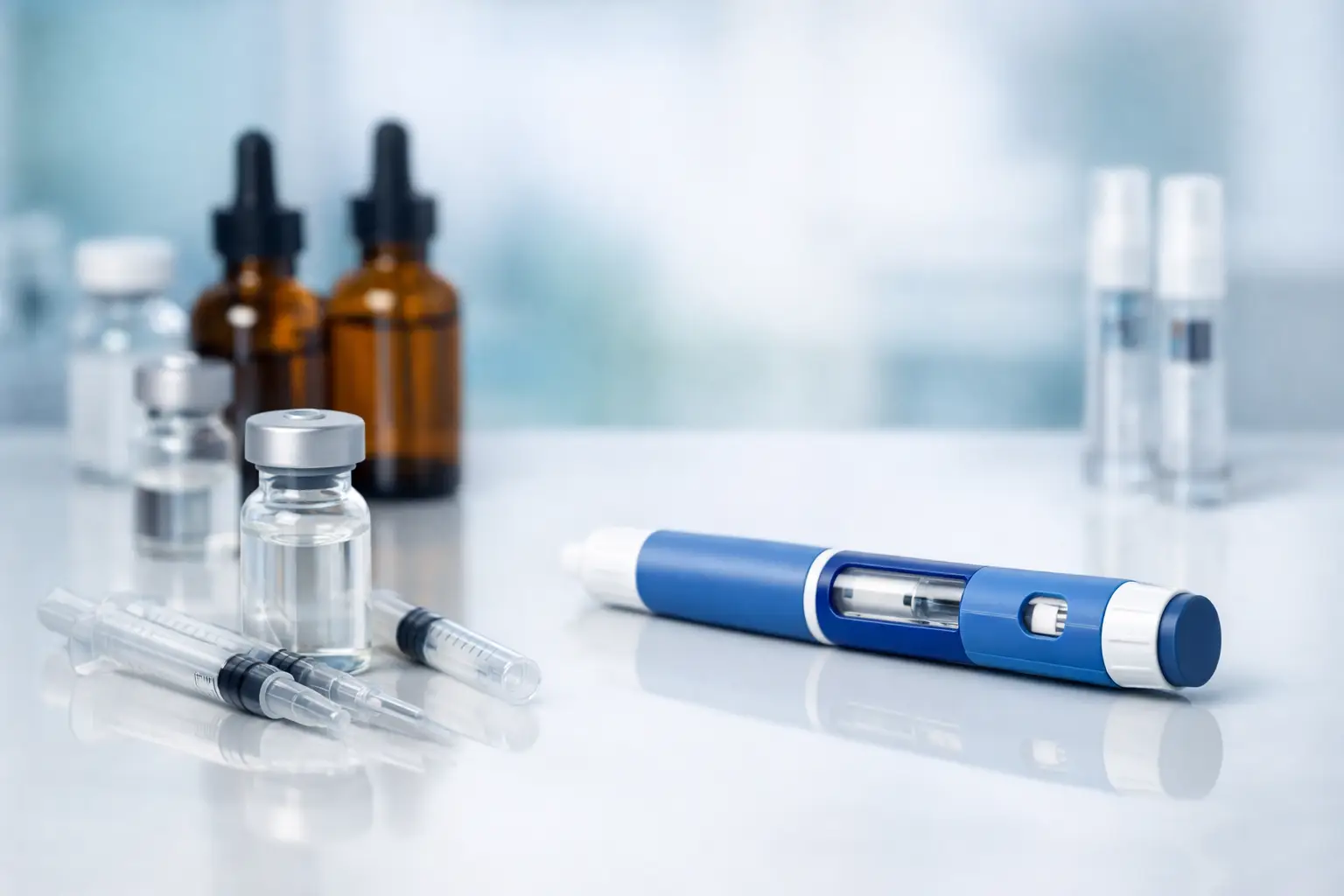


CJC-1295 / Ipamorelin cost varies by provider, formulation, dosing plan, clinical oversight, fulfillment method, and whether follow-up support is included. Because these compounds are commonly discussed in compounded or wellness settings and are not FDA-approved for marketed weight-loss uses, price should be evaluated alongside evidence, safety, eligibility, and transparency.
Ready to find out if you qualify? Start Free Assessment — No payment required
What can CJC-1295 / Ipamorelin cost include?
A quoted program price may represent several services rather than a vial alone. A responsible comparison should identify whether the fee includes a medical intake, provider review, prescription decision, pharmacy fulfillment, shipping, follow-up, and monitoring guidance.
CJC-1295 is a growth hormone-releasing hormone analogue, while ipamorelin is a growth hormone secretagogue. They are often discussed together because both may influence growth hormone signaling. That proposed mechanism does not establish that the combination is safe or effective for weight loss, body composition, or general wellness.
The CJC-1295 / Ipamorelin program hub provides product-specific context. Before considering any peptide program, review whether the service is appropriate for your health history and goals. A provider may determine that another approach, including an FDA-approved treatment when clinically appropriate, is more suitable.
Common components to compare
| Program component | Questions to ask | Why it matters | |---|---|---| | Clinical intake | Is a licensed clinician reviewing my history? | Peptides may not be appropriate with certain conditions, symptoms, or medicines. | | Provider fee | Is the medical evaluation included or billed separately? | A low advertised price may exclude consultation or follow-up costs. | | Medication or compound | What exactly is prescribed, and by which pharmacy? | Compounded products are not FDA-approved products and require careful review. | | Fulfillment | Are shipping, supplies, and refrigeration instructions included? | Handling and delivery requirements can affect the practical cost. | | Follow-up | Are check-ins, dose changes, or reassessments included? | Ongoing oversight can be important when a treatment is being considered. | | Cancellation and refills | What happens if eligibility changes or the prescription is not renewed? | Policies can prevent unexpected charges. |
Why advertised prices may differ
CJC-1295 / Ipamorelin cost may differ because programs use different service models. Some advertise a monthly package, while others separate the clinician visit, medication, shipping, and supplies. The amount and frequency prescribed can also vary, but a higher dose or longer supply should not be interpreted as better or more effective.
A transparent provider should explain what is included before payment. Ask whether the quoted price is recurring, whether the prescription is sent to a patient-selected or affiliated pharmacy, and whether pharmacy charges can change. You can also ask how the provider handles delays, damaged shipments, temperature concerns, missed doses, and treatment discontinuation.
EdenRx serves patients in Florida and New York through provider-reviewed telehealth services. The pricing page can help you understand available service information, while the programs page offers broader context about program options. Actual eligibility, clinical recommendations, and pricing may depend on the evaluation and selected service.
Compounded peptides versus FDA-approved medications
Compounded medications are prepared by a pharmacy for an individual prescription or a limited group of prescriptions. They are not FDA-approved products, and FDA does not review compounded drugs for safety, effectiveness, or quality before marketing in the same way it reviews approved medications. A compounded product should not be described as a generic version of, equivalent to, or interchangeable with an FDA-approved brand-name drug.
CJC-1295 and ipamorelin are not FDA-approved for weight loss. The regulatory status of a product, its source, formulation, and prescribing rationale should be clear. Patients should ask whether the clinician is recommending an approved medication, a compounded preparation, or a non-drug wellness service.
FDA has also warned that compounded drugs can carry risks related to contamination, incorrect strength, labeling, storage, and adverse reactions. These risks do not mean every compounded prescription is unsafe, but they support using a licensed clinician and a legitimate, appropriately regulated pharmacy.
For people exploring evidence-based medical weight management, online weight-loss care and the GLP-1 weight-loss program are separate pathways that may be discussed when clinically appropriate. GLP-1 medicines are not suitable for everyone, and they should not be presented as interchangeable with CJC-1295 or ipamorelin.
Evidence and proposed mechanism
CJC-1295 is designed to act on growth hormone-releasing hormone pathways, and ipamorelin is described as a growth hormone secretagogue that may stimulate growth hormone release. Growth hormone signaling is complex and does not directly establish meaningful or safe fat loss. Changes in laboratory markers or hormone levels would not by themselves prove improved health outcomes.
Human evidence for CJC-1295 and ipamorelin in routine weight-loss care is limited. Much of the public discussion involves small studies, indirect evidence, nonstandardized formulations, or claims that go beyond available clinical data. The evidence may not answer important questions about long-term safety, cardiovascular outcomes, body-composition changes, interactions, or which patients could benefit.
A provider-reviewed program should communicate this uncertainty rather than promise a specific result. It should also distinguish an investigational or compounded approach from therapies supported by larger clinical evidence and FDA-approved labeling for particular indications.
Authoritative evidence and safety sources
The U.S. Food and Drug Administration explains that compounded drugs are not FDA-approved and discusses risks associated with compounded medications. FDA also provides information about unapproved products marketed with unsupported medical claims. These resources are useful when evaluating peptide advertisements and pharmacy practices.
The National Library of Medicine's PubMed database contains peer-reviewed and indexed research on growth hormone-releasing compounds, but the existence of a publication does not prove that a specific compounded product is safe, effective, or appropriate for weight loss. Patients and clinicians should assess study design, population, formulation, outcomes, and duration rather than rely on a headline or testimonial.
Because formulations and patient circumstances vary, evidence review should occur alongside an individualized medical assessment. No online article can determine whether CJC-1295, ipamorelin, another medication, or no medication is appropriate for a particular person.
Safety questions to discuss before enrolling
Potential safety concerns depend on the compound, dose, route, formulation, medical history, and other medicines. Growth hormone-related effects may be clinically important, and the long-term safety profile of these peptide combinations for wellness or weight loss remains uncertain. Possible symptoms or risks should be discussed with a qualified clinician rather than self-treated.
Before enrollment, disclose endocrine disorders, cancer history, diabetes, sleep-related breathing problems, heart or kidney conditions, pregnancy or breastfeeding, prior reactions, and all prescription or nonprescription products. Ask what symptoms require urgent care and how adverse effects will be reported.
A program should not encourage purchasing research-use products for human use, changing doses without instructions, sharing medication, or using a product with unclear storage or labeling. If a prescription is not appropriate, a legitimate provider should explain that decision and discuss safer next steps.
Who may need a different weight-loss pathway?
Eligibility is not based only on a desired number on the scale. A clinician may consider body measurements, weight-related conditions, current medicines, prior treatment attempts, eating patterns, mental health, pregnancy status, and other health factors. The who qualifies for weight-loss medication guide explains common clinical considerations, but only an individualized evaluation can determine eligibility.
Some patients may benefit from nutrition, activity, sleep, behavioral support, an FDA-approved medication, or a combination of approaches. Others may have symptoms that require in-person examination or laboratory testing. If a telehealth evaluation cannot safely answer the relevant questions, the provider may recommend in-person care.
Why Provider Review Matters
Provider review helps connect a treatment request with the patient's actual health history. A licensed clinician can evaluate contraindications, review current medications, discuss evidence limitations, determine whether a compounded preparation is appropriate, and explain alternatives. The clinician may also decide that treatment should not begin or should be stopped.
Telehealth does not eliminate the need for medical judgment. A responsible process should include identity and history verification, a clinical assessment, informed discussion of risks and benefits, prescription review when relevant, and follow-up instructions. Patients should know how to contact the care team and what happens if symptoms, lab results, or eligibility change.
At EdenRx, the assessment is designed to support provider review for eligible patients in Florida and New York. Starting with the free assessment does not guarantee a prescription, approval, or particular outcome. Results vary, and the clinician's recommendation is based on the information available and the patient's individual needs.
Built from Eden Med Spa — real patients, real treatments.
A practical CJC-1295 / Ipamorelin cost checklist
Before enrolling, confirm:
- The total upfront and recurring price.
- Whether provider evaluation and follow-up are included.
- Whether medication, supplies, and shipping are separate charges.
- The dispensing pharmacy and how it is licensed for your state.
- Whether the product is compounded and how that status is explained.
- Storage, administration, missed-dose, and disposal instructions.
- How adverse effects and urgent concerns are handled.
- Refill, cancellation, refund, and prescription-transfer policies.
- Whether the program has a clear alternative if the requested peptide is not appropriate.
These questions help you compare the full value of care rather than comparing a headline monthly number. The lowest price may not include the clinical services needed for safe decision-making, while a higher price does not prove superior quality.
Still comparing options? Review your choices with a provider — Start with a free assessment.
Frequently Asked Questions
How much does CJC-1295 / Ipamorelin cost?
There is no single national price. CJC-1295 / Ipamorelin cost may depend on provider review, formulation, prescription amount, pharmacy, shipping, follow-up, and supplies. Ask for an itemized total and confirm which charges recur.
Does the price include a medical evaluation?
Not always. Some programs include an intake and provider review, while others charge separately. Confirm whether the evaluation, prescription decision, follow-up, and medication fulfillment are included before enrolling.
Is CJC-1295 or ipamorelin FDA-approved for weight loss?
No. CJC-1295 and ipamorelin are not FDA-approved for weight loss. Compounded preparations are not FDA-approved products, and FDA does not review them for safety, effectiveness, or quality before marketing as it does approved drugs.
Are compounded peptides the same as brand-name medications?
No. A compounded preparation should not be described as the same as, generic to, equivalent to, or interchangeable with an FDA-approved brand-name medication. The formulation, oversight, evidence, and regulatory status may differ.
Can I get CJC-1295 / Ipamorelin through telehealth in Florida or New York?
A telehealth provider may evaluate patients in Florida or New York, but eligibility and prescribing decisions are individualized. An assessment does not guarantee a prescription, and the provider may recommend another option or in-person care.
What should I do if a program promises guaranteed weight loss?
Be cautious. Weight-loss outcomes vary, and no responsible provider should guarantee a result. Ask for evidence, safety information, total pricing, pharmacy details, and the clinician's qualifications before making a decision.
Conclusion
CJC-1295 / Ipamorelin cost is only one part of a meaningful comparison. Look for transparent pricing, qualified provider review, clear pharmacy and fulfillment information, honest discussion of limited evidence, and a plan for follow-up and safety. If you are in Florida or New York, start a free assessment to learn whether a provider-reviewed weight-management option may be appropriate for you.