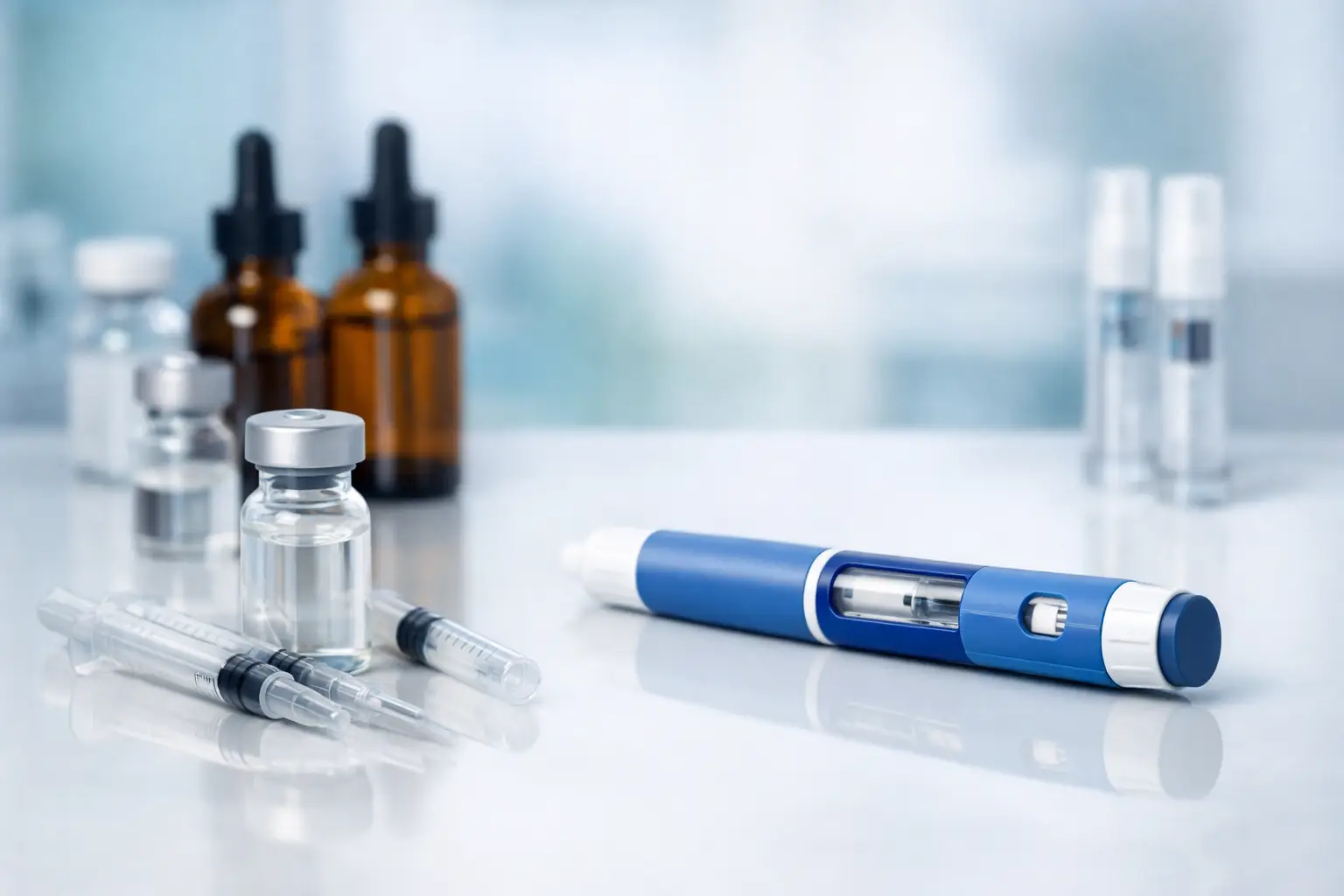
Peptide therapy in Cape Coral, FL may provide targeted support for metabolic health, recovery, and wellness through short chains of amino acids that signal specific biological processes. If eligible, patients can access a provider-reviewed online program that pairs remote medical oversight with individualized treatment planning.
Ready to find out if you qualify? Start Free Assessment — No payment required
What is peptide therapy and what compounds are used?
Peptide therapy uses small chains of amino acids called peptides that act as signaling molecules in the body. Common therapeutic peptides used in clinical and wellness settings include growth hormone–releasing peptides, melanocortin peptides, BPC-157, and others; each peptide targets different pathways such as metabolism, inflammation, tissue repair, or appetite regulation.
Compounded peptides are often prepared by licensed pharmacies to create the exact formulation and dosage appropriate for a patient’s needs. In a medical program, compounding follows state and federal guidelines and is combined with clinical oversight, lab monitoring, and follow-up care to help manage safety and efficacy expectations.
Mechanism: how peptides work in the body
Peptides work by binding to specific receptors on cells to trigger or modulate biological responses. For example, some peptides may promote the release of growth hormone from the pituitary, others may support tissue repair or reduce inflammation, and certain peptides may influence appetite or metabolic signaling.
These effects are typically modulatory rather than curative: peptides may potentially enhance natural physiological processes, and any clinical or wellness benefits vary by individual, dosing, and concurrent health factors. As such, outcomes should be viewed as potential improvements rather than guaranteed results.
Safety profile and clinical monitoring
Peptide therapy may be generally well tolerated when prescribed and supervised by qualified medical providers, but it is not without risks. Potential side effects depend on the specific peptide and route of administration and can include injection-site reactions, changes in appetite, fluid retention, or hormonal shifts that require monitoring.
A provider-reviewed program will typically require an initial medical history review, baseline labs, and periodic follow-up testing to check safety markers and treatment response. At EdenRx, remote medical oversight helps ensure that compounded peptides are used if eligible and that any adverse effects are promptly addressed. For pricing and program options, see /pricing and /programs.
Who may benefit from peptide therapy?
Peptide therapy may be considered by adults seeking targeted support for specific wellness goals such as recovery from musculoskeletal injury, improved metabolic function, or adjunct support for weight and appetite regulation. Candidates are evaluated on medical history, current medications, lab results, and overall treatment goals.
Not everyone is a candidate: individuals with certain active medical conditions, pregnancy, or uncontrolled illnesses may be advised against peptide therapy. In Florida and New York, eligibility is determined via medical review; begin with a free screening at /assessment to learn if you may qualify.
How the EdenRx online provider-reviewed program works
EdenRx offers an online model that combines a free assessment, provider review, and coordination with licensed compounding pharmacies when appropriate. After completing /assessment, a medical provider reviews your medical history and labs to determine if peptide therapy is a suitable option, and then discusses dosing, monitoring, and expected timelines.
Our program is integrated into broader telehealth services including weight-loss options such as /online-weight-loss-florida and education on related therapies like /semaglutide-florida or comparisons such as /semaglutide-vs-tirzepatide. This helps patients consider peptides in the context of a comprehensive wellness plan rather than as a standalone solution.
Why Provider Review Matters
Provider review ensures that peptide therapy is offered only when medically appropriate and that risks are minimized through clinical oversight. A qualified provider evaluates interactions with existing medications, contraindications, and necessary lab monitoring to reduce the likelihood of adverse events.
Provider-reviewed programs also help ensure that compounded peptides come from licensed pharmacies and that dosing regimens follow evidence-informed protocols. Because peptide therapy may affect hormones and metabolic pathways, this oversight is especially important for safety and for setting realistic expectations about potential outcomes.
Built from Eden Med Spa — real patients, real treatments.
Ready to take the next step? Start Free Assessment — No payment required
Frequently Asked Questions
Q: What is the difference between peptide therapy and prescriptions like semaglutide? A: Peptides are short amino-acid chains that signal specific receptors, while medications like semaglutide are single-molecule drugs with defined mechanisms for appetite and glucose regulation. Both may be part of a broader program; compare options at /semaglutide-vs-tirzepatide and learn about semaglutide availability at /semaglutide-florida.
Q: Is peptide therapy legal and available in Florida? A: Yes, peptide therapy can be legally prescribed in Florida when indicated by a licensed provider and compounded by a licensed pharmacy. EdenRx operates in Florida and New York with provider review to ensure compliance and safety.
Q: How do I know if I am eligible? A: Eligibility is determined through a medical review that includes your health history, medications, and labs. Start with a free screening at /assessment to see if you may qualify.
Q: Are there guaranteed results? A: No therapy can guarantee results. Peptide therapy may potentially support certain biological functions, but outcomes vary by individual, dosing, and health status.
Q: What kind of monitoring is required? A: Monitoring may include baseline labs, periodic blood work, symptom check-ins, and follow-up telehealth visits to assess safety and make dose adjustments when needed. Your provider will outline a monitoring plan if eligible.
Q: How much does peptide therapy cost? A: Costs depend on the specific peptide, dosing schedule, compounding pharmacy fees, and clinical follow-up. See /pricing for typical program fees and /programs for bundled options.
Conclusion
Peptide therapy in Cape Coral, FL may offer a targeted, provider-reviewed option for people seeking adjunctive support for metabolic health, recovery, or specific wellness goals. Because outcomes vary and safety monitoring is important, a medical review is required to determine eligibility and to design an individualized plan.
If you re interested in exploring whether peptide therapy may be appropriate for you, start with a free medical screen today. Start Free Assessment — No payment required