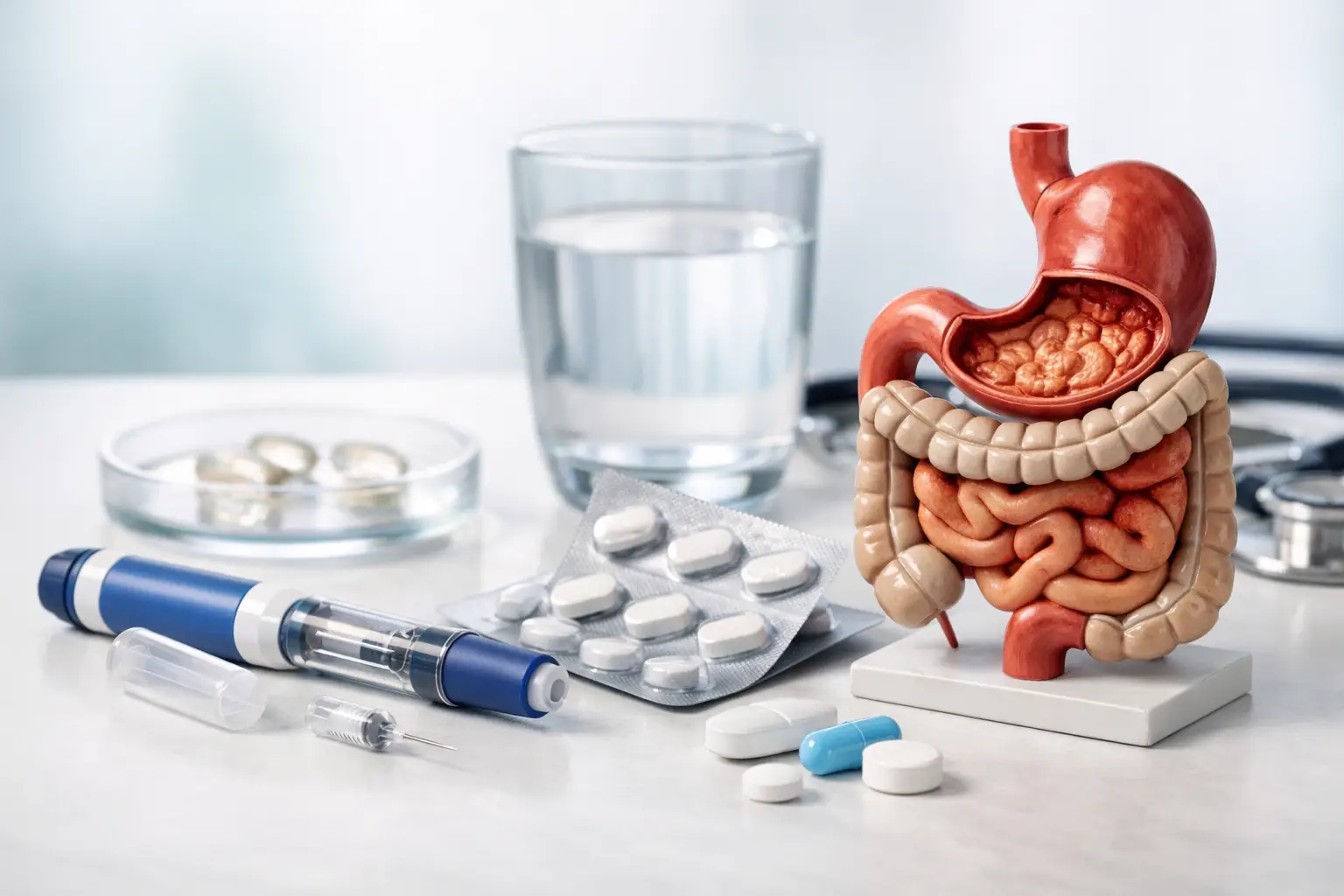


Early data suggest targeted amino acid supplementation and L-carnitine may help limit muscle loss in people taking GLP-1 medications, but evidence remains preliminary and results vary. Always discuss options with a provider to determine what may be appropriate for you if eligible in Florida or New York.
Ready to find out if you qualify? Start Free Assessment — No payment required
Understanding GLP-1 Therapies and Muscle Loss
GLP-1 receptor agonists (GLP-1 RAs) such as semaglutide and tirzepatide are prescribed for weight management and diabetes because they reduce appetite and improve glycemic control. Weight loss from these medications often includes both fat and some lean mass. The degree of lean mass loss can depend on baseline muscle mass, the rate of weight loss, dietary protein intake, and activity levels.
Because preserving functional muscle is important for strength, metabolism, and long-term health, clinicians and patients are exploring adjunct strategies to protect lean mass while benefiting from GLP-1 therapies. If you are considering or already enrolled in a program, learn more about options at /glp1-weight-loss-program or how our /weight-loss-online services can support lifestyle components alongside medication.
Amino Acids: Role, Mechanism, and Evidence
Amino acids are the building blocks of protein and play a central role in muscle protein synthesis (MPS). Essential amino acids, especially leucine, activate the mTOR signaling pathway that stimulates MPS. Supplementing with a high-quality amino acid formula or increasing dietary protein can potentially offset some muscle loss seen with rapid weight reduction.
Clinical data specifically studying "GLP-1 muscle loss amino acid L-carnitine" combinations are limited. However, trials in other weight-loss contexts show that higher protein intake and amino acid supplements can reduce the proportion of lean mass lost. A provider can help tailor protein goals and recommend evidence-based amino acid supplements if appropriate; see /who-qualifies-for-weight-loss-medication for eligibility and coordination with medical care.
L-Carnitine: What It Is and How It Might Help
L-carnitine is a naturally occurring compound involved in fatty acid transport into mitochondria, supporting energy production. It has been studied for potential benefits in fatigue, exercise recovery, and as an adjunct in weight-management settings. The proposed mechanism for muscle protection includes improved energy metabolism and decreased muscle oxidative stress, which may support workout tolerance during caloric restriction.
Evidence for L-carnitine reducing muscle loss specifically in people on GLP-1 therapies is sparse and mixed. Some small studies suggest modest benefits for preserving muscle biomarkers during weight loss, while others show little effect. Safety is generally favorable at typical oral doses, but gastrointestinal side effects and interactions with certain medications are possible. Discuss dosing, timing, and monitoring with your clinician, especially if you are enrolled in one of our /programs.
Combining Supplements with GLP-1s: Practical Guidance
If you and your provider decide to trial amino acids or L-carnitine while on GLP-1 therapy, a few practical steps can improve the likelihood of benefit. Prioritize daily protein targets (often 1.0–1.6 g/kg body weight depending on age and activity), distribute protein across meals, and consider an essential amino acid or whey supplement around resistance exercise to stimulate MPS. Resistance training is a powerful complement and should be part of any plan to preserve muscle.
For L-carnitine, common oral doses range from 500–2,000 mg/day in research settings; however, individual needs vary. Avoid assuming higher doses are more effective. Work with a provider to assess potential interactions, underlying kidney or liver issues, and to determine safe supplementation relative to your prescribed GLP-1. Our care pathways at /programs and /pricing outline how medication management and lifestyle counseling can be coordinated.
Who May Benefit and Safety Considerations
People most likely to benefit from amino acid or L-carnitine supplementation are those who are losing weight rapidly, have low baseline protein intake, are older adults at higher risk of sarcopenia, or those unable to maintain resistance exercise. Patients with stable kidney disease, certain metabolic conditions, or on interacting medications should use caution and require individualized assessment.
Safety profiles differ: well-formulated amino acid supplements are generally safe when used within recommended amounts, though gastrointestinal upset or imbalanced nutrient intake can occur. L-carnitine is usually tolerated but can cause nausea, diarrhea, and rare metabolic effects. Both supplements should be evaluated in the context of your overall treatment plan and monitored by a clinician — start with a review at /assessment to confirm eligibility and safety for supplementation.
Why Provider Review Matters
Supplement choices should be integrated into a broader medical plan. A provider-reviewed approach ensures supplements won’t interact with prescription medications, considers renal or hepatic function, and personalizes dosing based on age, activity, and goals. At EdenRx, medical oversight is part of coordinating pharmacotherapy and lifestyle interventions so you get an individualized strategy rather than one-size-fits-all advice.
If you are curious about combining supplements with GLP-1 therapy, a medical review can also help set realistic expectations. No supplement is a guaranteed cure; potential benefits may be modest and vary by person. Book a free screening at /assessment to see if you may benefit and how it can fit into your treatment plan.
Built from Eden Med Spa — real patients, real treatments.
Ready to find out if you qualify? Start Free Assessment — No payment required
Frequently Asked Questions
Q: Can amino acids completely prevent muscle loss on GLP-1s? A: No. Amino acids may help reduce the amount of muscle lost by supporting protein synthesis, but they do not guarantee complete prevention. Results vary by diet, exercise, age, and medication dose.
Q: Is L-carnitine safe to take with GLP-1 medications? A: L-carnitine is generally considered safe for many people, but safety depends on your individual health profile. Discuss with an EdenRx provider to review interactions and appropriate dosing if eligible.
Q: Which amino acids are most important for muscle preservation? A: Essential amino acids, especially leucine, are key drivers of muscle protein synthesis. A balanced high-quality protein intake or essential amino acid supplement timed with resistance training tends to be most effective.
Q: Should I stop my GLP-1 if I’m worried about muscle loss? A: Decisions about prescription medications should be made with your clinician. GLP-1s provide proven benefits for weight and metabolic health; a provider can adjust your plan to mitigate muscle loss rather than stopping therapy without review.
Q: How do I know if I should add supplements or change my program? A: Start with a clinical assessment. Our /who-qualifies-for-weight-loss-medication and /assessment pages offer ways to evaluate eligibility. Providers can recommend tailored protein goals, exercise prescriptions, and supplement options.
Q: Will insurance cover supplements or assessments? A: Coverage varies. Our /pricing page and care team can help you understand costs and any potential coverage; supplements are often an out-of-pocket expense.
Conclusion
Amino acid supplementation and L-carnitine may offer potential support for preserving lean mass in people taking GLP-1 therapies, but evidence is preliminary and individual responses differ. The safest, most effective approach pairs nutritional strategies, resistance exercise, and provider oversight. If you are in Florida or New York and curious whether these options may be appropriate, start with a clinical review to determine if you are eligible and to build a personalized plan.
Ready to take the next step? Start Free Assessment — No payment required
For program details and enrollment options, visit our GLP-1 and weight-loss pages: /glp1-weight-loss-program, /weight-loss-online, /programs.