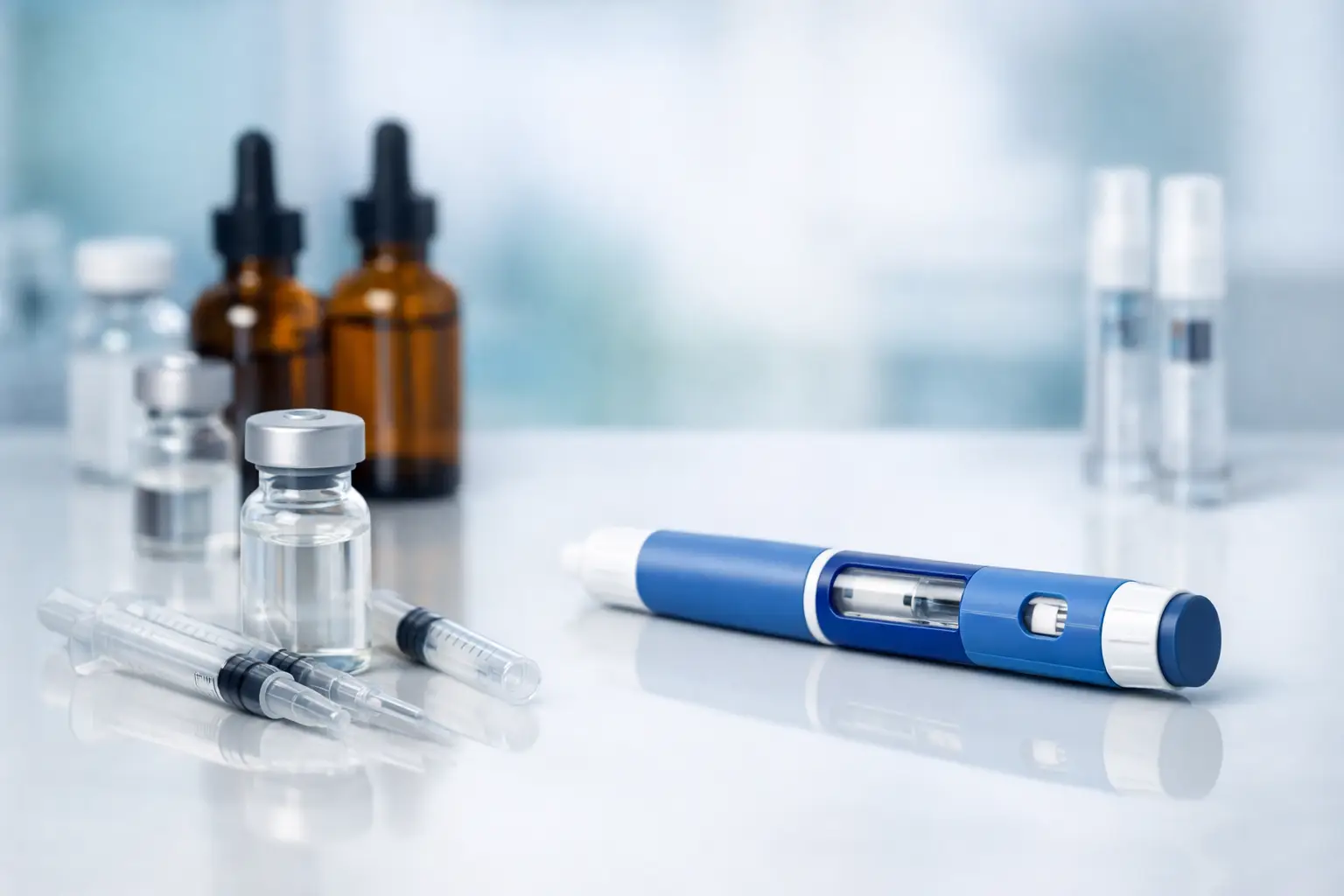


Vitamin injections in Jamaica NY may help address certain nutrient deficiencies and support wellness when administered under medical supervision. If eligible, a provider-reviewed program can tailor injections to your needs and monitor safety.
Ready to find out if you qualify? Start Free Assessment — No payment required
What are vitamin injections and how do they differ from oral supplements?
Vitamin injections are formulations of vitamins and cofactors delivered by intramuscular or subcutaneous injection. Common compounds include vitamin B12 (methylcobalamin or cyanocobalamin), B-complex blends, vitamin D, MIC (methionine, inositol, choline) mixes, and antioxidants such as glutathione. Because injections bypass the digestive tract, they potentially offer higher and more consistent bioavailability than oral supplements for people with malabsorption or digestive issues.
In a provider-reviewed telehealth program, a licensed clinician evaluates your health history, labs, and medications before recommending injections. This medical oversight helps identify who may benefit, prevents unsafe combinations, and determines appropriate dosing frequency. Online programs can often coordinate local administration or provide trained staff to deliver injections in-clinic.
Common compounds explained: what’s in the vials?
Vitamin B12 supports red blood cell formation and energy metabolism; methylcobalamin is a commonly used biologically active form. B-complex injections combine B1, B2, B3, B5, B6, B9 (folate), and B12 to support metabolic pathways, nervous system function, and cellular energy production. Vitamin D injections address deficiency that may not respond well to oral dosing in some individuals.
MIC injections contain methionine, inositol, and choline — nutrients involved in methylation and fat metabolism pathways. Glutathione injections are sometimes used as an antioxidant therapy to support detoxification processes. Each compound has distinct biochemical roles; a provider will recommend combinations based on lab results, diet, symptoms, and overall health goals.
Mechanism of action: how injections work in the body
By delivering nutrients directly into muscle or subcutaneous tissue, injections bypass first-pass digestive metabolism and variable gut absorption. This can rapidly increase serum levels of specific vitamins and cofactors, providing a reliable therapeutic concentration when oral routes are ineffective or impractical. For example, B12 injections provide a direct substrate for cellular processes involved in energy production and red blood cell synthesis.
Some formulations aim to support metabolic pathways rather than "burn fat" directly: MIC components participate in methylation and lipid transport, which may potentially support healthy metabolism as part of a broader lifestyle plan. Injections are an adjunct to diet, exercise, and evidence-based medical therapies and are best used when there is a demonstrated need or deficiency.
Safety profile and what to expect during treatment
Vitamin injections are generally well tolerated when provided by licensed healthcare professionals. Common mild effects include injection-site soreness, bruising, or temporary redness. More significant risks are rare but can include allergic reactions to an injectable component, infection at the injection site if sterile technique is not used, or systemic reactions if doses exceed recommended levels.
A provider-reviewed program screens for contraindications such as allergies, interactions with medications, pregnancy, or certain medical conditions. Baseline labs may be recommended to confirm deficiency and guide dosing. Always inform your provider of all supplements and medications you take; some injections can interact with prescription drugs or exacerbate pre-existing conditions.
Who may benefit from vitamin injections in Jamaica NY?
People with documented nutrient deficiencies — such as low B12 or vitamin D confirmed by blood tests — may potentially benefit from injections if oral supplements are ineffective or poorly absorbed. Individuals with gastrointestinal malabsorption (for example after bariatric surgery), strict dietary restrictions, chronic gastrointestinal conditions, or age-related absorption changes are common candidates for injectable therapy.
Others seeking a complementary approach to support energy, mood, or metabolic comfort may be evaluated for appropriateness, but injections are not a universal solution. In Florida and New York, telehealth programs that are provider-reviewed can help determine candidacy and coordinate in-person administration when required. If eligible, a personalized plan may be recommended in conjunction with lifestyle measures.
Why Provider Review Matters
Provider review ensures clinical oversight: licensed clinicians assess medical history, perform or order relevant labs, and screen for contraindications before recommending vitamin injections. This reduces risk from inappropriate dosing, interactions, and overlooked medical issues. In a provider-reviewed telehealth model, you receive individualized recommendations rather than a one-size-fits-all protocol.
Provider oversight also enables monitoring and follow-up. Dosage adjustments, interval changes, or discontinuation can be made based on response and lab results. For residents of Jamaica NY, enrolling in a provider-reviewed program helps align injectable therapy with regional medical standards and ensures that care is coordinated and documented.
Built from Eden Med Spa — real patients, real treatments.
Ready to start? Start Free Assessment — No payment required
What a typical evaluation and treatment plan looks like
After you begin with an online assessment, a licensed clinician reviews your responses, medical history, and any available labs. If injections are potentially appropriate, the provider may recommend baseline bloodwork (for example, serum B12 and vitamin D levels) to verify deficiencies and tailor dosing. The plan will include frequency of injections and safety monitoring recommendations.
Administration options vary: some programs coordinate local clinics or medspa visits for injections, while others provide guidance for self-administration under supervision when appropriate and legally permitted. Pricing, package options, and program details are typically available through official program pages — see our /pricing and /programs pages for options and transparency.
Integrating injections with other weight and wellness programs
Vitamin injections are sometimes used alongside broader weight-management or metabolic programs but should not be presented as a sole therapy for weight loss. If you are exploring medical weight-loss medications like tirzepatide or semaglutide, discuss combined approaches with your provider. Learn about related options at /tirzepatide-new-york, /online-weight-loss-new-york, and comparison information at /semaglutide-vs-tirzepatide.
A coordinated plan ensures safety and maximizes potential benefits: injections can complement nutrition support, activity, and prescription therapies when guided by a clinician. Always follow your provider’s instructions and scheduled follow-ups to assess efficacy and safety.
Frequently Asked Questions
Q: Are vitamin injections safe?
A: When administered or recommended by a licensed provider, vitamin injections are generally safe. Risks include local irritation, infection, or allergic reaction. A provider-reviewed program screens for contraindications and monitors for adverse effects.
Q: How quickly do injections work?
A: Response time varies by compound and individual health status. Some people notice changes in energy within days with B12 injections if they were deficient; others may require weeks. Results vary and are not guaranteed.
Q: Do I need blood tests before starting injections?
A: Many providers recommend baseline labs (e.g., serum B12, vitamin D) to document deficiency and guide dosing. Lab testing helps determine who may benefit and avoids unnecessary or excessive dosing.
Q: Can I use vitamin injections with weight-loss medications?
A: Possibly, but coordination with your prescribing clinician is essential. Discuss any injectable vitamins when considering medications like tirzepatide; see /tirzepatide-new-york and /semaglutide-vs-tirzepatide for context. A provider-reviewed plan helps prevent interactions and overlapping side effects.
Q: How often are injections given?
A: Frequency depends on the nutrient, baseline levels, and clinical goals. Some schedules are weekly, biweekly, or monthly. Your provider will recommend a schedule if eligible and will adjust based on response and labs.
Q: Can anyone in Jamaica NY get these injections through telehealth?
A: Telehealth evaluation is available, but eligibility depends on medical history, exam findings, and local practice regulations. Residents of New York and Florida may be eligible through provider-reviewed programs; final decisions are made by licensed clinicians.
Conclusion
Vitamin injections in Jamaica NY can be a useful, provider-reviewed option for addressing certain deficiencies and supporting wellness when used as part of a comprehensive care plan. They are not a cure and should be used with clinical oversight, appropriate testing, and realistic expectations. If you live in New York and are curious whether you may qualify, a telehealth assessment is a convenient first step.
Ready to find out if you qualify? Start Free Assessment — No payment required
Explore program details, pricing, and related services at /programs and /pricing. For weight-management integration, see /online-weight-loss-new-york and our tirzepatide resources at /tirzepatide-new-york.