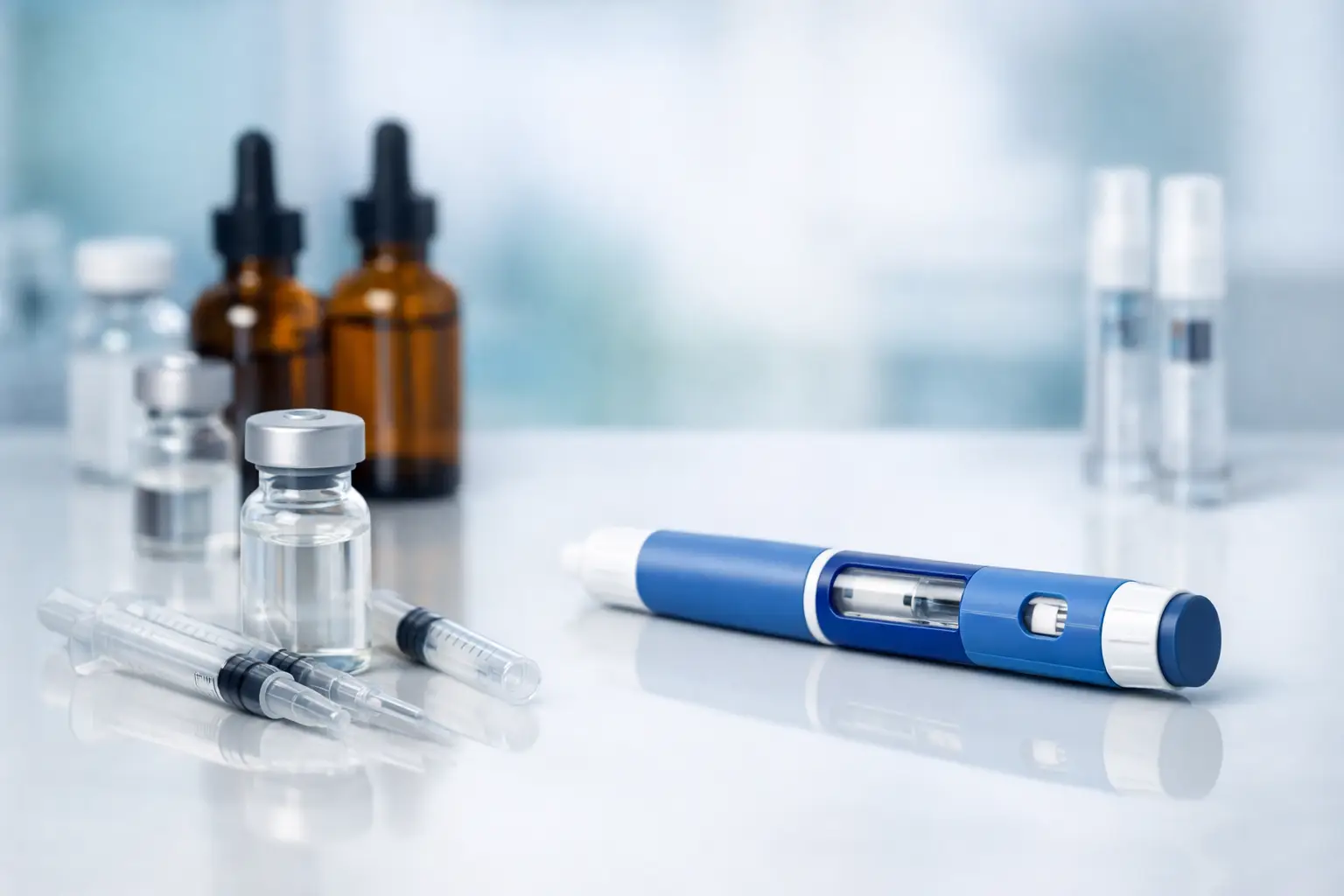


Peptide therapy may support the body's natural hormone signaling pathways, including those involved in testosterone production, making it a topic of growing interest in men's and women's wellness. While results vary and no outcomes are guaranteed, understanding the relationship between specific peptides and testosterone levels can help patients make more informed decisions alongside their healthcare provider.
Ready to find out if you qualify? Start Free Assessment — No payment required
What Is Peptide Therapy?
Peptides are short chains of amino acids — the building blocks of proteins — that act as biological messengers throughout the body. Unlike synthetic hormones that directly replace what the body may be lacking, therapeutic peptides are designed to signal the body's own systems to respond in specific ways, such as stimulating the release of growth hormone, supporting recovery, or potentially influencing hormonal balance.
In a clinical context, peptide therapy involves the administration of carefully selected peptide compounds, often via subcutaneous injection or other delivery methods, to target specific physiological pathways. At EdenRx, peptide-based approaches are always provider-reviewed to ensure they align with each patient's individual health profile, goals, and eligibility. If you're curious whether you may be a candidate, our assessment tool is a great starting point.
How Peptides May Influence Testosterone Levels
Certain peptides — most notably those in the growth hormone secretagogue category, such as Sermorelin, Ipamorelin, and CJC-1295 — may indirectly influence testosterone levels by stimulating the pituitary gland and hypothalamic-pituitary-gonadal (HPG) axis. This axis is the master regulatory system controlling testosterone production in both men and women. When signaling along this axis is optimized, the body may produce hormones more efficiently, including testosterone.
Additionally, peptides that support IGF-1 (insulin-like growth factor 1) production may help create an anabolic environment in which testosterone can function more effectively at the cellular level. It's important to note that peptide therapy is not a direct testosterone replacement and is not intended to treat hypogonadism on its own. Rather, it may serve as a complementary tool within a broader, provider-guided wellness strategy. Results vary significantly from person to person, and eligibility must be determined by a licensed provider.
The Role of Growth Hormone-Releasing Peptides
Growth hormone-releasing peptides (GHRPs) and growth hormone-releasing hormone (GHRH) analogs are among the most studied classes of peptides in relation to hormonal wellness. Compounds like Ipamorelin are considered selective, meaning they may stimulate growth hormone release without significantly spiking cortisol or prolactin — hormones that can negatively affect testosterone production when chronically elevated.
By potentially raising growth hormone and IGF-1 levels, GHRPs may support a more favorable hormonal environment. For men experiencing age-related declines in both growth hormone and testosterone, this dual influence may be particularly relevant. However, it's critical to understand that these compounds are not FDA-approved treatments for low testosterone, and any therapeutic use should occur under licensed medical supervision. EdenRx's programs are designed with exactly this kind of provider oversight built in.
Safety Profile: What Patients Should Know
Peptide therapy, when administered under proper medical supervision, generally carries a favorable safety profile compared to more aggressive hormonal interventions. Common reported side effects of growth hormone secretagogues may include mild water retention, temporary flushing, or injection site reactions. More serious adverse effects are uncommon when dosing protocols are followed correctly, but individual responses can vary.
Because peptides work with the body's existing signaling systems rather than overriding them, the risk of suppressing the body's natural hormone production — a well-known concern with exogenous testosterone therapy — is considered lower. That said, compounded peptide formulations, which are common in telehealth settings, require additional scrutiny regarding source quality and purity. At EdenRx, all compounded therapies go through a provider-review process to help ensure patient safety. You can learn more about who qualifies for weight loss medication and related peptide programs on our site.
Who May Benefit from Peptide Therapy for Hormonal Support?
Adults who may potentially benefit from peptide therapy in relation to testosterone and hormonal wellness include men experiencing age-related declines in energy, muscle mass, or libido — often associated with suboptimal testosterone or growth hormone levels — as well as women navigating hormonal shifts during perimenopause or menopause. Individuals who are not ideal candidates for traditional testosterone replacement therapy (TRT) due to fertility concerns, contraindications, or personal preference may also find peptide-based approaches worth exploring with a provider.
Eligibility is determined on a case-by-case basis and depends on medical history, current hormone levels, lifestyle factors, and overall health status. Patients with certain conditions — including active cancer, pituitary disorders, or uncontrolled diabetes — may not be appropriate candidates. If you're wondering whether peptide therapy aligns with your wellness goals, our online weight loss and wellness programs and GLP-1 weight loss program pages offer additional context, and our pricing page breaks down what to expect financially.
Why Provider Review Matters
The growing popularity of peptide therapy has led to a surge in unregulated online offerings, making provider oversight more important than ever. Compounded peptides purchased without a prescription or from unverified sources carry real risks — including contamination, incorrect dosing, and the absence of any follow-up monitoring. A licensed provider review is not a formality; it is a foundational safety mechanism that ensures therapy is appropriate for the individual patient.
At EdenRx, every patient undergoes a structured intake and assessment process reviewed by licensed medical professionals before any therapy is recommended or dispensed. This includes a review of health history, current medications, and relevant labs where applicable. Our platform is built to make provider-reviewed care accessible — not to bypass the clinical judgment that protects patients. Built from Eden Med Spa — real patients, real treatments.
Wondering if peptide therapy may be right for you? Take the Free Assessment and get a provider-reviewed recommendation — no payment required to start.
Frequently Asked Questions
Can peptide therapy replace testosterone replacement therapy (TRT)? Peptide therapy is not a replacement for TRT and is not approved to treat diagnosed hypogonadism. It may potentially support the body's natural hormonal signaling, but it works through different mechanisms. Patients with clinically low testosterone should consult a licensed provider to determine the most appropriate course of action.
How long does it take to notice results from peptide therapy? Timelines vary significantly depending on the individual, the specific peptides used, dosing protocols, and overall health status. Some patients report noticing changes in energy, sleep, or body composition within weeks, while hormonal shifts may take several months to become measurable. Results are never guaranteed.
Is peptide therapy safe for women? Certain peptides may be appropriate for women, particularly those navigating hormonal transitions. However, safety and eligibility depend heavily on individual health history. A provider review is essential before starting any peptide protocol, and not all peptides are suitable for all women.
Are compounded peptides legal and regulated? Compounded peptides occupy a nuanced regulatory space in the United States. When prescribed by a licensed provider and dispensed by an accredited compounding pharmacy, they may be legally administered. However, the regulatory landscape has evolved — particularly for certain peptides previously available as research chemicals. EdenRx works only with licensed, provider-reviewed channels.
Does EdenRx offer peptide therapy in Florida and New York only? Yes. EdenRx currently serves patients in Florida and New York. Our telehealth model allows provider-reviewed care to be delivered conveniently, but licensure requirements mean we are currently limited to these states. Check our programs page for the most up-to-date service availability.
Will peptide therapy help with weight loss? Some peptides — particularly GLP-1 receptor agonists and certain growth hormone secretagogues — have been associated with changes in body composition and weight management. However, peptide therapy is not a guaranteed weight loss solution. For patients interested in medically supported weight management, our GLP-1 weight loss program may be worth exploring to see if you qualify.
Conclusion
The relationship between peptide therapy and testosterone levels is a nuanced but genuinely promising area of wellness medicine. Certain peptide compounds may potentially support the hormonal signaling pathways that influence testosterone production, offering an option worth exploring for eligible patients who want a more physiologically integrated approach to hormonal health. As with any medical therapy, the key is individualized, provider-reviewed care — not one-size-fits-all solutions.
EdenRx is committed to making that kind of care accessible, transparent, and grounded in clinical responsibility. If you're ready to take the next step, start with our free assessment to find out if you may qualify for peptide therapy or another provider-reviewed wellness program.
Take control of your hormonal health today. Start Your Free Assessment — Provider-reviewed. No payment required to begin. Available in Florida and New York. Results vary; individual eligibility required.