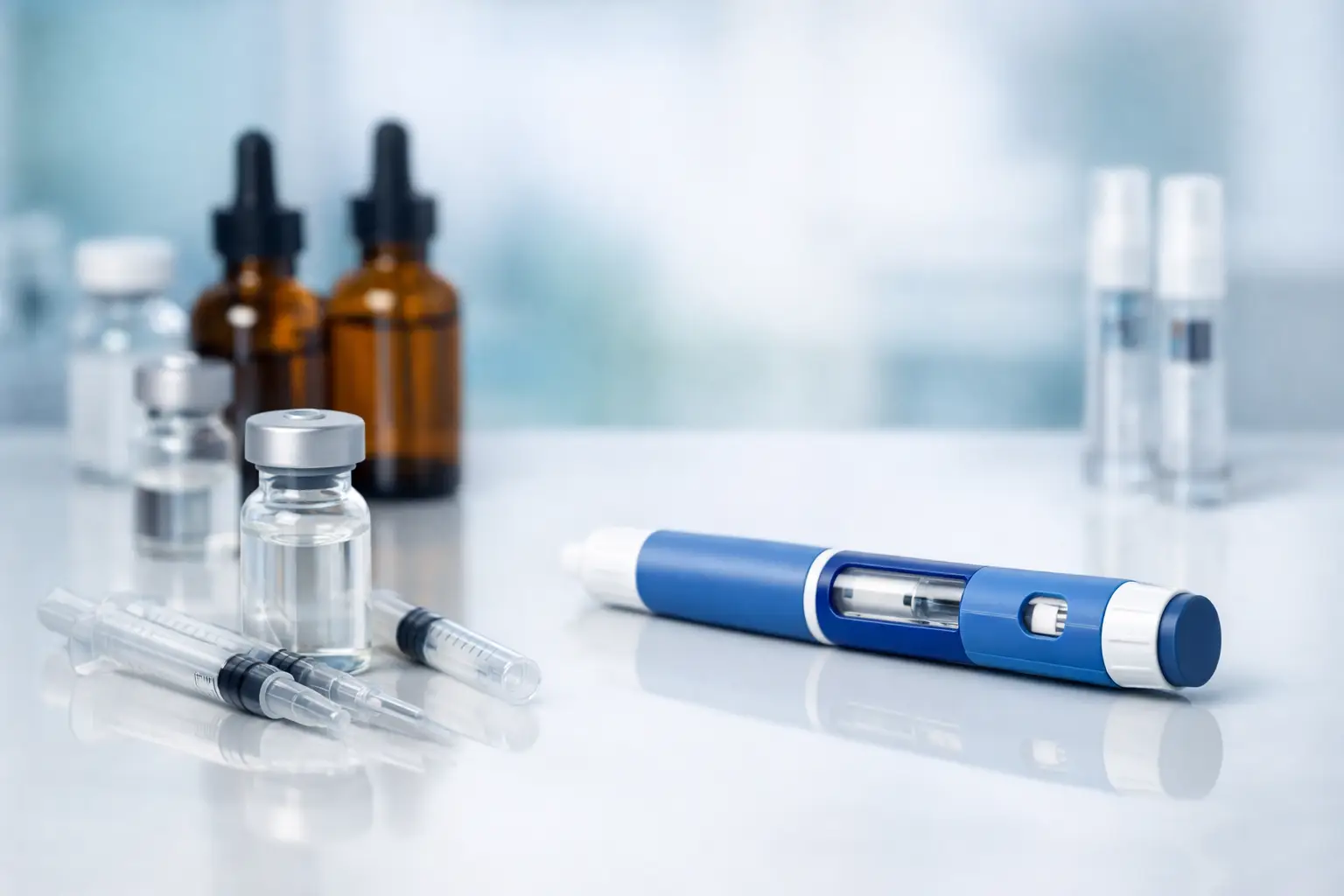


Peptide therapy side effects are generally mild to moderate for most patients and often improve as the body adjusts to treatment — but knowing what to expect before you begin is a critical part of informed care. This article breaks down the most commonly reported experiences, how licensed providers monitor and manage them, and what the current evidence suggests about safety profiles for weight-loss peptides.
Ready to find out if you qualify? Start Free Assessment — No payment required.
What Are Peptides and How Do They Work?
Peptides are short chains of amino acids — the same building blocks that make up proteins — that act as signaling molecules throughout the body. In the context of medical weight loss, peptides like semaglutide and tirzepatide work by mimicking naturally occurring gut hormones, primarily GLP-1 (glucagon-like peptide-1) and GIP (glucose-dependent insulinotropic polypeptide). These hormones regulate appetite, slow gastric emptying, and help stabilize blood sugar levels after meals.
When introduced therapeutically at controlled doses, these compounds interact with receptors in the brain and digestive tract to reduce hunger signals and promote a sense of fullness. The result, for eligible patients, may be a meaningful reduction in caloric intake and — over time — clinically significant weight loss. Understanding the mechanism helps explain why certain side effects occur: because the same pathways that regulate appetite also govern digestion, GI-related effects are among the most frequently discussed. You can explore more about how these medications compare on our Semaglutide vs. Tirzepatide breakdown.
Common Peptide Therapy Side Effects Patients Report
The most frequently reported peptide therapy side effects involve the gastrointestinal system. Nausea is the most common complaint, particularly during the first few weeks of treatment or following a dose increase. Patients may also experience vomiting, diarrhea, constipation, bloating, or a general feeling of stomach discomfort. These effects are typically dose-dependent — meaning they tend to be more pronounced at higher doses and may lessen as the body adapts.
Beyond GI symptoms, some patients report injection-site reactions such as redness, mild swelling, or bruising at the site of subcutaneous administration. Fatigue and headache are also noted in a subset of patients, especially early in treatment. It is important to emphasize that individual responses vary significantly — results vary — and not every patient will experience the same constellation of effects. A thorough intake process and ongoing provider review are essential to catching any concerns early and adjusting your protocol accordingly.
Less Common but Notable Side Effects to Be Aware Of
While the majority of reported side effects are mild and transient, there are less common effects that warrant discussion with a qualified provider. Some patients have reported changes in heart rate, a phenomenon sometimes described as a mild increase in resting pulse. Dizziness, particularly when standing up quickly (orthostatic hypotension), has also been noted in some individuals, which may relate to changes in fluid intake or caloric consumption during active weight loss.
Rarer but more serious potential concerns — which have been studied in clinical trials — include pancreatitis and, in patients with a personal or family history of certain thyroid conditions, a theoretically elevated risk related to thyroid C-cell tumors identified in animal studies. These risks are among the primary reasons that peptide-based weight loss therapies require a licensed provider's oversight and a thorough medical history review before initiation. Our Is Semaglutide Safe? article dives deeper into the clinical safety data if you'd like more detail.
How Dosing Protocols Help Minimize Side Effects
One of the most effective strategies for managing peptide therapy side effects is a gradual, titrated dosing approach. Rather than starting at a therapeutic maintenance dose, most evidence-based protocols — including those used by provider-reviewed platforms — begin at a lower starting dose and increase incrementally over several weeks or months. This "start low, go slow" methodology gives the body time to acclimate to the medication and has been shown to significantly reduce the severity and frequency of GI side effects.
Dietary modifications can also make a meaningful difference. Patients are often advised to eat smaller, more frequent meals, avoid high-fat or heavily processed foods during the adjustment period, and stay well-hydrated. Reducing alcohol intake and not lying down immediately after eating may further ease nausea. When you work through a structured program — like those available through EdenRx's online weight loss programs — these lifestyle recommendations are built directly into your care plan, not treated as afterthoughts.
Why Provider Review Matters
Peptide therapies are prescription medications, and the decision to prescribe them should never be made without a comprehensive review of your medical history, current medications, and individual risk factors. A licensed provider's oversight is what separates a safe, monitored treatment experience from a potentially harmful one. At EdenRx, every patient who moves forward with a treatment plan has their case reviewed by a licensed medical provider — not an algorithm — before any prescription is issued.
This matters because peptide therapy is not appropriate for everyone. Patients with a personal or family history of medullary thyroid carcinoma, Multiple Endocrine Neoplasia syndrome type 2, or certain pancreatic conditions may not be eligible. Pregnant or breastfeeding individuals are also excluded. The provider review step isn't a formality — it's the layer of protection that ensures you're only receiving treatment if eligible, and that the selected protocol fits your unique health profile. Learn more about what's included in our pricing and plans and how care is structured through our weight loss online services.
Wondering if peptide therapy is right for you? Take our free, no-commitment assessment today. Start Your Free Assessment — Available to residents of Florida and New York.
Managing Side Effects: Practical Tips for Patients
If you are experiencing mild side effects during peptide therapy, there are several evidence-informed strategies that may provide relief. For nausea, ginger tea, small bland meals, and eating slowly can help settle the stomach. Staying consistently hydrated — aiming for at least 8 cups of water daily — supports digestion and may reduce headache frequency. Rotating injection sites with each dose can minimize local skin reactions and prevent scar tissue buildup over time.
Most importantly, communication with your provider is the single most effective tool you have. If side effects feel unmanageable, a dose reduction or temporary pause in titration may be appropriate — and your provider can make that call quickly when you're on a platform designed for ongoing check-ins. Patients on EdenRx's supervised programs have access to provider touchpoints throughout their journey, so concerns don't have to wait for a scheduled annual visit. Side effect management is an ongoing, collaborative process, not a one-time conversation.
Built from Eden Med Spa — real patients, real treatments.
Frequently Asked Questions
How long do peptide therapy side effects typically last?
For most patients, GI-related side effects like nausea and bloating are most pronounced during the first two to four weeks of treatment or following a dose increase. These effects often diminish as the body adjusts. If symptoms persist or become severe, patients should contact their provider promptly for guidance.
Are peptide therapy side effects serious?
The majority of commonly reported side effects are mild to moderate in nature. However, there are rare but serious risks — including pancreatitis and potential thyroid-related concerns — which is why these medications are only available by prescription and require a thorough provider review before starting.
Can I reduce side effects by changing my diet?
Yes, dietary adjustments may potentially help. Eating smaller meals, avoiding high-fat or fried foods, staying hydrated, and not eating immediately before lying down are all strategies that may reduce the severity of GI side effects. Your provider or care team can offer personalized guidance based on your specific symptoms.
Who should not use peptide therapy for weight loss?
Peptide therapies such as semaglutide or tirzepatide are not appropriate for individuals with a personal or family history of medullary thyroid carcinoma or Multiple Endocrine Neoplasia syndrome type 2, those with a history of pancreatitis, or those who are pregnant or breastfeeding. A full medical history review is required before any prescription is issued.
Is peptide therapy available through EdenRx in my state?
EdenRx currently serves patients in Florida and New York. If you reside in one of these states, you may complete a free online assessment to determine if you qualify for a provider-reviewed weight loss program. Results vary and eligibility is determined on an individual basis.
What makes EdenRx different from other online weight loss platforms?
EdenRx is built on a foundation of real clinical experience — originating from Eden Med Spa — with every treatment plan reviewed by a licensed medical provider before any prescription is issued. The platform is designed to combine the convenience of telehealth with the rigor of in-person provider oversight, offering structured programs with transparent pricing and no hidden fees.
Conclusion
Peptide therapy represents a meaningful option for patients who may benefit from medically supervised weight loss support, but like all prescription treatments, it comes with a side effect profile that deserves honest, informed discussion. The most commonly reported effects — nausea, GI discomfort, and injection-site reactions — are typically manageable, especially under a properly titrated protocol guided by a licensed provider. Less common risks exist, which is precisely why provider review is not optional — it is foundational.
If you're considering peptide therapy and want to understand whether you may be a candidate, the first step is a structured assessment that evaluates your health history, goals, and eligibility. EdenRx offers a free, no-commitment assessment for residents of Florida and New York, with every qualifying plan reviewed by a licensed medical provider.
Take the first step today. Start Your Free Assessment — No payment required. Available in Florida and New York. Explore programs, review pricing, or learn more about weight loss online care through EdenRx.