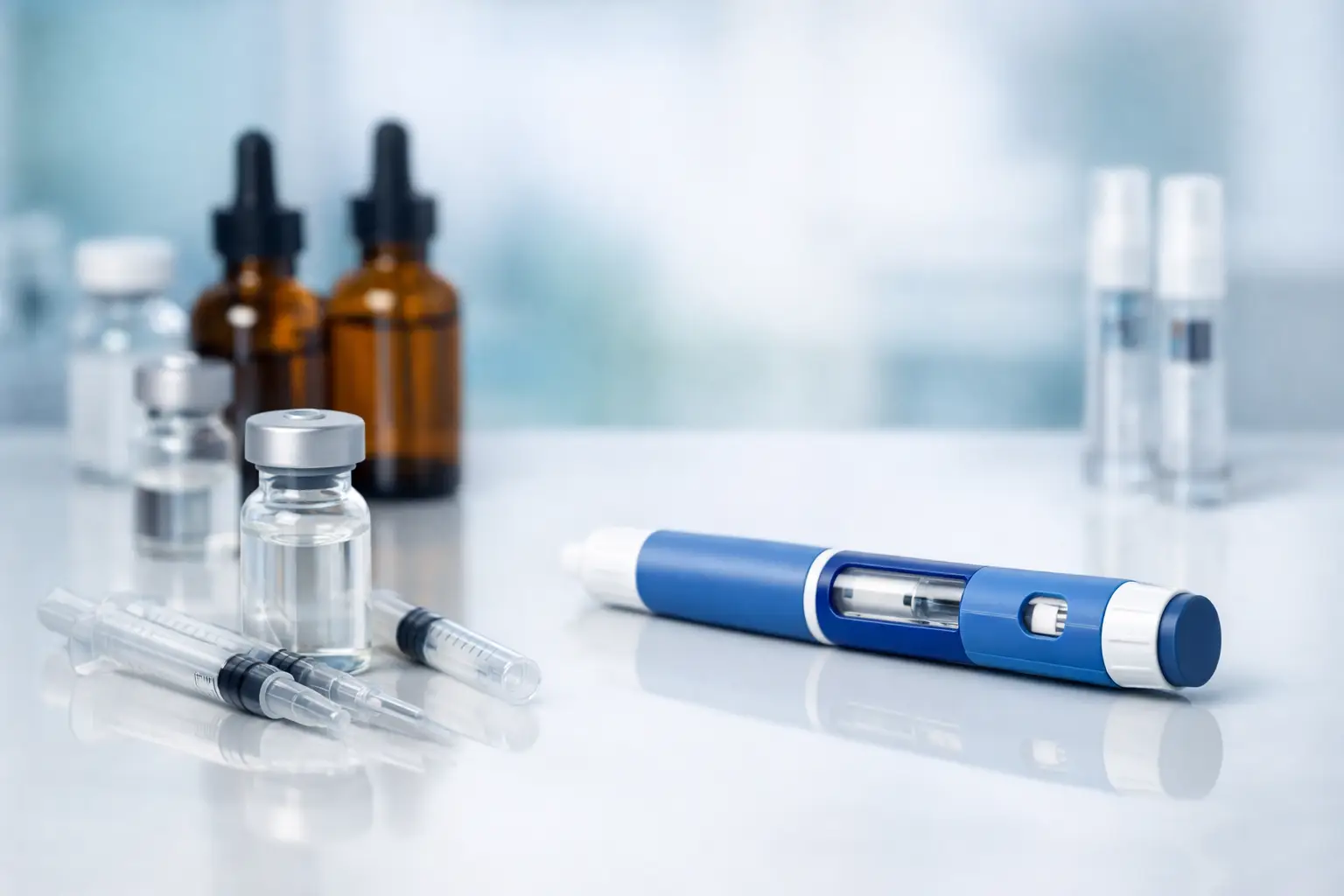


Peptide injections may offer targeted benefits for wellness and weight management, but understanding safety, administration, and monitoring is essential before starting. This peptide injection safety guide explains how peptides work, what to expect, and who may benefit when managed by a qualified provider.
Ready to find out if you qualify? Start Free Assessment — No payment required
What are compounded peptides and how are they made?
Compounded peptides are short chains of amino acids synthesized in a laboratory to match specific sequences that occur naturally in the body or are designed to mimic biological activity. They are prepared by compounding pharmacies when commercial formulations are not available or when individualized dosing is required; compounding allows for tailored concentrations and combinations but also introduces variability that patients should understand.
Because compounded products are made outside of mass production, quality depends on the pharmacy’s standards and oversight. When considering peptide therapy, ask whether the pharmacy follows current good manufacturing practices (cGMP), whether batch testing is performed, and if certificates of analysis are available. At EdenRx, provider review and pharmacy selection are part of the safety pathway for eligible patients in Florida and New York.
How peptides work: mechanism of action in plain language
Peptides interact with receptors on cells to trigger signaling pathways that regulate processes like metabolism, appetite, tissue repair, or hormone release. Different peptides have different targets — some may influence insulin sensitivity and appetite control, while others may affect inflammation or tissue healing. This targeted mechanism is why peptides are being explored across wellness and weight management applications.
Mechanisms vary by compound and are a key part of safety considerations: the intended receptor effects explain both potential benefits and side effects. For example, a peptide that reduces appetite may also affect digestion or blood sugar. Comparing mechanisms, and how they relate to approved therapies like semaglutide, can help set realistic expectations; see how semaglutide safety compares at /is-semaglutide-safe and explore differences between semaglutide and tirzepatide at /semaglutide-vs-tirzepatide.
Safety profile: risks, side effects, and monitoring
Common side effects reported with many peptide injections may include localized reactions (redness, swelling, itching), transient nausea, headache, or mild fatigue. More significant risks are less common but can include allergic reactions, changes in blood sugar, and interactions with other medications. Because peptides often modulate biological systems, monitoring is an important part of minimizing risk.
Before starting therapy, providers typically review your medical history, medications, allergies, and baseline labs to screen for contraindications and to set a monitoring schedule. If you are pursuing weight-focused care, combining peptide therapy with medically supervised lifestyle support or telehealth programs for weight loss may be recommended; learn about our programs and pricing at /programs and /pricing. Availability is limited to eligible patients in Florida and New York and depends on provider assessment.
Who may benefit from peptide therapy (and who should be cautious)
Some individuals seeking improved metabolic support, appetite regulation, or recovery support may potentially benefit from peptide injections when prescribed and monitored by a qualified provider. Candidates often include adults without significant uncontrolled medical conditions who have tried standard lifestyle measures and are evaluated as suitable during a clinical assessment. A telehealth approach can help determine eligibility remotely, but in-person follow-up or labs may be required.
Peptide therapy may not be appropriate for pregnant or breastfeeding people, individuals with certain autoimmune disorders, unstable cardiac disease, or those on medications that might interact. People with a history of severe allergic reactions to injectable therapies should exercise caution. Always discuss your full medical history during the initial visit or via our free assessment at /assessment to determine if peptide therapy may be a safe option for you in FL or NY.
Administration and practical safety steps
Most peptide injections are given subcutaneously with small needles, similar to injectable diabetes medications. Proper injection technique, dosing schedule, storage conditions (refrigeration for many compounds), and disposal of sharps are practical safety elements you’ll be instructed on. Training by a provider or qualified clinician reduces the chance of administration errors or local complications.
Other safety steps include verifying the peptide label and concentration at each refill, tracking lot numbers, and watching for changes in reaction at the injection site over time. If you experience severe symptoms such as shortness of breath, signs of infection at the injection site, or persistent severe gastrointestinal symptoms, contact your provider promptly. Periodic lab monitoring may be recommended to assess metabolic effects and ensure ongoing safety.
Why Provider Review Matters
Provider review matters because peptides have varied biological effects and require individualized assessment. A qualified provider will evaluate your medical history, current medications, and goals; determine whether a peptide is a reasonable option; select an appropriate dose; and set a follow-up and monitoring plan. The provider also coordinates with compounding pharmacies to ensure quality and traceability.
Telehealth platforms like EdenRx combine remote convenience with clinician oversight to help ensure appropriate prescribing for patients in Florida and New York. Provider review helps reduce risk by screening for contraindications, adjusting doses when needed, and offering education on administration and storage. If you are comparing options, consider asking potential providers about their experience, sourcing, and monitoring protocols.
Built from Eden Med Spa — real patients, real treatments.
Ready to find out if you qualify? Start Free Assessment — No payment required
Frequently Asked Questions
Q: Are peptide injections FDA-approved? A: Some peptides are FDA-approved for specific medical indications, while many compounded peptides are used off-label or are compounded formulations; this means they may not have FDA approval for the specific purpose you’re considering. Provider review and informed consent are important so you understand the evidence and approval status.
Q: How long before I might see effects? A: Timing varies by peptide and individual factors; some people may notice changes within weeks while others may require months. Results may potentially vary and are not guaranteed; follow-up with your provider helps evaluate effectiveness and safety if eligible.
Q: Are peptide injections painful? A: Most subcutaneous peptide injections cause only brief discomfort similar to routine injections. Proper technique, room-temperature solutions, and rotating injection sites can minimize pain and local irritation.
Q: Can peptides interact with my other medications? A: Peptides can interact with other medications or conditions (for example, those affecting blood sugar). Always provide a full medication list during your assessment so the provider can evaluate potential interactions and adjust monitoring if needed.
Q: How are peptides stored and handled? A: Many peptides require refrigeration and should be handled according to pharmacy instructions. Follow storage, reconstitution, and disposal guidelines supplied by your provider or pharmacy to maintain potency and safety.
Q: What is the cost and will insurance cover peptides? A: Coverage varies widely. Some peptide treatments and compounded formulations are not covered by insurance. Review pricing and program options at /pricing and discuss payment expectations during your assessment at /assessment.
Conclusion
Peptide injection therapy may potentially offer targeted benefits for selected individuals when prescribed and monitored by a qualified provider. Understanding compound sourcing, mechanisms of action, expected side effects, and appropriate monitoring helps you make an informed decision. If you live in Florida or New York and want to explore whether peptide therapy could be appropriate for your goals, start with a clinician review.
Ready to find out if you qualify? Start Free Assessment — No payment required
For broader weight-care options, explore our telehealth weight loss services at /weight-loss-online and learn how peptide therapy may fit within a comprehensive approach including lifestyle support and clinically supervised programs at /programs.