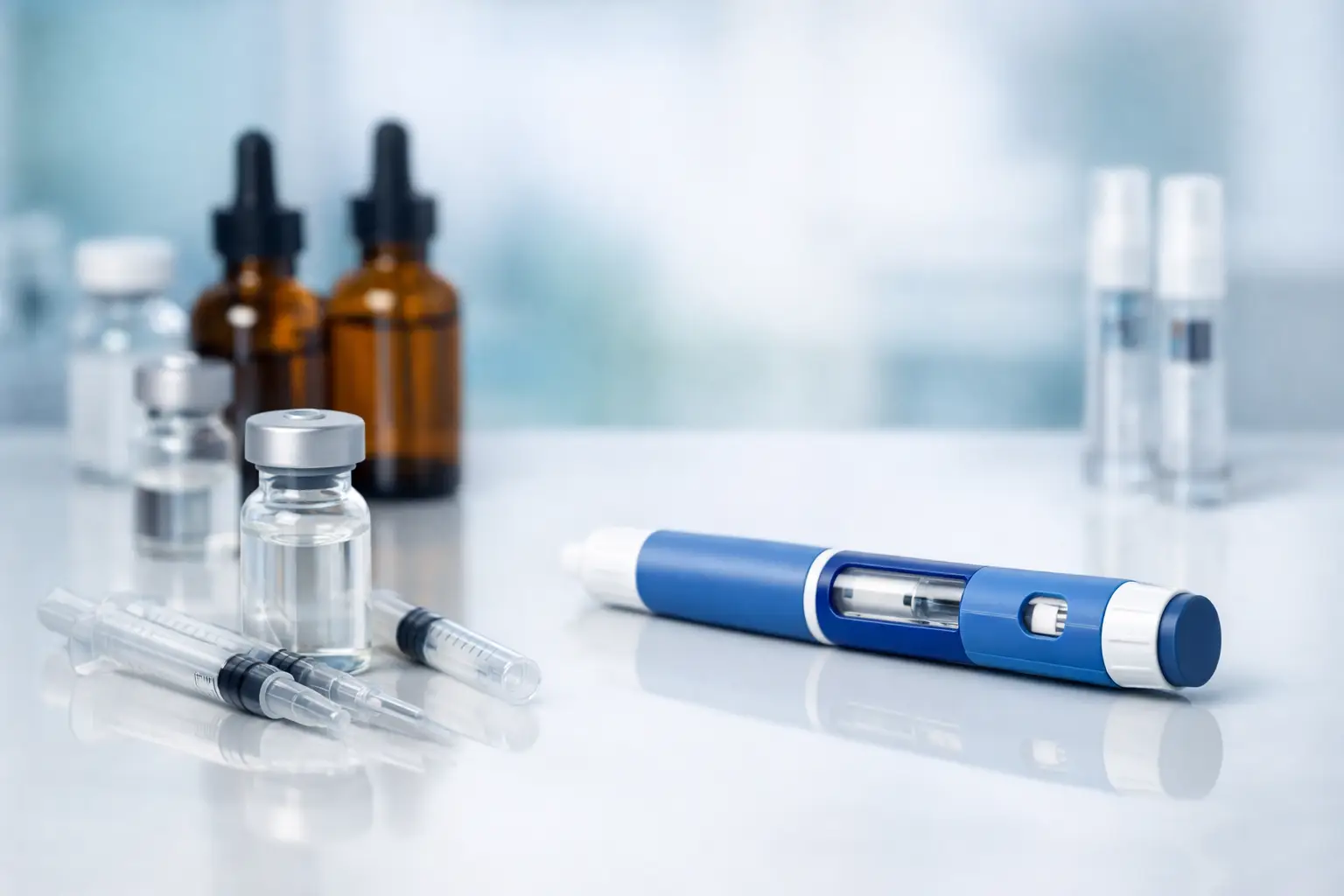


Ozempic and Wegovy are both brand-name medications containing the same active ingredient — semaglutide — but they are FDA-approved for different uses, prescribed at different doses, and carry distinct clinical considerations. Understanding the difference between the two is an important first step, though only a licensed provider can determine which option, if any, may be right for you.
Ready to find out if you qualify? Start Free Assessment — No payment required
What Are Ozempic and Wegovy, Exactly?
Both Ozempic and Wegovy are injectable GLP-1 receptor agonists manufactured by Novo Nordisk. They work by mimicking a naturally occurring hormone called glucagon-like peptide-1, which helps regulate blood sugar, slow gastric emptying, and reduce appetite signals in the brain. Despite sharing the same active molecule, they were developed with different patient populations in mind and went through separate FDA approval processes.
Ozempic (semaglutide 0.5 mg, 1 mg, or 2 mg) received FDA approval in 2017 for the management of type 2 diabetes in adults, with a secondary cardiovascular benefit indication added later. Wegovy (semaglutide 2.4 mg) received FDA approval in 2021 specifically for chronic weight management in adults with obesity or overweight with at least one weight-related condition. This distinction — diabetes management versus weight management — shapes how providers prescribe each medication.
The Key Differences: Dose, Indication, and Insurance
The most clinically meaningful difference between Ozempic and Wegovy is the maximum approved dose. Wegovy's 2.4 mg maintenance dose is higher than Ozempic's maximum of 2 mg, and clinical trials suggest this higher dose is associated with greater average weight reduction. The STEP trials for Wegovy showed participants may potentially lose a significant percentage of body weight over 68 weeks when combined with lifestyle changes — though individual results vary.
Insurance coverage is another major practical difference. Because Ozempic is approved for type 2 diabetes, it is more commonly covered by commercial insurance plans for patients with that diagnosis. Wegovy, approved for weight loss, may face more variable coverage depending on your plan and state. Out-of-pocket costs, prior authorization requirements, and formulary access can all differ significantly — which is why reviewing EdenRx pricing options with a provider is a critical part of the process.
How They Are Prescribed: Off-Label vs. On-Label Use
You may have heard of people using Ozempic "for weight loss" — this is technically off-label use, meaning a provider prescribes it for a purpose beyond its FDA-approved indication. Off-label prescribing is legal and common in medicine, and providers may choose Ozempic over Wegovy for a variety of clinical reasons, including a patient's cardiovascular history, tolerance to dose escalation, or formulary access. Neither choice is inherently better without a full clinical picture.
Wegovy, by contrast, is the on-label choice for weight management. When a provider prescribes it within its approved indication, the dosing schedule, titration protocol, and monitoring guidelines are all designed with weight loss as the primary goal. If you're exploring a GLP-1 weight loss program, your provider will review your health history, current medications, and goals before recommending any specific medication or formulation.
Side Effects and Tolerability: What to Know
Because both medications contain semaglutide, their side effect profiles are broadly similar. The most commonly reported side effects include nausea, vomiting, diarrhea, constipation, and stomach discomfort — particularly during the dose escalation phase. These effects are often temporary and may subside as your body adjusts. However, more serious risks, including rare cases of pancreatitis and a potential association with thyroid C-cell tumors in animal studies, are listed in the prescribing information for both drugs.
Because Wegovy reaches a higher maintenance dose, some patients may experience more pronounced GI side effects compared to lower-dose Ozempic use. Slow titration protocols — starting at a low dose and gradually increasing over weeks — are the standard approach to minimizing discomfort. A provider-reviewed program, like those available through EdenRx's telehealth weight loss platform, ensures you have clinical guidance throughout your titration process rather than navigating it alone.
Ozempic vs Wegovy: Side-by-Side Comparison
| Feature | Ozempic | Wegovy | |---|---|---| | Active Ingredient | Semaglutide | Semaglutide | | FDA Approval | Type 2 Diabetes (2017) | Chronic Weight Management (2021) | | Max Approved Dose | 2 mg/week | 2.4 mg/week | | Injection Frequency | Once weekly | Once weekly | | Primary Use | Blood sugar control | Weight loss | | Insurance Coverage | More common (diabetes Dx) | Variable (weight loss coverage varies) | | Off-Label Weight Use | Common | N/A (on-label for weight) | | Typical Titration Period | 4–8 weeks | Up to 16–20 weeks |
Note: This table is for general informational purposes only. Individual eligibility, dosing, and outcomes vary. Consult a licensed provider before starting any medication.
How GLP-1 Medications Compare to Diet Alone
One of the most common questions people ask is whether medication is even necessary, or whether diet and exercise alone can achieve comparable results. For many individuals with obesity or weight-related health conditions, lifestyle changes alone may not produce or sustain clinically meaningful weight loss — not due to lack of willpower, but because of complex hormonal and metabolic factors. GLP-1 medications address some of those underlying mechanisms in ways that caloric restriction alone cannot replicate.
That said, GLP-1 medications are not a replacement for healthy habits — they are intended to work alongside them. Our GLP-1 vs. diet comparison resource explores this topic in more depth, but the short version is that patients who combine medication with behavioral changes may potentially see better long-term outcomes than either approach alone. Results vary, and no outcome is guaranteed.
Not sure which program fits your goals? View EdenRx Programs and see transparent pricing — then start your free assessment when you're ready.
Why Provider Review Matters
Choosing between Ozempic and Wegovy — or deciding whether either is appropriate — is not a decision that should be made based on online research alone, including this article. Both medications carry contraindications, including a personal or family history of medullary thyroid carcinoma or Multiple Endocrine Neoplasia syndrome type 2. They may interact with other medications, particularly those affecting blood sugar. And they are not appropriate for everyone who simply wants to lose weight.
At EdenRx, every patient goes through a structured provider review process before any medication is recommended. Our licensed providers, available to patients in Florida and New York, evaluate your full health history, current medications, BMI, and weight-related conditions before determining whether a GLP-1 medication — and which one — may be appropriate for you. This is not a rubber-stamp process. It is the same clinical standard you would expect from an in-person visit, delivered conveniently through our telehealth platform. Start with a free assessment to see if you may qualify. Results vary by individual.
Built from Eden Med Spa — real patients, real treatments.
Frequently Asked Questions
Is Ozempic the same as Wegovy? They contain the same active ingredient (semaglutide), but they are different products with different FDA-approved indications and dosing. Ozempic is approved for type 2 diabetes; Wegovy is approved for chronic weight management.
Can I use Ozempic for weight loss if I don't have diabetes? Some providers do prescribe Ozempic off-label for weight management in patients without diabetes. Whether this is appropriate depends on your individual health profile and is a decision made by a licensed provider, not the patient alone.
Which medication causes more weight loss — Ozempic or Wegovy? Clinical trial data suggests Wegovy's higher maintenance dose (2.4 mg) may potentially be associated with greater average weight reduction compared to lower doses of Ozempic. However, individual results vary significantly, and no specific outcome is guaranteed.
Are the side effects of Ozempic and Wegovy the same? Broadly, yes — both may cause nausea, vomiting, diarrhea, and other GI symptoms, especially during dose escalation. Because Wegovy reaches a higher dose, some patients may experience more pronounced side effects.
Does insurance cover Ozempic or Wegovy for weight loss? Coverage varies widely by plan. Ozempic is more commonly covered when prescribed for type 2 diabetes. Wegovy coverage for weight loss is less consistent. A provider can help you navigate your options, and EdenRx offers transparent pricing information for out-of-pocket planning.
Is EdenRx available outside of Florida and New York? Currently, EdenRx serves patients in Florida and New York only. If you are located in one of these states, you may start a free assessment to determine if you may be eligible for a provider-reviewed GLP-1 program.
The Bottom Line
Ozempic and Wegovy are not interchangeable, even though they share the same active ingredient. The right choice — if either is appropriate — depends on your diagnosis, health history, goals, insurance situation, and a thorough evaluation by a licensed provider. No blog post, comparison chart, or online forum can make that determination for you.
What EdenRx can offer is a structured, provider-reviewed path to finding out whether you may be eligible for a GLP-1 weight loss program. Our telehealth platform is built for patients in Florida and New York who want real clinical guidance — not guesswork. Explore our programs, review how GLP-1 medications work, and when you're ready, start your free assessment today. No payment is required to get started.
Take the first step. Start Your Free Assessment — available to patients in Florida and New York. Results vary. Eligibility determined by a licensed provider.