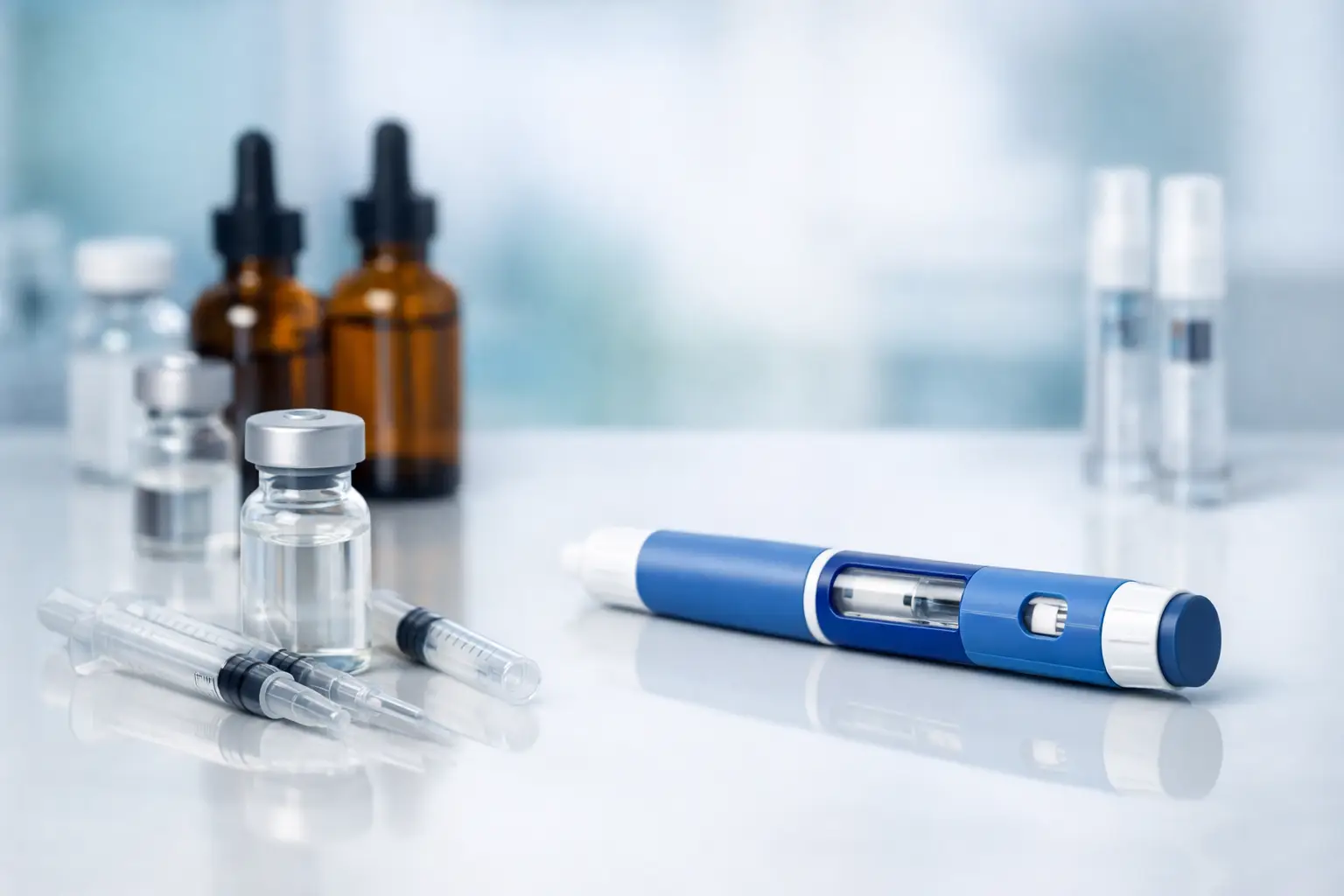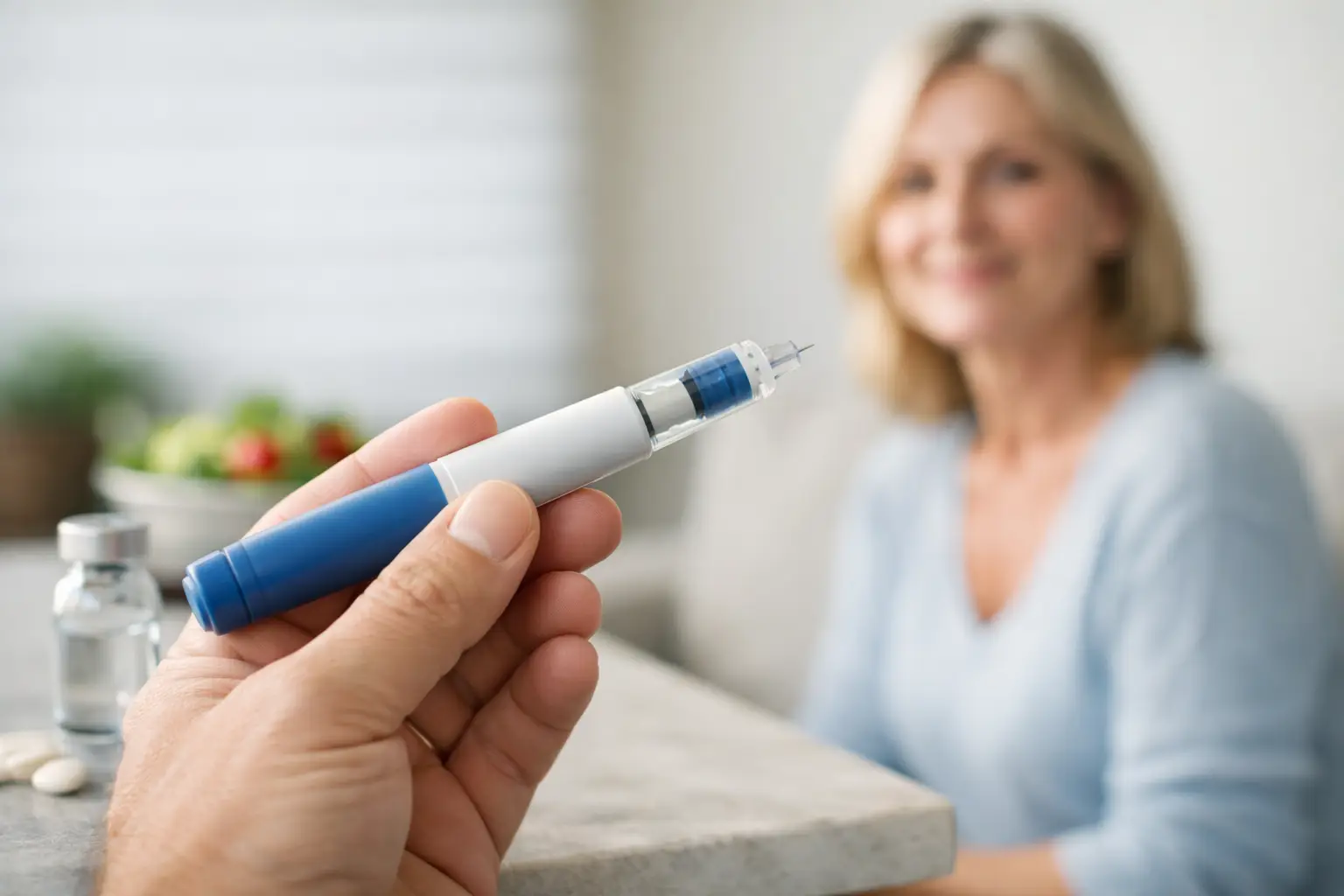


NAD+ injection vs oral supplement: injections typically raise NAD+ levels more rapidly and directly, while oral supplements may be less potent but more convenient. Your best option may depend on your goals, medical history, and whether you are eligible for supervised care in Florida or New York.
Ready to find out if you qualify? Start Free Assessment — No payment required
What is NAD+ and how do these forms differ?
NAD+ (nicotinamide adenine dinucleotide) is a coenzyme found in every living cell that plays a role in cellular energy production and metabolic signaling. In therapeutics and wellness, people use NAD+ via injections, intravenous (IV) infusions, or oral supplements containing NAD+ precursors to support metabolic function and cellular repair pathways.
When comparing NAD+ injection vs oral supplement, the primary difference is bioavailability. Injections and IV administration deliver NAD+ or related compounds directly into the bloodstream, potentially producing higher and faster increases in systemic levels. Oral supplements must survive digestion and first-pass metabolism in the liver, which can reduce how much active compound reaches tissues.
How NAD+ works: mechanism of action
NAD+ participates in redox reactions that transfer electrons during cellular respiration, helping convert nutrients into usable energy (ATP). It is also a substrate for enzymes involved in DNA repair (poly ADP-ribose polymerases), sirtuins that regulate cellular stress responses, and other signaling pathways that influence metabolism and cellular health.
Different formulations act through related but distinct mechanisms. Injected NAD+ or IV infusions bypass digestive breakdown and may rapidly increase systemic NAD+ pools. Oral supplements often contain NAD+ precursors such as nicotinamide riboside (NR) or nicotinamide mononucleotide (NMN), which the body converts into NAD+ over time. The conversion efficiency and absorption can vary among individuals.
Safety profile and monitoring considerations
Both injectable and oral NAD+ approaches are generally well tolerated when administered under clinical supervision, but they carry different safety considerations. Injectable routes (intramuscular or IV) require sterile technique and trained providers to minimize risks like infection, bruising, or infusion-related reactions. Supervised administration allows monitoring for immediate side effects and ensures appropriate dosing.
Oral supplements typically have fewer acute procedural risks; however, product quality and purity vary widely across manufacturers. Oral precursors may cause mild gastrointestinal symptoms in some people. Because NAD+ therapies can interact with underlying conditions or medications, a provider review and medical assessment is recommended, especially for patients seeking treatment through telehealth programs in FL and NY.
Who may benefit from injections vs oral supplements?
People seeking rapid increases in circulating NAD+ levels, or those under medical protocols supervised by clinicians, may choose injections or IV infusions. This approach may be considered for individuals who require monitored dosing or who have conditions where higher systemic availability is desired. Eligibility for in-clinic or supervised telehealth administration is subject to provider assessment and state regulations in Florida and New York.
Oral NAD+ supplements may appeal to those preferring convenience, lower cost, or who are exploring NAD+ support for general wellness. Oral precursors like NR and NMN may be suitable for maintenance or long-term use if tolerated. Regardless of route, individuals with significant medical histories, on multiple medications, or who are pregnant or breastfeeding should seek personalized guidance and a medical assessment.
Comparing effectiveness: what the evidence suggests
Direct comparisons of NAD+ injection vs oral supplement are evolving. Some studies and clinical reports suggest that parenteral (injected/IV) NAD+ can produce larger and quicker rises in blood NAD+ concentrations than oral administration. However, oral precursors have demonstrated an ability to increase tissue NAD+ levels over time and may have sustained benefits in long-term protocols.
Clinical outcomes vary by dose, formulation, and patient factors, so it is not accurate to say one route is universally superior. The choice often depends on specific therapeutic goals, tolerance, accessibility, and whether you are eligible for supervised care through a provider-reviewed program. For those exploring weight-related metabolic support, consider how NAD+ integrates with other options such as GLP-1 weight loss programs or lifestyle approaches described in GLP-1 vs Diet.
Practical considerations: cost, convenience, and program options
Injections and IV infusions tend to be more resource-intensive and may cost more because they require clinical time, facilities, and sterile supplies. They may involve initial visits and follow-up monitoring. Many telehealth platforms offer program information and pricing details to help you compare options—see our pricing and programs pages for examples of supervised care plans.
Oral supplements offer at-home convenience and variable pricing depending on brand and dosage. When choosing an oral product, prioritize third-party testing, clear ingredient lists, and dosing transparency. A provider consultation via telehealth can help determine if an oral NAD+ precursor is appropriate and how it may fit into a broader wellness or metabolic plan, including weight-management services like weight loss online.
Why Provider Review Matters
A provider review helps ensure safety, proper dosing, and appropriate monitoring. Clinicians evaluate medical history, current medications, and potential interactions to determine if a patient may be eligible for injectable NAD+ protocols or better suited to oral supplementation. In regulated states like Florida and New York, licensed providers can authorize and supervise treatments that require clinical oversight.
Provider-reviewed programs also help set realistic expectations: clinicians explain that outcomes may vary and that NAD+ is not a cure but a supportive metabolic therapy for some individuals. If you are considering NAD+ as part of a broader health strategy, a clinical assessment can align treatment with evidence-based approaches and complementary services like our GLP-1 programs.
Built from Eden Med Spa — real patients, real treatments.
Ready to find out if you qualify? Start Free Assessment — No payment required
Frequently Asked Questions
Q: What is the main difference between NAD+ injections and oral supplements? A: The primary difference is bioavailability: injections deliver compounds directly to the bloodstream for faster, potentially higher systemic levels, while oral supplements rely on digestion and metabolic conversion, which may reduce immediate availability.
Q: Are NAD+ injections safe? A: When administered by trained providers in appropriate settings, injections and IV NAD+ are generally tolerated, but they carry procedural risks like infection, infusion reactions, or local irritation. A medical review helps identify potential contraindications.
Q: Can anyone take oral NAD+ supplements? A: Many adults may tolerate oral NAD+ precursors, but safety depends on individual health status, medications, and pregnancy/breastfeeding. Discuss with a clinician to see if you may be eligible and to choose a reputable product.
Q: How quickly will I notice effects? A: Response times vary. Injected NAD+ may change systemic levels more rapidly, while oral precursors may take days to weeks to show effects. Outcomes may differ by person and intended use; no guaranteed results.
Q: Will NAD+ help with weight loss? A: NAD+ may support metabolic processes, but it is not a weight loss cure. For targeted weight-management strategies, consider evidence-based programs such as our GLP-1 weight loss program or other supervised plans.
Q: Can I use NAD+ with other treatments? A: Possibly, but interactions depend on specific medications and therapies. A provider review is recommended to safely combine NAD+ with other treatments or supplements.
Conclusion
Choosing between NAD+ injection vs oral supplement depends on goals, safety considerations, convenience, and eligibility for supervised care. Injections may offer faster and higher systemic delivery, while oral precursors can be a convenient, longer-term option. A provider-reviewed assessment is the best way to determine which approach may suit you if eligible in Florida or New York.
Ready to find out if you qualify? Start Free Assessment — No payment required
For program options and pricing, explore our programs and pricing pages to see how NAD+ approaches might fit into a broader wellness plan.