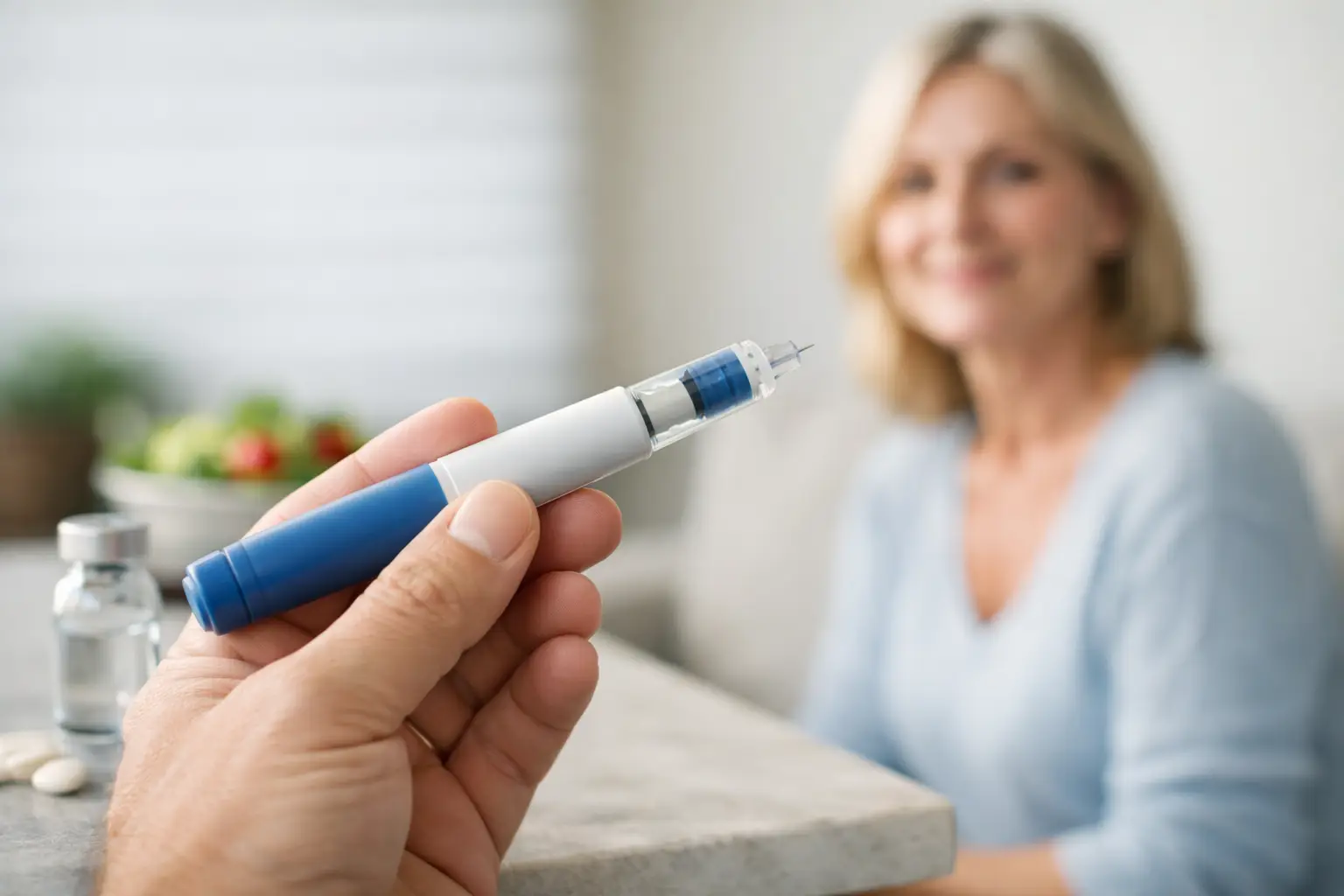


For people living with obesity or weight-related health conditions, both GLP-1 receptor agonists and bariatric surgery may offer meaningful, clinically supported results — but the right choice depends on your individual health profile, goals, and medical history.
Ready to find out if you qualify? Start Free Assessment — No payment required.
What Are GLP-1 Medications and How Do They Work?
GLP-1 receptor agonists — such as semaglutide and tirzepatide — are a class of medications originally developed to manage type 2 diabetes. They work by mimicking the glucagon-like peptide-1 hormone, which helps regulate blood sugar, slows gastric emptying, and reduces appetite signals in the brain. For eligible patients, this can potentially translate into significant, sustained weight reduction over time.
In large-scale clinical trials, semaglutide (brand name Wegovy) produced average weight loss of approximately 15% of body weight in participants without diabetes, while tirzepatide (brand name Zepbound) showed results as high as 20–22% in some trials. These numbers were once associated almost exclusively with surgical interventions, which is why GLP-1 medications have fundamentally changed the conversation around non-surgical weight loss options. Results, of course, vary by individual.
What Is Bariatric Surgery and What Does the Data Show?
Bariatric surgery refers to a group of procedures — most commonly Roux-en-Y gastric bypass, sleeve gastrectomy, and adjustable gastric banding — that physically alter the digestive system to reduce food intake and, in some cases, nutrient absorption. These procedures are typically reserved for individuals with a BMI of 40 or higher, or 35+ with serious weight-related comorbidities.
Long-term studies on bariatric surgery consistently show average excess weight loss ranging from 50% to 70%, with gastric bypass often producing the most durable results over 10+ years. Surgery has also demonstrated strong outcomes for resolving type 2 diabetes, hypertension, and sleep apnea. However, these outcomes come with surgical risks, a significant recovery period, and lifelong nutritional monitoring requirements that must be carefully weighed.
GLP-1 vs Bariatric Surgery: A Side-by-Side Look
When comparing these two approaches directly, neither is universally superior — each fits a different patient profile and risk tolerance. The table below summarizes key data points to help frame an informed conversation with your provider.
| Factor | GLP-1 Medications | Bariatric Surgery | |---|---|---| | Average Weight Loss | ~15–22% body weight (varies) | ~50–70% excess weight loss | | Procedure Required | No (weekly injection or oral) | Yes (inpatient surgery) | | Recovery Time | None | 2–6 weeks typically | | Reversibility | Yes (stop medication) | Largely irreversible | | Common Side Effects | Nausea, GI upset, fatigue | Surgical risks, dumping syndrome | | Long-Term Commitment | Ongoing medication use | Lifelong dietary changes | | Insurance Coverage | Variable; often out-of-pocket | Often covered with criteria met | | Eligibility | Provider-assessed; broader pool | BMI ≥ 35–40 with comorbidities | | Diabetes Remission | Possible improvement | High remission rates (bypass) |
This comparison is intended as a general educational guide. A licensed provider must evaluate your full medical history before any treatment recommendation is made. Explore EdenRx's GLP-1 weight loss program to learn more about how medication-based care is structured.
Risks, Side Effects, and Safety Considerations
No weight loss intervention is without risk, and an honest comparison must include this dimension. Bariatric surgery carries the inherent risks of any major operation: anesthesia complications, infection, blood clots, and procedure-specific issues like anastomotic leaks. Post-operatively, patients may experience dumping syndrome, nutrient deficiencies (especially vitamin B12, iron, and calcium), and — in rare cases — require revision surgery.
GLP-1 medications carry a different risk profile. The most commonly reported side effects include nausea, vomiting, constipation, and diarrhea, particularly during dose escalation. Rare but more serious risks — including pancreatitis and thyroid C-cell concerns flagged in animal studies — are part of the prescriber's informed consent process. Unlike surgery, GLP-1 therapy is reversible; if side effects become unmanageable, the medication can be discontinued under provider guidance. Understanding these differences is a key reason why the GLP-1 vs. diet comparison is only one part of a broader clinical picture.
Cost, Access, and Real-World Affordability
Cost is one of the most practical factors separating these two options. Bariatric surgery, when covered by insurance, may involve significant out-of-pocket costs including deductibles, pre-surgical evaluations, and post-op care. Without insurance, costs can range from $15,000 to $25,000 or more depending on procedure and facility.
GLP-1 medications, while expensive at retail pharmacy prices (often $900–$1,400/month for brand-name options), are increasingly accessible through telehealth platforms, compounded formulations where legally permitted, and manufacturer savings programs. EdenRx offers transparent pricing with provider-reviewed care built into the program — making it potentially more accessible for patients who don't meet surgical criteria or prefer a non-invasive path. View all available programs to see what may fit your situation.
Why Provider Review Matters
One of the most important — and often overlooked — factors in choosing between GLP-1 therapy and bariatric surgery is the role of a qualified medical provider. Both interventions require individualized evaluation that goes well beyond BMI alone. Factors such as cardiovascular history, kidney function, current medications, mental health considerations, and personal lifestyle all influence which option is appropriate and safe for a given patient.
At EdenRx, every patient undergoes a structured clinical assessment reviewed by a licensed provider before any treatment is recommended or prescribed. This is not a one-size-fits-all platform — it is a provider-reviewed telehealth experience designed to match eligible patients in Florida and New York with the right level of care. If GLP-1 therapy is not the appropriate fit, your provider will communicate that clearly. The goal is always your long-term health, not simply a prescription. Built from Eden Med Spa — real patients, real treatments.
Not sure which option is right for you? Let a licensed provider review your profile. Start Your Free Assessment Today — Available in Florida & New York. Results vary.
Frequently Asked Questions
Q: Can GLP-1 medications replace bariatric surgery? For some patients, GLP-1 medications may potentially offer comparable weight loss to certain surgical procedures — particularly sleeve gastrectomy — without the risks of surgery. However, for patients with a very high BMI or certain metabolic conditions, surgery may still be the more appropriate option. A provider must evaluate your individual case.
Q: Who is eligible for GLP-1 weight loss treatment through EdenRx? Eligibility is determined through a provider-reviewed clinical assessment. Generally, GLP-1 therapy may be appropriate for adults with a BMI of 27 or higher with at least one weight-related condition, or a BMI of 30 or higher. EdenRx currently serves patients in Florida and New York. Start your free assessment to find out if you qualify.
Q: Is bariatric surgery safer than GLP-1 medications? Neither option is categorically safer — they carry different risk profiles. Surgery involves acute surgical risks with potentially more dramatic and durable results, while GLP-1 medications involve ongoing medication-related side effects with a reversible, non-invasive approach. Your provider is best positioned to weigh these tradeoffs for your specific health history.
Q: How long do you have to take GLP-1 medications to maintain weight loss? Clinical data suggests that weight may return if GLP-1 medications are discontinued, similar to how weight can be regained after any intervention without lifestyle adherence. Many patients remain on maintenance dosing long-term. This is an important conversation to have with your provider when evaluating the commitment involved.
Q: Does insurance cover GLP-1 medications for weight loss? Coverage varies significantly by insurer and plan. Many commercial insurance plans do not yet cover GLP-1 medications specifically for weight loss, though coverage is expanding. Medicare Part D currently excludes most weight loss drugs. EdenRx's pricing page outlines current program costs and options.
Q: Can I switch from bariatric surgery to GLP-1 therapy or vice versa? Some post-bariatric patients use GLP-1 medications to address weight regain or plateau, and this is an area of growing clinical interest. Conversely, patients who do not respond adequately to GLP-1 therapy may potentially be candidates for surgical evaluation. These decisions should always be made in consultation with a qualified medical provider.
Conclusion: The Data Informs, the Provider Decides
The evidence is clear that both GLP-1 medications and bariatric surgery are powerful, clinically validated tools for weight management — but they are not interchangeable. GLP-1 therapy may be the right first step for many patients seeking a non-surgical, provider-supervised approach, while surgery may remain the most appropriate option for those with more complex or severe obesity-related conditions. No blog article, comparison table, or online resource can replace an individualized clinical evaluation.
If you are in Florida or New York and are exploring your options, EdenRx makes it easy to get started with a free, provider-reviewed assessment. There is no payment required to find out if you may be eligible. Results vary, and all treatment decisions are made by licensed healthcare providers based on your unique health profile.
Take the first step today. Start Your Free Assessment at EdenRx — Provider-reviewed. No payment to begin. Or explore our full GLP-1 weight loss program and program options to learn more.