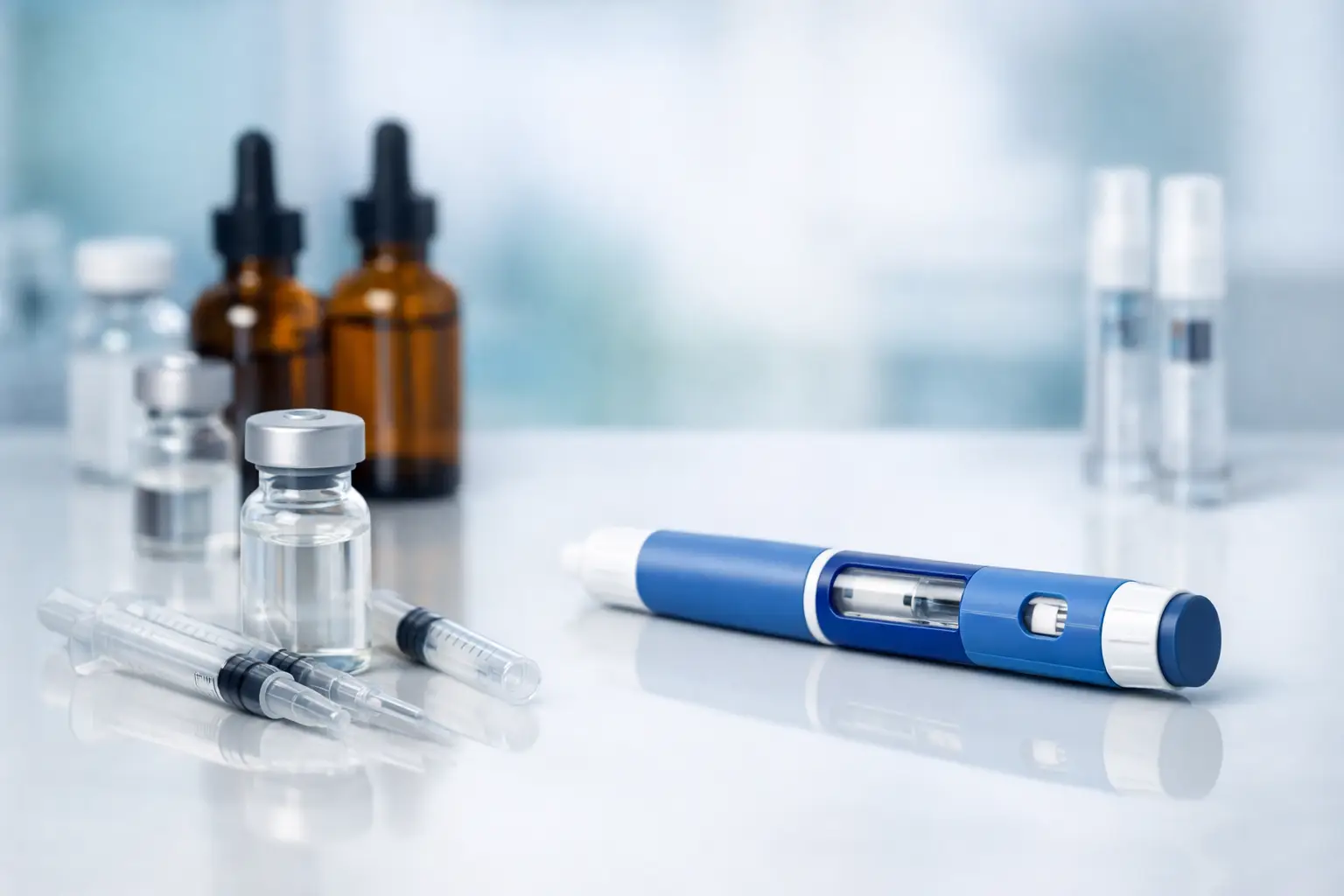


GLP-1 receptor agonists — the class of medications behind today's most-discussed weight loss treatments — may offer benefits that go beyond the number on the scale, potentially supporting healthier cholesterol and lipid profiles in eligible patients. While results vary and no outcomes are guaranteed, emerging clinical evidence suggests that GLP-1 cholesterol improvement is a meaningful area of interest for patients managing both weight and cardiovascular risk factors.
Ready to find out if you qualify? Start Free Assessment — No payment required.
What Is GLP-1 and How Does It Work?
GLP-1, or glucagon-like peptide-1, is a naturally occurring hormone released from the gut in response to food. GLP-1 receptor agonists are medications that mimic this hormone, signaling the brain to reduce appetite, slowing gastric emptying, and helping regulate blood sugar. These mechanisms work together to support sustained calorie reduction and, if eligible, clinically meaningful weight loss over time.
Because excess body weight is one of the most well-established contributors to abnormal cholesterol levels, medications that drive significant weight loss may also indirectly affect lipid metabolism. This connection has made GLP-1 therapies a growing area of research for patients who carry both weight-related and cardiovascular risk factors. Explore our GLP-1 weight loss program to see how a provider-reviewed approach works.
The Link Between Excess Weight and High Cholesterol
Cholesterol is not a single marker — it encompasses LDL (often called "bad" cholesterol), HDL ("good" cholesterol), total cholesterol, and triglycerides. Excess body fat, particularly visceral fat stored around the abdomen, is closely associated with elevated LDL and triglyceride levels and suppressed HDL. This pattern is sometimes called "atherogenic dyslipidemia" and is a recognized cardiovascular risk factor.
When weight decreases — through lifestyle changes, medication, or a combination of both — the liver's production and processing of lipoproteins may shift in a favorable direction. Fat cells that previously released excess free fatty acids into the bloodstream may become less metabolically active, potentially lowering the upstream drivers of poor cholesterol numbers. This is why weight loss, including that achieved through GLP-1 programs, is often discussed alongside cardiovascular health. See if you qualify for weight loss medication through our platform.
What Research Suggests About GLP-1 Cholesterol Improvement
Several large clinical trials have examined lipid changes in patients using GLP-1 receptor agonists. Trials involving semaglutide — one of the most studied agents in this class — have reported reductions in LDL cholesterol, total cholesterol, and triglycerides, as well as modest improvements in HDL, in participants who experienced significant weight loss. The STEP trials, for instance, observed favorable lipid shifts alongside an average weight reduction of approximately 15% in the active treatment group.
It is important to note that these are population-level findings and that individual results vary considerably. Not every patient will experience the same degree of lipid improvement, and GLP-1 medications are not FDA-approved as standalone cholesterol treatments. However, for patients who qualify and are managing both obesity and dyslipidemia, a GLP-1 program may potentially address multiple risk factors simultaneously. Learn more about our online weight loss services and how we structure care for eligible patients.
Triglycerides: A Particularly Responsive Lipid Marker
Among the various lipid markers, triglycerides appear to be among the most responsive to GLP-1-driven weight loss. Triglycerides are fats stored in the blood that rise sharply with excess caloric intake, refined carbohydrate consumption, and insulin resistance. Because GLP-1 receptor agonists improve insulin sensitivity and reduce overall calorie consumption, they may create a compounding effect on triglyceride clearance.
Some studies have observed triglyceride reductions of 20% or more in patients achieving substantial weight loss on GLP-1 therapy. While these numbers are promising, they should be interpreted carefully — baseline triglyceride levels, diet quality, alcohol intake, and genetic factors all influence outcomes. Patients should work with a licensed provider to understand how GLP-1 therapy fits into their broader lipid management plan. View our programs to understand the full scope of what EdenRx offers.
Why Provider Review Matters
GLP-1 medications are prescription therapies that require individualized medical evaluation before use. At EdenRx, every patient undergoes a structured assessment reviewed by a licensed provider before any medication is considered. This matters enormously when cholesterol and cardiovascular health are part of the clinical picture — not all patients are appropriate candidates, and some may have contraindications that need to be evaluated before starting treatment.
Our provider-review process is designed to ensure that if you are eligible, you receive a care plan tailored to your health history, current medications, and goals. We serve patients in Florida and New York, and all consultations happen online — no clinic visits required. Before any medication is dispensed, your information is reviewed by a real medical professional, not an algorithm. See our transparent pricing and find out what to expect at every step of the process.
Think GLP-1 therapy might be right for you? Take the free assessment today. No commitment, no payment required — just answers.
Built from Eden Med Spa — real patients, real treatments.
Frequently Asked Questions
Can GLP-1 medications lower my cholesterol? GLP-1 receptor agonists are not approved specifically as cholesterol-lowering drugs, but research suggests they may potentially improve LDL, triglycerides, and HDL as part of broader weight loss in eligible patients. Results vary by individual.
How long does it take to see lipid changes on a GLP-1 program? Lipid improvements, if they occur, are generally observed alongside meaningful weight loss — which typically takes several months of consistent use. Your provider can help set realistic expectations based on your baseline numbers and health profile.
Is GLP-1 therapy safe for people with high cholesterol? Many patients with dyslipidemia may be appropriate candidates for GLP-1 therapy, but eligibility depends on your full medical history. Some patients may have contraindications. A provider-reviewed assessment, like the one offered through EdenRx, is the right first step.
Will I still need my cholesterol medication if I start a GLP-1 program? That decision must be made by your prescribing provider. GLP-1 therapy is not a replacement for statins or other lipid-lowering medications. If your cholesterol improves significantly over time, your provider may reassess your medication regimen — but do not stop any prescribed medication without medical guidance.
Does EdenRx serve patients outside of Florida and New York? Currently, EdenRx provides telehealth weight loss services to patients in Florida and New York only. We hope to expand to additional states in the future. Check who qualifies to see if you meet the criteria in your state.
What GLP-1 medications does EdenRx offer? EdenRx works with licensed providers to evaluate eligible patients for GLP-1 receptor agonist therapies. Specific medications available depend on your provider review, health history, and current eligibility. Explore the program to learn more.
The Bottom Line: GLP-1 Cholesterol Improvement Is a Real — and Promising — Area of Research
For patients in Florida and New York who are managing excess weight alongside elevated cholesterol or triglycerides, GLP-1 receptor agonists may offer a pathway to improvement on multiple fronts. The evidence suggests that GLP-1 cholesterol improvement is a clinically meaningful benefit that some eligible patients experience alongside weight loss — though individual results will always vary and no outcomes are guaranteed.
EdenRx was built to make access to this care straightforward, transparent, and medically sound. Every step of our process — from assessment to ongoing support — is provider-reviewed and designed around your safety and long-term health. If you are ready to find out whether you qualify, the first step costs nothing.
Start your free assessment now at tryedenrx.org/assessment. No payment required. No obligation. Just a clearer picture of what may be possible for your health.