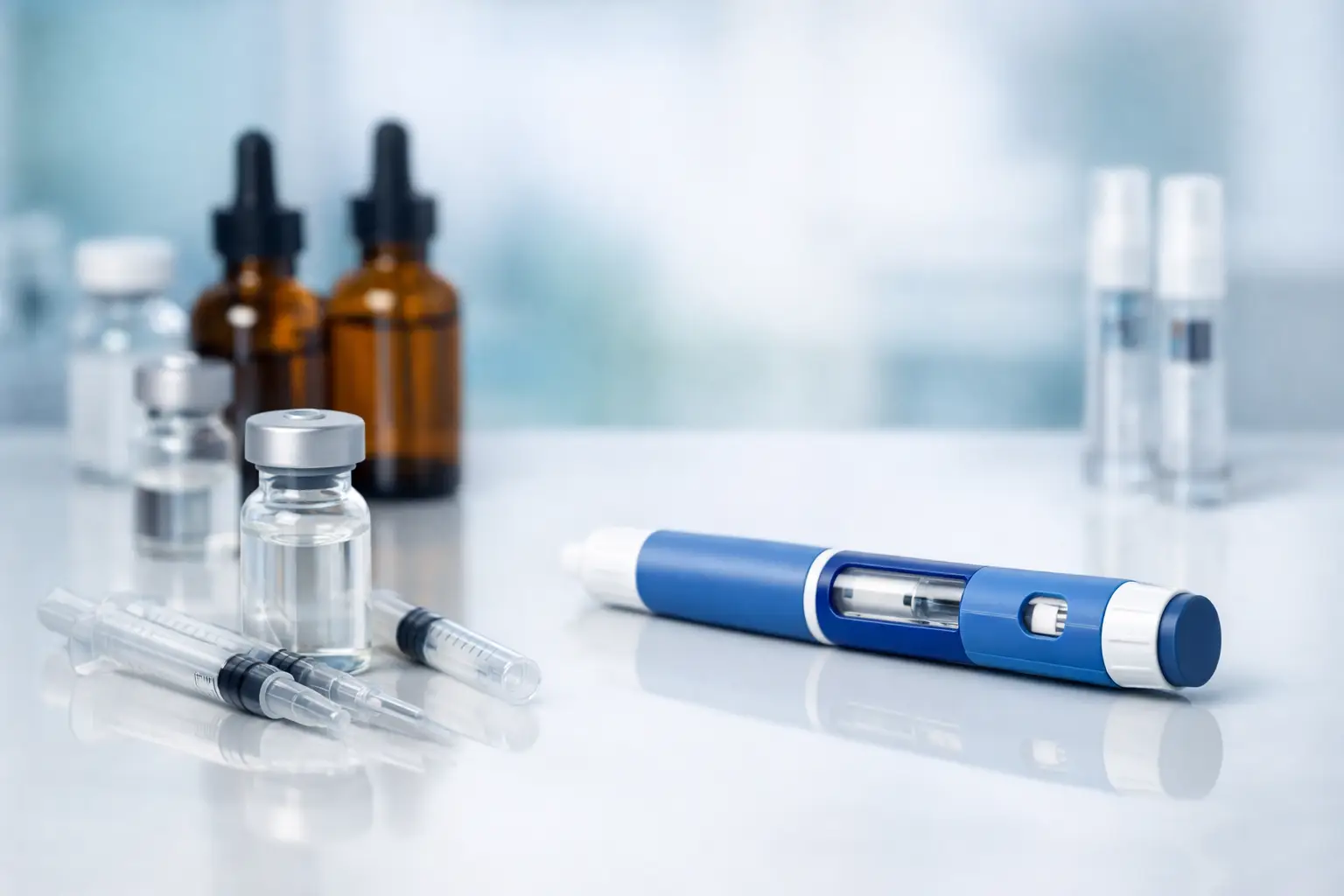


GLP-1 receptor agonists have emerged as some of the most talked-about medications in metabolic health, and for patients with kidney disease, understanding GLP-1 kidney disease safety is a critical first step before starting any weight loss program. While early research suggests these medications may offer protective effects for the kidneys in certain populations, individual health circumstances vary widely — and provider review is essential before beginning treatment.
Ready to find out if you qualify? Start Free Assessment — No payment required
What Are GLP-1 Receptor Agonists and How Do They Work?
GLP-1 (glucagon-like peptide-1) receptor agonists are a class of medications originally developed for type 2 diabetes management and now increasingly used for weight loss. Medications like semaglutide and tirzepatide work by mimicking a naturally occurring hormone that regulates blood sugar, slows gastric emptying, and reduces appetite. If you're curious about how these medications compare, our semaglutide vs. tirzepatide guide breaks down the key differences in mechanism, efficacy, and side effect profiles.
Because GLP-1 agonists interact with multiple organ systems — including the pancreas, liver, and cardiovascular system — their effects on the kidneys have become an active area of research. Understanding how these drugs are metabolized and excreted is important for patients with reduced kidney function, as altered clearance rates may affect both safety and dosing considerations.
What Does the Research Say About GLP-1 and Kidney Health?
Several large clinical trials have explored the relationship between GLP-1 receptor agonists and kidney outcomes. The FLOW trial, for example, examined semaglutide in patients with type 2 diabetes and chronic kidney disease (CKD) and found that the medication may potentially reduce the risk of kidney function decline, dialysis initiation, and kidney-related death compared to placebo. These findings were significant enough to prompt updated clinical guidance from several nephrology organizations.
That said, it is important to emphasize that results vary, and these studies were conducted under closely supervised medical conditions. The potential kidney-protective effects observed in trials do not apply universally to all patients with kidney disease. Factors such as the stage of CKD, presence of proteinuria, concurrent medications, and overall metabolic health all influence how an individual may respond. Patients should never self-prescribe or adjust GLP-1 medications without direct provider oversight.
GLP-1 Kidney Disease Safety: Key Risks and Precautions
While GLP-1 agonists may be appropriate for some patients with kidney disease, there are important safety considerations that must be addressed. Dehydration is one of the more commonly cited concerns — nausea and vomiting, which are potential side effects of GLP-1 medications, can lead to reduced fluid intake, which may in turn place additional stress on already compromised kidneys. Patients with advanced CKD (Stage 4 or 5) or those already on dialysis may face additional restrictions.
Drug dosing is another critical factor. Certain GLP-1 medications are primarily cleared through pathways that may be affected in patients with impaired kidney function, potentially altering drug levels in the body. Our article on semaglutide safety covers general safety profiles in more depth, but the bottom line is that any patient with a history of kidney disease must have a thorough medical evaluation before initiating GLP-1 therapy. At EdenRx, all treatment plans are reviewed by licensed providers to assess individual risk factors.
How EdenRx Evaluates Patients With Kidney Disease
At EdenRx, our provider-reviewed weight loss programs are designed to take your full medical history into account — including any history of kidney disease, diabetes, cardiovascular conditions, or other chronic illnesses. During the intake process, you'll complete a comprehensive health questionnaire that allows our licensed medical team to evaluate whether GLP-1 therapy may be appropriate, safe, and eligible for your specific situation.
If kidney disease is part of your health history, our providers may request additional information, recommend certain lab work, or advise a different approach based on your stage of CKD and current medications. We do not offer a one-size-fits-all solution. Our programs are built around clinical appropriateness, which means some patients may not qualify for GLP-1 medications — and that determination is made in your best interest. Curious about what treatment might cost? Visit our pricing page for transparent information.
Lifestyle Factors That Support Kidney Health During Weight Loss
For patients with kidney disease who are pursuing weight loss — whether or not GLP-1 therapy is part of their plan — lifestyle modifications remain a foundational pillar of care. Maintaining adequate hydration, following a kidney-friendly diet (which may include limits on sodium, potassium, and phosphorus), managing blood pressure, and engaging in appropriate physical activity can all potentially support kidney function while reducing metabolic risk factors.
Weight loss itself, when achieved safely and sustainably, may reduce the burden on the kidneys by lowering blood pressure, improving insulin sensitivity, and reducing inflammation. Even modest weight reduction of 5–10% of body weight has been associated in research with improvements in metabolic markers relevant to kidney health. Our medical team can help eligible patients in Florida and New York develop a structured, supervised approach that accounts for kidney health at every step of the journey.
Taking the next step is easy. See if you qualify for a GLP-1 program — provider-reviewed, no payment required to start.
Why Provider Review Matters
GLP-1 kidney disease safety is not a topic that lends itself to generalization. The same medication that may benefit one patient with early-stage CKD could potentially pose risks for another with more advanced disease or a different comorbidity profile. This is precisely why EdenRx requires every patient to go through a licensed provider review before any treatment is initiated or prescribed.
Our clinical team evaluates your complete health profile — not just your weight loss goals — to ensure that any recommended treatment is appropriate for your individual circumstances. This level of oversight reflects our commitment to responsible, evidence-informed telehealth care. Telehealth should never mean cutting corners on safety, and at EdenRx, it doesn't.
Built from Eden Med Spa — real patients, real treatments.
Frequently Asked Questions
Are GLP-1 medications safe for people with kidney disease? GLP-1 receptor agonists may be appropriate for some individuals with kidney disease, but this depends on many factors including the stage of CKD, other health conditions, and current medications. A licensed provider must evaluate your complete health history before any GLP-1 therapy is considered. Results vary.
Can semaglutide worsen kidney function? In some cases, side effects like nausea and vomiting may lead to dehydration, which could potentially stress the kidneys. However, clinical trial data also suggests semaglutide may offer kidney-protective effects in certain diabetic populations. Individual outcomes vary, and provider oversight is essential.
Does EdenRx accept patients with chronic kidney disease? EdenRx welcomes patients with CKD to complete a free assessment. However, eligibility for GLP-1 programs is determined on an individual basis by our licensed providers. Some patients with kidney disease may not qualify, depending on their specific clinical profile. Services are currently available to residents of Florida and New York.
What stage of kidney disease disqualifies someone from GLP-1 therapy? There is no single universal cutoff, but patients with Stage 4–5 CKD or those on dialysis may face greater restrictions. Prescribing decisions depend on individual clinical judgment. We encourage all interested patients to start a free assessment to receive a personalized evaluation.
How does EdenRx ensure safety for patients with complex medical histories? Every patient at EdenRx undergoes a provider-reviewed intake process that includes a detailed health questionnaire. Our licensed medical team reviews each submission before any treatment is recommended or prescribed, with safety as the primary consideration.
Is telehealth weight loss appropriate for someone managing kidney disease? Telehealth weight loss programs may be appropriate for certain patients managing kidney disease, particularly those in earlier stages with stable function. The key is robust provider oversight and individualized treatment planning — both of which are central to how EdenRx operates its programs.
Conclusion
GLP-1 kidney disease safety is a nuanced and evolving topic that deserves serious attention from both patients and providers. While emerging research suggests these medications may potentially offer kidney-protective benefits in specific populations, they are not appropriate for everyone — and self-prescribing is never safe. If you have kidney disease and are considering a GLP-1-based weight loss program, the most important step you can take is getting a thorough, individualized evaluation from a licensed medical provider.
At EdenRx, our provider-reviewed telehealth platform is designed to do exactly that. We serve eligible patients in Florida and New York with transparent pricing, evidence-informed care, and a commitment to safety above all else. Results vary, and not every patient will qualify — but the only way to know is to start the conversation.
See if you're eligible today. Take the Free Assessment — provider-reviewed, no payment required. Also explore our weight loss programs and pricing to learn more.