


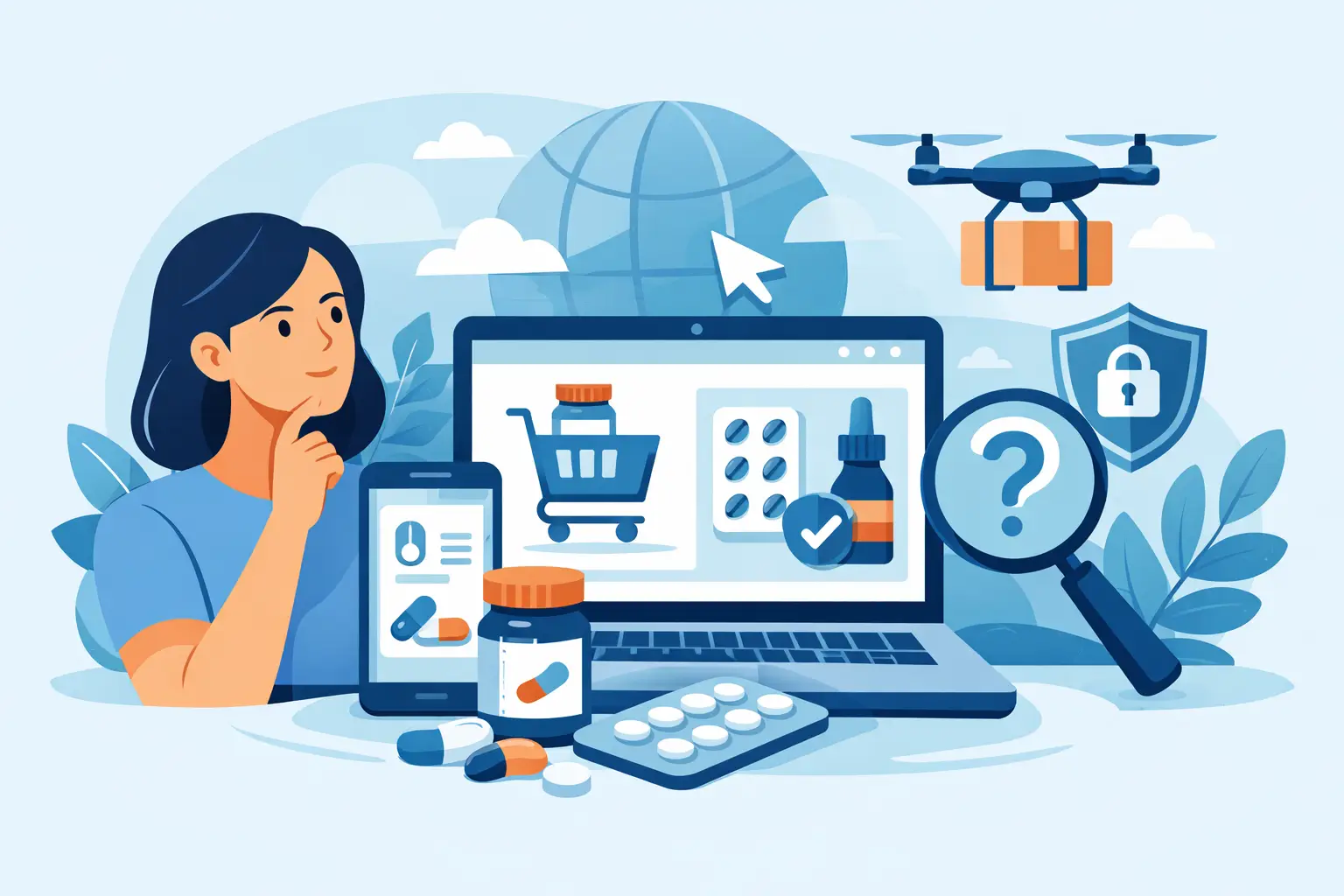
Convenience matters when you are managing your health on a tight schedule. But with an online pharmacy, speed should never come at the expense of safety. If you are considering prescription treatment through a digital platform, the real question is not just how fast medication arrives. It is whether the process behind it is clinically sound, transparent, and designed to protect you.
For many adults exploring medically guided weight loss, that distinction matters. Telehealth has made treatment more accessible, but not every platform operates with the same level of oversight. Some are built around careful evaluation and ongoing support. Others are built to move transactions along. Knowing the difference can help you make a better decision from the start.
What an online pharmacy actually does
An online pharmacy is a licensed pharmacy that fills prescriptions and coordinates medication delivery through a digital process rather than a traditional storefront experience. That does not mean the clinical standard should be lower. In a legitimate model, the prescription still comes from a licensed healthcare provider, the pharmacy still follows state and federal requirements, and the medication is still dispensed under regulated procedures.
What changes is the patient experience. Instead of driving to a location, waiting at the counter, and fitting healthcare into office hours, you move through secure digital steps. That can be a real advantage for people with demanding jobs, family responsibilities, or limited time for in-person visits.
Still, convenience only works when the system around it is credible. A digital front end should not blur the line between medical care and simple checkout.
How to evaluate an online pharmacy
The safest way to assess an online pharmacy is to look beyond the website design and ask how treatment decisions are being made. A polished experience can be helpful, but it is not proof of medical quality.
Start with provider involvement. If prescription treatment is being considered, there should be a licensed healthcare provider reviewing your health history, current conditions, and eligibility. That review should feel like an actual medical step, not a formality.
Next, look at pharmacy fulfillment. Medications should be dispensed by licensed U.S. pharmacies, with clear handling standards and a defined process for getting questions answered. If a platform is vague about where medication comes from or how it is filled, that is worth taking seriously.
Transparency also matters. You should be able to understand what is included, what follow-up care looks like, and when you would speak with a provider if concerns come up. Strong healthcare platforms do not hide the process. They make it easier to understand.
Why this matters in weight management care
Weight loss treatment is not a one-size-fits-all decision. For patients considering GLP-1 medications such as semaglutide or tirzepatide, clinical review is part of responsible care, not an extra step.
These medications can be effective for the right patient, but they still require assessment, monitoring, and a plan that reflects your health profile. That is where the difference between a clinically guided platform and a transactional one becomes more obvious. A responsible online model is not just about shipping medication. It is about determining whether treatment is appropriate and supporting the patient throughout the process.
That includes setting realistic expectations. Some patients respond quickly. Others need dose adjustments, closer follow-up, or a different treatment path. A credible care model leaves room for that nuance.
Online pharmacy convenience has real value
There is a reason more patients are open to digital care. When the model is built well, it removes unnecessary friction from treatment.
You can complete a secure assessment on your own schedule. A provider can review your information without requiring a waiting room visit. If treatment is appropriate, medication can be filled and sent directly to your home. For many adults, especially those who have delayed care because of time constraints or privacy concerns, that can make treatment more realistic to start and easier to stay consistent with.
That consistency matters. In weight management, results are often tied not just to the medication itself but to whether the patient can remain engaged with care over time. A simpler process can support better follow-through.
But convenience has limits. It should reduce hassle, not reduce standards. If a platform makes medical treatment feel overly casual, that is not innovation. It is a warning sign.
Signs of a safer online pharmacy experience
A trustworthy experience usually feels clear from the beginning. You know who is reviewing your case. You understand the treatment path. You know how medication is fulfilled and what support is available after it arrives.
It also feels measured. There is no pressure to rush through medical questions, no exaggerated language, and no attempt to make every patient fit the same program. Good healthcare is structured, even when it is delivered digitally.
In weight management, that structure often includes an intake review, eligibility determination, prescription decisions made by a licensed provider, and ongoing check-ins as needed. Some platforms, including models connected to established medical practices, are better positioned to deliver that kind of continuity because they are built on real clinical operations rather than marketing alone.
What patients should ask before moving forward
Before choosing an online pharmacy or telehealth platform, it helps to ask a few direct questions. Who reviews your medical information? How is eligibility determined? Which pharmacy fills the prescription? What happens if you have side effects, concerns, or need follow-up?
You do not need a complicated explanation. You need a clear one.
A legitimate provider should be able to explain the process in plain language. That includes what treatment can and cannot do. It also includes acknowledging that not every patient is a fit for every medication.
That kind of honesty is usually a good sign. Healthcare decisions are stronger when expectations are realistic from the start.
Online pharmacy care is not all the same
The phrase online pharmacy can make different services sound interchangeable, but they are not. Some platforms are built around clinical review and patient support. Others rely heavily on speed, advertising, and convenience-first messaging.
For patients, the difference shows up in the details. Was there a meaningful medical intake? Was your history reviewed by a licensed provider? Is there a clear path for ongoing supervision? Are you being guided through treatment, or simply moved through a system?
Those distinctions matter more in areas like chronic weight management, where treatment decisions often extend beyond a single prescription. Effective care may involve dose changes, symptom management, progress tracking, and a longer-term plan. A better digital experience supports those needs instead of ignoring them.
That is why many patients are looking for a middle ground - modern access with real clinical standards behind it. A provider-reviewed model can offer that balance when it is executed well.
The right question to ask
Instead of asking whether an online pharmacy is easier, ask whether it is built to support safe, appropriate care. Ease matters. So does privacy. So does efficiency. But in prescription treatment, especially for weight management, those benefits only hold value when they sit on top of real medical oversight.
If a platform gives you clarity, licensed provider review, pharmacy transparency, and ongoing support, digital care can be a smart and practical option. If it skips those things, the convenience is not worth much.
The best healthcare experiences tend to feel simple on the surface because the clinical structure underneath them is strong. That is the standard worth looking for.