
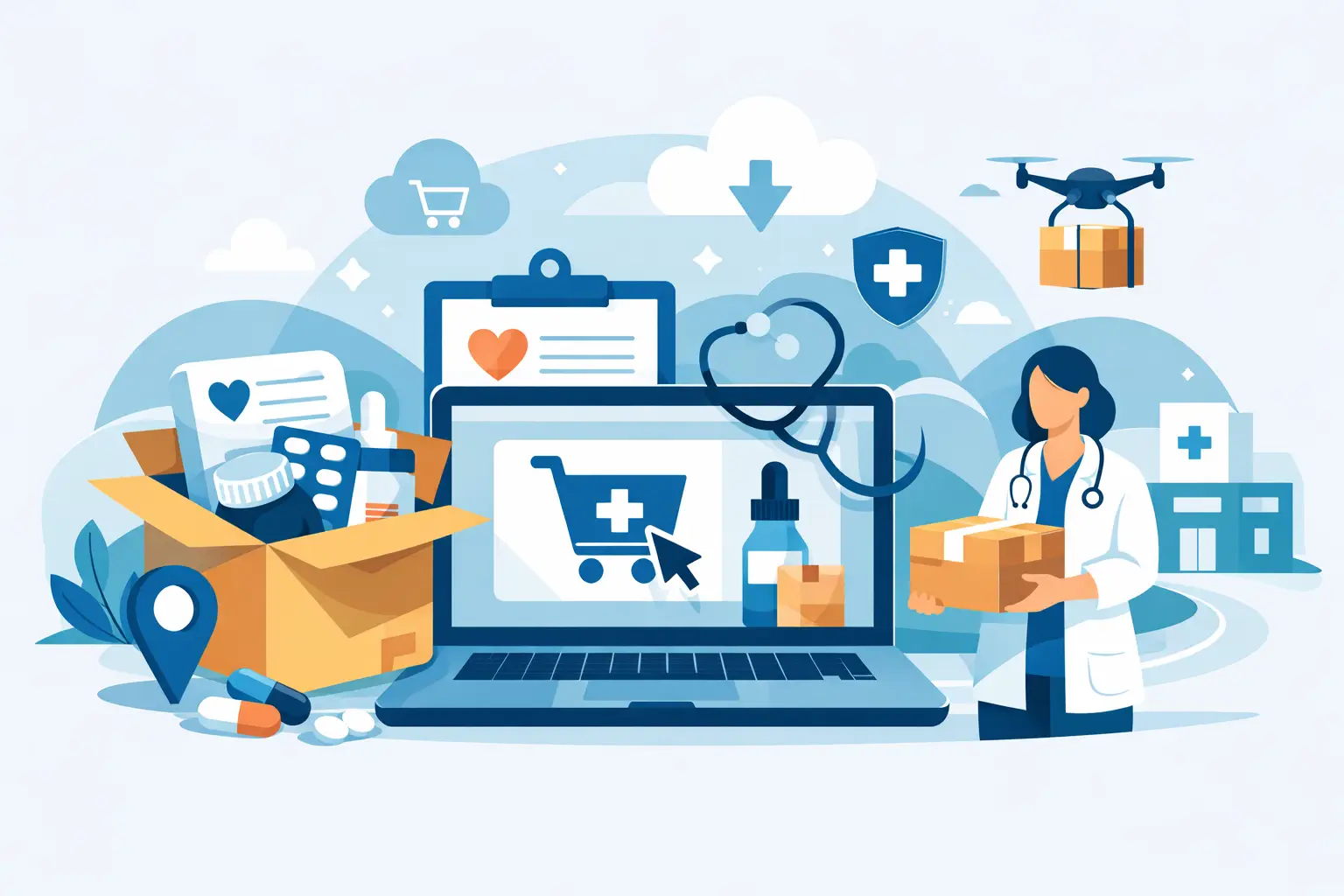
If you have ever completed a health assessment online and then wondered what happens next, you are really asking: what is online fulfillment? In healthcare, it is the process that moves a patient from digital intake to provider review, prescription processing, pharmacy dispensing, and delivery. When it works well, it feels simple on the patient side. Behind the scenes, it is anything but casual.
For people exploring medically guided weight management, this matters more than it might in ordinary e-commerce. A T-shirt can be picked, packed, and shipped with little risk. Prescription treatment requires clinical review, eligibility decisions, licensed pharmacy involvement, and clear patient communication. Online fulfillment in this setting is not just logistics. It is care coordination.
What Is Online Fulfillment?
At its most basic level, online fulfillment is the system that completes an order or service after someone starts it online. In retail, that usually means inventory, packing, shipping, and delivery. In healthcare, the model changes because a patient is not simply ordering a product. They are entering a clinical process.
That distinction is important. In a legitimate telehealth workflow, online fulfillment starts only after required clinical steps are completed. A patient submits health information through a secure platform. A licensed provider reviews that information. If treatment is appropriate, a prescription may be issued. Then a licensed pharmacy fulfills that prescription and coordinates shipment to the patient.
So when people ask what is online fulfillment in a medical setting, the right answer is this: it is the operational system that supports access to care after a patient begins online, while still preserving clinical oversight and pharmacy standards.
How online fulfillment works in telehealth
The process usually begins with digital intake. A patient fills out an online assessment that covers health history, current medications, goals, and other relevant factors. This step is often fast, but it should not be shallow. Good intake is designed to collect enough information for a provider to make a responsible decision.
Next comes provider review. This is where online healthcare separates itself from a standard online checkout. The provider evaluates whether treatment is appropriate based on the information submitted. In some cases, the answer is yes. In others, the patient may need more information, a different plan, or no prescription at all. That is not friction for the sake of friction. It is part of safe care.
If a prescription is issued, fulfillment moves to the pharmacy stage. A licensed pharmacy receives the prescription, verifies it, prepares the medication, and ships it according to applicable standards. Depending on the treatment, that can include packaging requirements, labeling, dosing instructions, and timing considerations.
The final step is delivery and ongoing support. In stronger care models, fulfillment does not end when the package arrives. Patients may receive follow-up guidance, refill coordination, check-ins, or access to provider support as they continue treatment.
Why online fulfillment matters for weight management care
For adults pursuing medically guided weight loss, convenience is a major reason telehealth is appealing. Many patients are balancing work, family, and long-standing frustration with traditional approaches that have not delivered lasting progress. An online process can remove delays, reduce unnecessary appointments, and make treatment easier to continue.
But convenience alone is not enough. Weight management treatment often involves medications that require clinical judgment, monitoring, and patient education. That means the quality of online fulfillment directly affects the patient experience.
A well-run process helps patients understand what they are taking, what timeline to expect, and how to move through treatment with appropriate medical oversight. A weak process creates confusion. Patients may not know who reviewed their information, where the prescription is coming from, how follow-up works, or what happens if they have a question after delivery.
In other words, fulfillment is not a back-office detail. It shapes trust.
What good online fulfillment looks like
The best online fulfillment systems are clear, compliant, and patient-centered. They make each step understandable without making the experience feel heavy or complicated.
First, there is transparency. Patients should know that a licensed provider is reviewing their information and that any prescription is being fulfilled by a licensed U.S. pharmacy. That clarity matters because healthcare decisions should never feel anonymous.
Second, there is structure. Patients should understand the sequence: assessment, review, eligibility decision, pharmacy processing, delivery, and follow-up. This helps set realistic expectations and reduces the uncertainty that often comes with online healthcare.
Third, there is communication. Delays can happen. Medication availability can vary. Providers may request additional information. None of that automatically signals a problem. What matters is whether the platform communicates clearly and promptly.
Finally, there is continuity. Ongoing treatment works better when the fulfillment system supports more than a one-time transaction. For many patients, that means refill planning, progress monitoring, and a straightforward path to questions or clinical support.
What online fulfillment is not
It is easy to mistake online fulfillment for a fast digital storefront. In healthcare, that framing is too simplistic and can be misleading.
Online fulfillment is not bypassing clinical review. It is not instant access without medical judgment. It is not just shipping medication from a warehouse like any other consumer item. And it is not a substitute for appropriate provider oversight.
That is especially relevant in the weight management space, where patients may be comparing platforms that look similar on the surface. Two websites can offer a similar sign-up flow, but the quality of care behind the process may be very different. The real difference often shows up in how carefully patients are evaluated, how prescriptions are fulfilled, and how support continues after treatment begins.
Trade-offs patients should understand
Online fulfillment can make care more accessible, but it is not one-size-fits-all. For many people, the convenience is a major advantage. You can begin the process from home, avoid scheduling around a physical office visit, and receive treatment through a more efficient model.
At the same time, some patients prefer in-person interactions or have medical needs that are better addressed face to face. Others may expect online treatment to move instantly and feel frustrated if a provider needs more information or if pharmacy processing takes time. In healthcare, speed is useful, but accuracy and safety come first.
There is also a difference between simple and oversimplified. A strong platform reduces friction without cutting corners. If a process feels too easy in a way that minimizes medical review, that is not modern healthcare. That is a reason to ask more questions.
What to look for when evaluating an online fulfillment model
If you are considering telehealth for weight management, it helps to look past the marketing layer and focus on the process itself.
Ask whether a licensed provider reviews your assessment. Confirm that any prescription is fulfilled by a licensed pharmacy. Look for clear explanations of what happens after approval, how delivery works, and what kind of support is available during treatment. You should also be able to understand how follow-up is handled, especially if your response to treatment changes over time.
A credible model should feel efficient but grounded. It should respect your time without treating medical care like standard online shopping.
For example, platforms such as EdenRx are built around this balance: a secure digital intake, provider-reviewed eligibility, pharmacy fulfillment, and direct-to-patient delivery within a clinically guided framework. That structure is what makes online access useful without losing the standards patients expect from real medical care.
What is online fulfillment really doing behind the scenes?
From the outside, online fulfillment can look deceptively simple. You complete a form, receive a decision, and if appropriate, treatment is shipped. Behind that experience are multiple systems working together: patient intake, compliance workflows, provider review, prescription routing, pharmacy operations, shipping coordination, and patient communication.
When those systems are aligned, the process feels clean and reliable. When they are not, the patient feels the gaps immediately. Orders stall. Questions go unanswered. Expectations become unclear.
That is why fulfillment deserves more attention than it usually gets. It is the infrastructure that turns digital access into actual care.
For patients, the practical takeaway is simple. Online fulfillment is not just about getting something delivered. It is about how treatment moves from medical review to your door in a way that is safe, legitimate, and easy to follow. If the process is clear, clinically supervised, and built for ongoing support, it is doing exactly what it should.