


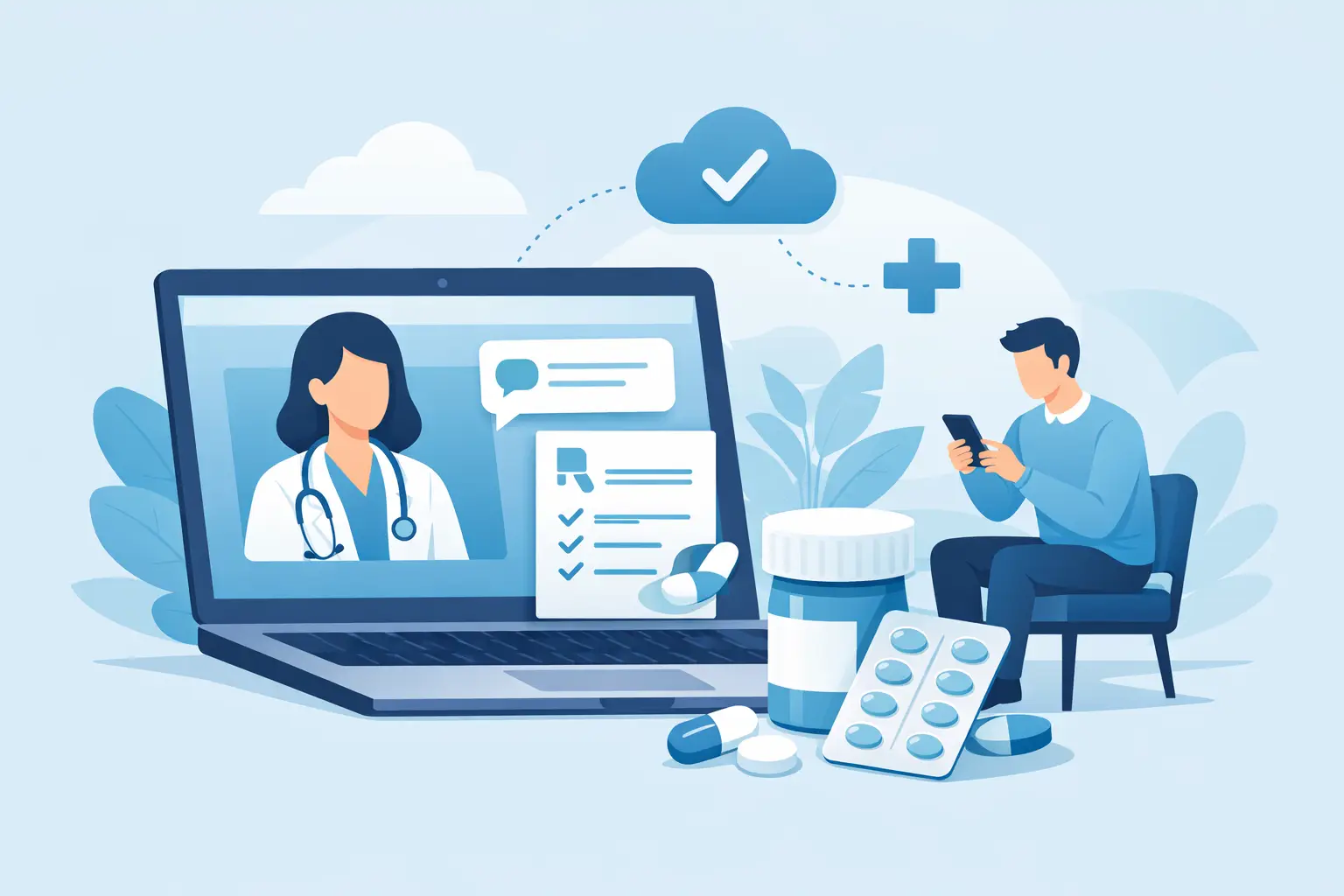
If you have ever put off care because you did not want to sit in a waiting room, figuring out how to get prescription online can feel like a practical upgrade. For many common health needs, online prescribing has made care faster, more private, and easier to fit into a normal week.
That said, convenience should not come at the expense of safety. Getting a prescription online is real medical care, not a shortcut around it. A licensed provider still has to evaluate your symptoms, review your history, decide whether treatment is appropriate, and in some cases send you for labs or an in-person visit.
How to get prescription online the right way
The process is usually straightforward, but the details matter. A legitimate online prescription starts with a medical evaluation, not a checkout page. If a site lets you buy prescription medication without any review by a licensed clinician, that is a problem.
In most cases, you begin by creating an account and answering questions about your symptoms, medications, allergies, and health history. Some services use an asynchronous intake form, while others schedule a live video or phone visit. Which one you get depends on the condition, the medication, and state rules.
After that, a licensed provider reviews your information. They may ask follow-up questions, request photos for visible conditions like rashes or acne, or recommend testing before prescribing. If treatment is appropriate, they send the prescription to a pharmacy or arrange fulfillment through the platform.
That is the basic path. Simple on the surface, but still grounded in a clinical decision.
What conditions are commonly treated online
Online prescribing works best for routine, lower-risk health concerns that can be evaluated through history, symptoms, and sometimes images. This often includes skin conditions, birth control, erectile dysfunction, hair loss, allergies, uncomplicated infections, and some forms of mental health support.
It can also be useful for medication refills, depending on the drug and your treatment history. If you are stable on a medication and need continuity of care, telehealth can be an efficient option.
But it depends on the situation. Some symptoms require a physical exam, imaging, urgent testing, or hands-on assessment. Chest pain, shortness of breath, severe abdominal pain, neurological symptoms, or signs of a serious infection are not a fit for a quick online prescription visit. In those cases, speed matters in a different way - you need the right level of care, not just the fastest one.
What you need before you start
Most online prescription services ask for a few basics. You will typically need a government-issued ID, payment information, your current medication list, and details about your medical history. If you use insurance, have that information ready too.
It also helps to know exactly what you are trying to treat. That does not mean you need to diagnose yourself. It means being able to describe your symptoms clearly, when they started, what makes them better or worse, and any treatments you have already tried.
Accuracy matters here. If you leave out other medications, underlying conditions, pregnancy status, or allergies, the provider may not have enough context to prescribe safely. Online care is convenient, but it still depends on good information.
How the medical review usually works
Many people assume online prescribing is automatic. It is not supposed to be. A clinician reviews whether the medication is appropriate for you, whether there are reasons not to prescribe it, and whether another option makes more sense.
Sometimes the answer is yes right away. Sometimes the provider recommends a different treatment than the one you had in mind. And sometimes the answer is no, at least for now. You may be told to get lab work, have your blood pressure checked, or book an in-person appointment.
That can feel inconvenient if you were hoping for a quick fix, but it is a good sign. Responsible platforms do not treat every request as a guaranteed prescription. They treat it as a clinical decision.
Which prescriptions can be issued online
A wide range of non-controlled medications can be prescribed online, subject to state laws and provider judgment. That includes many common treatments for chronic conditions, short-term issues, and preventive care.
Controlled substances are more complicated. Federal and state rules can limit how and when they are prescribed through telehealth. Some may require a live visit, identity verification, additional documentation, or an in-person exam depending on the medication and current regulations.
This is one area where expectations matter. If you are looking for a specific medication, especially one with abuse potential, a legitimate platform may have stricter requirements than you expect. That is not friction for the sake of friction. It is part of safe prescribing.
How to tell if an online prescription service is legitimate
If you are comparing platforms, look for signals of real clinical oversight. The service should clearly state that licensed medical providers evaluate patients and that prescriptions are only issued when medically appropriate. It should also explain what states it operates in, how follow-up works, and where medications come from.
Transparency is a strong trust signal. Pricing, provider credentials, privacy practices, and customer support should all be easy to find. You should know whether you are paying for a consultation, the medication, or both.
Be cautious if a site promises guaranteed prescriptions, skips the medical review, avoids basic health questions, or sells prescription drugs directly with no provider involvement. Extremely low prices, vague contact details, and pressure to buy fast are also red flags.
A good online care experience should feel efficient, not careless.
What happens after the prescription is approved
Once approved, the prescription is usually sent electronically to a pharmacy. Depending on the platform, you may choose a local pharmacy for pickup or have medication shipped to your home. Some services bundle the consultation and fulfillment into one experience, which can save time.
Before you start the medication, read the instructions carefully. Pay attention to dosing, timing, food interactions, common side effects, and when to seek help. If something is unclear, ask. Digital care should still leave room for real questions.
Follow-up is another detail worth checking before you choose a service. Some treatments need monitoring, refills, or dose adjustments. If the platform makes it hard to reach a clinician after prescribing, convenience fades quickly.
The trade-offs to know before using telehealth for prescriptions
Online prescribing can save time, reduce delays, and make care feel more accessible. For busy adults, that is a real benefit. It can also improve privacy for conditions people may feel awkward addressing in person.
But telehealth is not perfect for every case. A questionnaire cannot replace a physical exam when one is needed. Photos can help, but they do not always tell the full story. And while shipping is convenient, it may not work if you need treatment immediately.
There is also a difference between simple and oversimplified. The best online prescription services remove unnecessary friction without cutting corners on clinical judgment. That balance is what makes the model work.
How to get a prescription online without delays
If your goal is speed, a little preparation goes a long way. Complete every intake field carefully, upload any requested documents the first time, and respond quickly if a provider sends follow-up questions. Missing information is one of the most common reasons online requests stall.
It also helps to choose the right type of service for your needs. If your issue is time-sensitive, look for clear turnaround times and pharmacy options that match your timeline. If your condition may require follow-up, choose a platform built for continuity, not just a one-time transaction.
Brands built around streamlined prescription access, including digital-first services like EdenRx, are often designed to reduce those avoidable delays. The best experience feels clear from the start: what you need to provide, what the provider reviews, what happens next, and when your medication should arrive.
Common questions people ask
One of the most common concerns is whether online prescriptions are legal. Yes, when they are issued by a licensed provider following applicable state and federal rules. The legality depends on how the care is delivered, who is prescribing, and what medication is involved.
Another question is whether insurance covers online prescription visits. Sometimes it does, sometimes it does not. Coverage varies by plan, provider network, and platform model. Even when the visit is not covered, some people still choose cash-pay telehealth because the time savings and simplicity are worth it.
People also ask whether they can get antibiotics, birth control, or refills online. Often yes, but only if a clinician determines it is appropriate. That is the pattern to remember with all online prescribing: possible does not mean automatic.
The easiest way to approach online prescription care is to treat it like what it is - healthcare made more efficient, not healthcare made less real. If a service is transparent, clinically sound, and built around clear next steps, getting treatment online can be one of the simplest parts of taking care of yourself.